



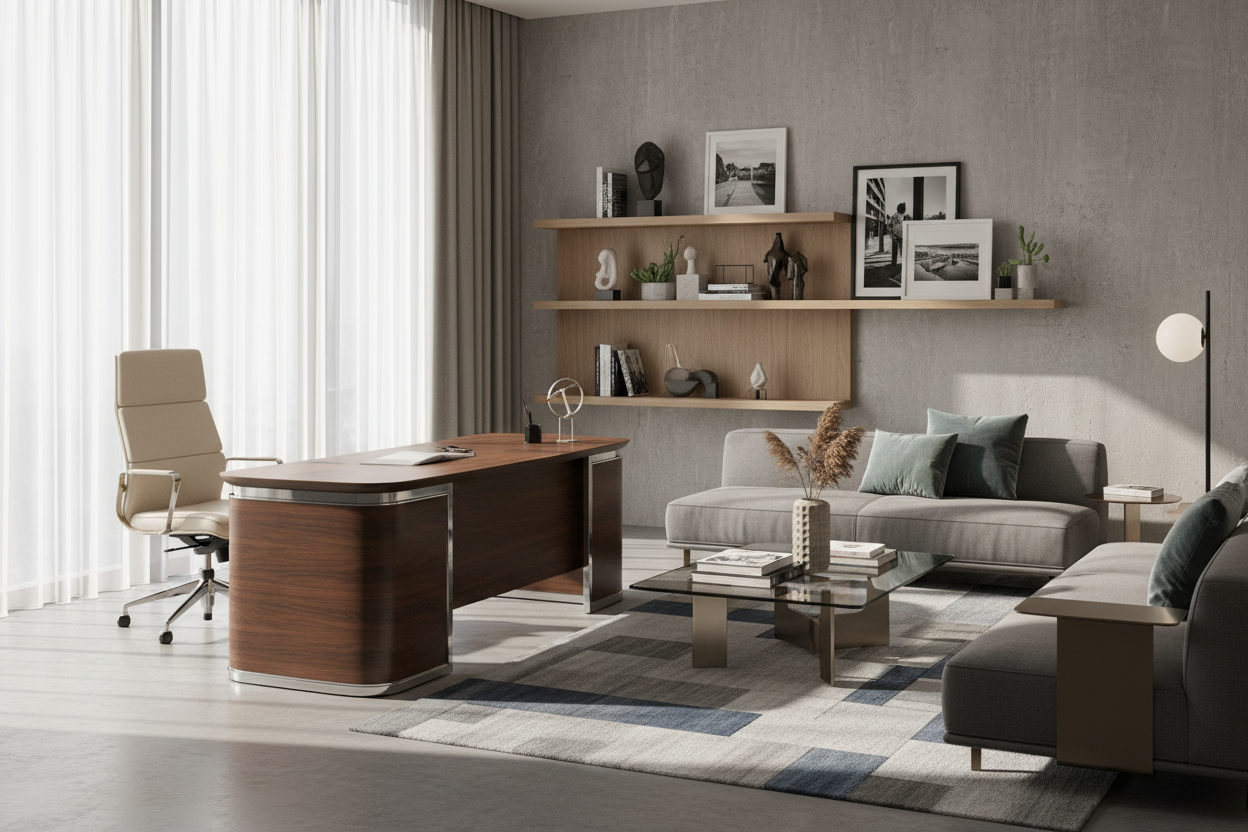
We have all walked into a home office that feels less like a workspace and more like a sterile cubicle. The challenge lies in finding pieces that command respect without sacrificing the warmth required for a residential setting. The solution isn't just buying expensive desks; it is about curating contemporary office furniture that bridges the gap between architectural beauty and ergonomic necessity.
Quick Decision Guide: What to Look For
If you are rushing to make a purchase, prioritize these four elements to ensure your investment holds its value and style:
- Silhouette: Look for clean, fluid lines and low-profile bases that keep the room feeling open.
- Material Mix: High-quality contemporary pieces often blend two textures, such as walnut wood with brushed brass or tempered glass with matte steel.
- Hidden Functionality: Ensure desks have integrated cable management channels to maintain the minimalist aesthetic.
- Scale and Proportion: Avoid bulky executive desks in smaller rooms; opt for floating designs or writing tables with modest footprints.
Defining the Aesthetic: Materiality Matters
When selecting pieces for a modern workspace, the finish is everything. In the past, office furniture was defined by heavy mahogany or cheap laminate. Today, the focus is on authenticity and tactile experiences.
Wood Veneers vs. Solid Timber
While solid wood is often touted as the gold standard, high-grade architectural veneers are frequently superior for contemporary designs. They allow for consistent grain patterns across large surfaces, which is crucial for that sleek, uninterrupted look. Look for rift-cut oak or walnut finishes that offer warmth without the rustic knots found in farmhouse styles.
The Role of Metals
To keep the space from feeling too heavy, incorporate metal accents. A curated contemporary office furniture collection will often feature slender metal legs in gunmetal, matte black, or brushed gold. These metallic elements act as 'jewelry' for the room, catching the light and adding a layer of sophistication.
Ergonomics Meets Sculpture
The biggest pitfall in contemporary design is sacrificing comfort for a striking silhouette. Your chair is the most critical tool in the room. Avoid the temptation to buy a dining chair simply because it looks good. Instead, seek out task chairs that conceal their mechanisms. Many high-end manufacturers now produce ergonomic seating where lumbar support and tension controls are integrated seamlessly into the upholstery, maintaining a sculptural form without the visual clutter of levers and knobs.
Space Planning and Visual Flow
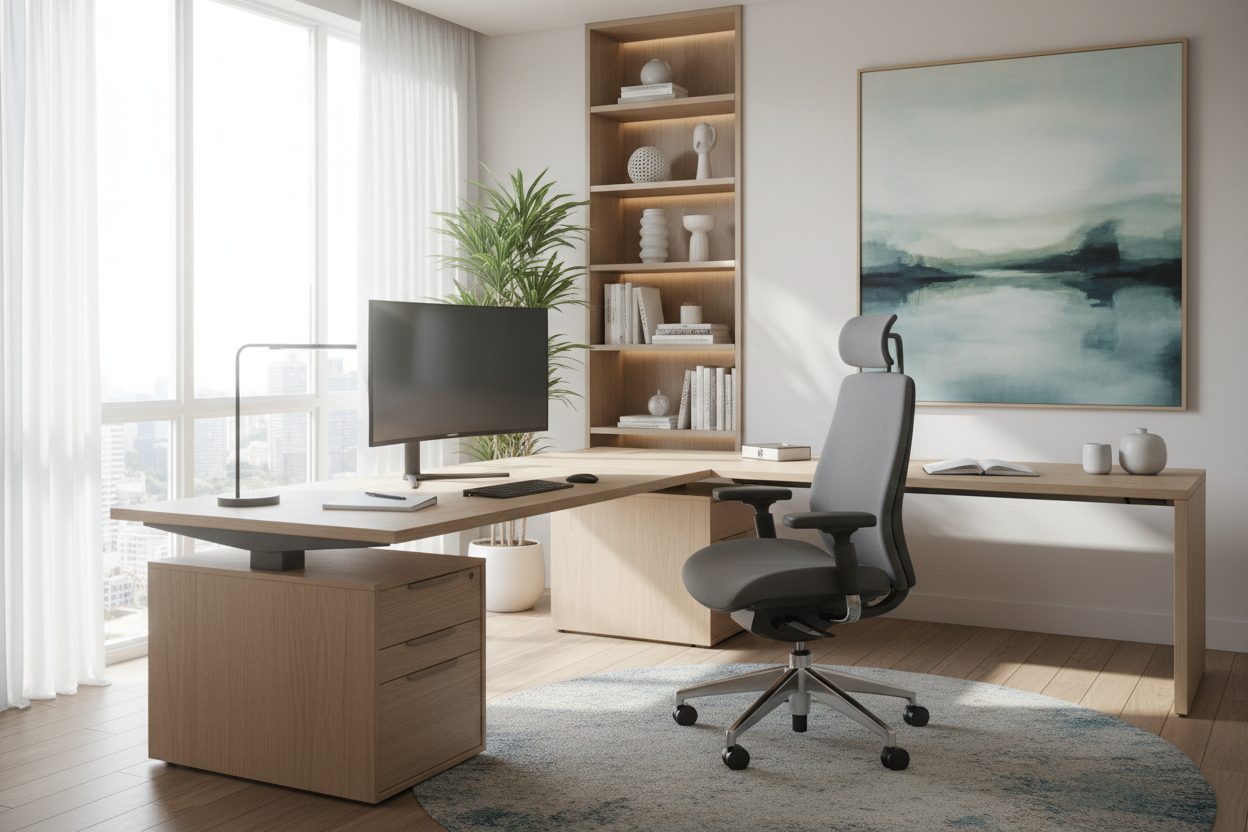
Contemporary design thrives on negative space. A common error is pushing the desk directly against a wall. If your square footage allows, 'float' the desk in the center of the room or perpendicular to a window. This commands authority and allows the furniture's design—often beautiful from the back—to be fully appreciated. Use a low-profile credenza behind you for storage to keep the desk surface pristine.
My Personal Take on Contemporary Office Furniture
I need to share a lesson learned the hard way during a project for a client in Tribeca. We selected a stunning, expansive desk with a 'soft-touch' matte black laminate finish. It looked incredible in the showroom and photographed beautifully.
However, within two weeks, the client called me. The issue wasn't the durability; it was the maintenance. That specific matte finish held onto natural oils from skin like a magnet. Every time he rested his forearms to type, it left a smudge that required a microfiber cloth and spray to remove. It drove him crazy. We eventually solved it by introducing a high-end leather desk blotter to cover the high-traffic area. Since then, I always test finishes for fingerprint resistance before specifying them. True luxury is not just how it looks on day one, but how it lives with you on day one hundred.
Conclusion
Designing a workspace with contemporary furniture is an exercise in balance. It requires weighing visual lightness against functional durability. By choosing the right materials and respecting the scale of your room, you can create an environment that not only looks expensive but actually enhances your workflow. Trust your eye, but verify the comfort.
Frequently Asked Questions
How do I mix contemporary office furniture with a traditional home?
Focus on materials rather than shapes. A contemporary glass desk can look at home in a traditional room if you pair it with a vintage rug or a classic leather chair. The contrast creates a curated, transitional look.
Is a glass desk a bad idea for a daily workspace?
Glass is visually excellent for small spaces as it disappears, making the room feel larger. However, it can feel cold to the touch and reflects sound. If you type heavily or use a mouse extensively, use a leather or felt desk pad to dampen the noise and add warmth.
What is the ideal desk size for a home office?
For a contemporary look that doesn't overwhelm the room, aim for a width between 48 and 60 inches. A depth of 24 to 30 inches is standard. Anything deeper than 30 inches often becomes a dumping ground for clutter, breaking the minimalist aesthetic.

Leave a comment
This site is protected by hCaptcha and the hCaptcha Privacy Policy and Terms of Service apply.