

















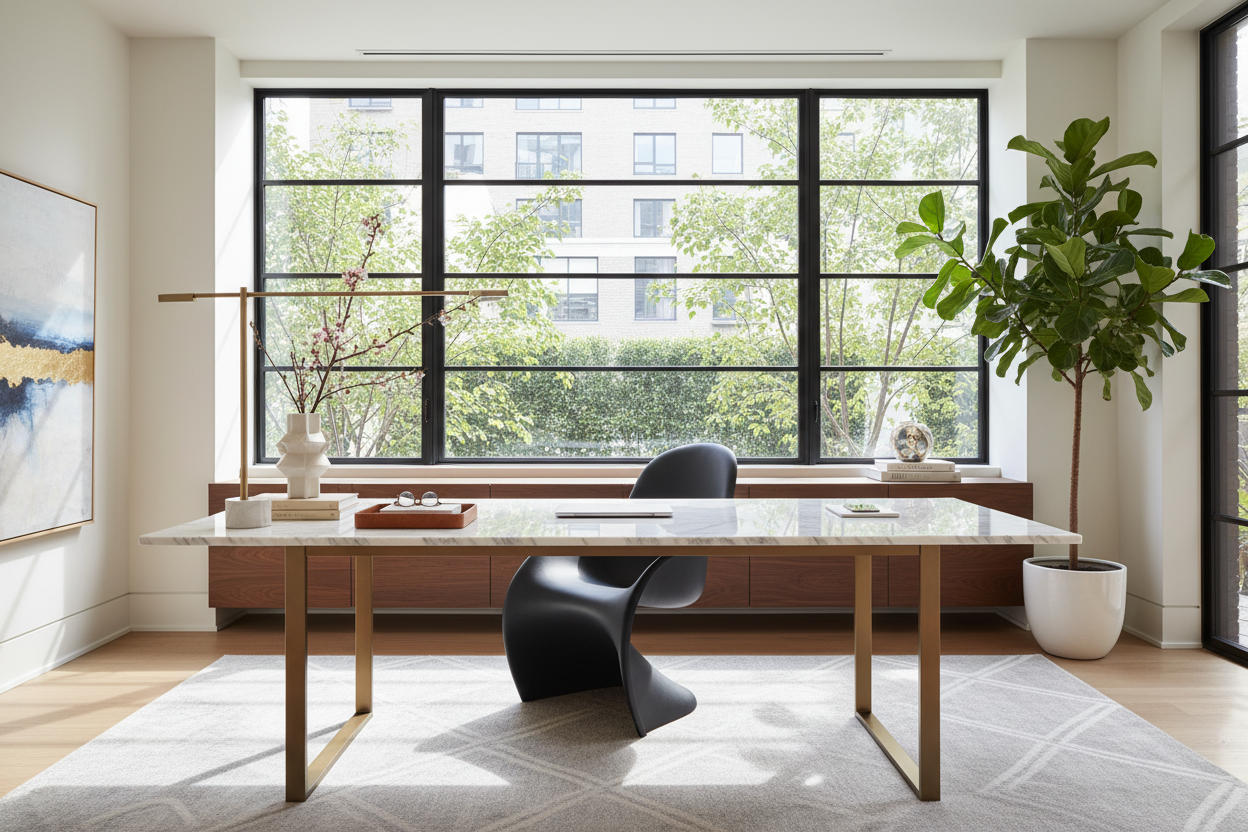
A desk is rarely just a surface; in the world of interior design, it is the architectural anchor of your workspace. The challenge most homeowners face is finding a piece that balances a sleek, forward-thinking silhouette with the grueling demands of a 9-to-5 routine. You want a piece that inspires creativity without sacrificing spinal health or utility. This guide explores curated contemporary desk ideas that bridge the gap between sculptural art and functional necessity.
Key Features to Look For
- Material Integrity: Prioritize solid hardwoods (walnut, white oak) or tempered glass over particle board for longevity.
- Visual Weight: Consider how the desk's mass affects the room's flow; open-frame metal bases create an airy feel in smaller rooms.
- Ergonomics: Ensure a standard height of 29-30 inches, or look for discreet adjustable mechanisms.
- Cable Management: Contemporary design demands clean lines; look for integrated grommets or hidden channels.
Defining the Aesthetic: Materiality and Texture
When selecting a centerpiece for your study, the tactile experience is just as vital as the visual impact. Modern desk ideas often lean heavily into mixed media. We are currently seeing a resurgence of warm, organic textures paired with cold, industrial elements. For a sophisticated look, consider a desk featuring a live-edge walnut top resting on a brushed brass geometric base.
If your goal is a minimalist, ethereal vibe, acrylic or glass desks are excellent for preserving sightlines. However, be mindful of the "coldness" of these materials. To counter this, I often advise clients to pair glass desks with a textured leather desk pad. This adds warmth and prevents the clammy feeling of forearms resting on cold glass during early mornings.
Space Planning and Visual Balance
The placement of your furniture dictates the room's energy. In modern office desk ideas, we often move away from pushing the desk against a wall—a layout that can feel stifling. Instead, try floating the desk in the center of the room or positioning it perpendicular to a window. This "command position" not only improves light distribution but allows the desk's profile to be appreciated from all angles.
For compact urban apartments, a cantilevered desk (one that is wall-mounted with no legs) offers a brilliant solution. It frees up floor space, creating an illusion of square footage while maintaining a sharp, architectural profile.
Functionality: The Hidden Details
True luxury lies in effortless function. Contemporary design is often criticized for lacking storage, but the best pieces integrate it subtly. Look for "blind" drawers—drawers without hardware that open via a push-latch mechanism. This maintains the unbroken lines of the piece while providing essential storage for pens and notebooks. If the desk is purely a writing table, ensure you have a complementary credenza or shelving unit nearby to handle the heavy lifting of storage, keeping the desk surface pristine.
Lessons from My Own Projects
I learned a hard lesson about finishes a few years ago while designing a home office for a graphic designer in Chicago. We fell in love with a stunning, high-gloss black lacquer desk. It looked like a grand piano—absolutely striking under the showroom lights.
However, within three weeks of installation, the client called me. The issue wasn't the look; it was the maintenance. Every single fingerprint showed up instantly, and worse, the reflection from his dual monitors bounced off the glossy surface, causing significant eye strain by midday. We eventually had to cover that beautiful lacquer with a matte oversized blotter to kill the glare. Now, when I recommend high-gloss finishes, I always check the lighting plan and the client's tolerance for micro-dust and fingerprints first. It’s a detail you don't think about until you're living with it.
Conclusion
Selecting the right desk is about understanding how you inhabit your space. Whether you opt for the warmth of timber or the precision of steel, the piece should invite you to sit down and focus. By prioritizing high-quality materials and thoughtful ergonomics, you create a workspace that is as enduring as it is beautiful.
Frequently Asked Questions
What is the ideal depth for a contemporary computer desk?
For a laptop setup, 24 inches is sufficient. However, if you use multiple monitors or require space for sketching, aim for a depth of 30 inches to ensure you aren't sitting too close to the screens.
How do I mix a modern desk with traditional decor?
Focus on materials rather than shape. A sleek, modern desk made of a traditional material like mahogany or cherry wood can bridge the gap. Alternatively, use a modern desk as a deliberate "statement piece" to create high contrast.
Are glass desks durable enough for daily use?
Yes, provided they are made of tempered safety glass. However, be aware that glass reveals everything—dust, fingerprints, and cable clutter beneath the desk—so they require higher maintenance to keep that pristine look.

Leave a comment
This site is protected by hCaptcha and the hCaptcha Privacy Policy and Terms of Service apply.