

















I spent three years trying to hide my home office. Every time I bought a new piece of tech, I felt like my living room was slowly transforming into a corporate cubicle. I’d spend hours scrolling through Pinterest, looking at these impossibly clean workstations, only to look at my own mess of black plastic and tangled wires with a sigh. It took three failed desks and a lot of cable-tie-induced frustration to realize the problem wasn't the desk itself—it was the mindset.
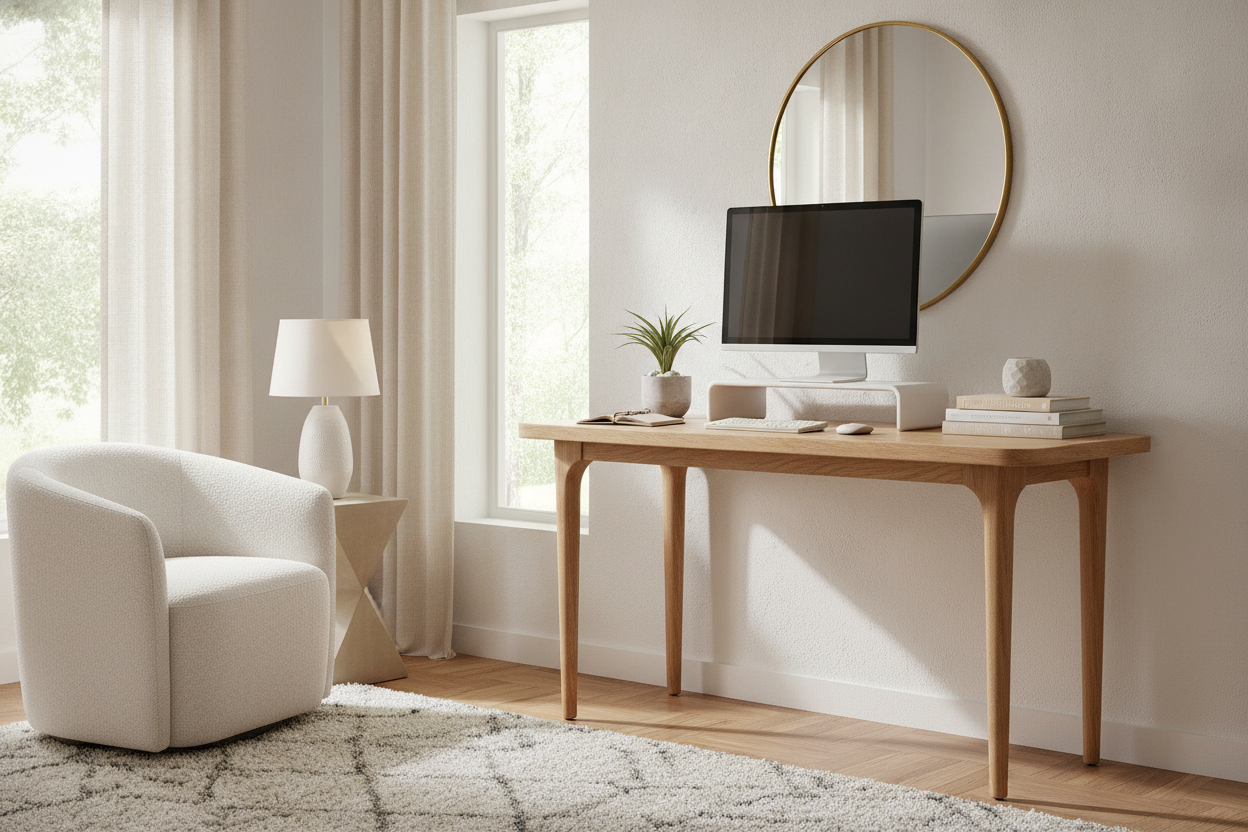
You don't have to choose between your posture and your floor plan. An aesthetic standing desk can actually enhance a room if you treat it like a piece of high-end furniture rather than a piece of hardware. I finally found a setup that doesn't make me want to close the door when guests come over, and it didn't require a total renovation. It just required a little bit of styling and a refusal to settle for 'office-grade' finishes.
Quick Takeaways
- Choose natural wood grains or matte finishes that match your existing decor.
- Invest in a heavy-duty cable management tray to hide the 'mechanical' look.
- Use a vintage table lamp instead of a clunky plastic desk light.
- Position the desk like a console table—behind a sofa or in an alcove.
- Scale up the desk size to avoid a cluttered, cramped look.
First Things First: Ditch the Office Cubicle Mindset
Most of us head straight to the office supply section when we need a desk. That is your first mistake. Those desks are designed for fluorescent lights and carpet tiles, not your home. To make a workspace feel like a natural part of your home, you need to look for a writing computer desk silhouette. This means prioritizing materials that have warmth and character—think solid walnut, reclaimed oak, or even a high-quality birch veneer.
I’ve seen too many people buy those cheap, white laminate tops with thin metal legs that shake every time you type. Not only do they look like they belong in a college dorm, but they also highlight the fact that this is a 'work' zone. Instead, look for a desk with a thicker top—at least 1.5 inches. A beefier desktop mimics the weight of a traditional library table. When the desk is lowered, it should look indistinguishable from a high-end console or a sturdy dining table. Avoid anything with pre-drilled grommet holes in the middle of the wood if you can; they are a dead giveaway of a corporate piece.
The Cord Chaos Will Instantly Ruin Your Vibe
Nothing kills a luxury aesthetic faster than a 'waterfall' of black cables hanging off the back of your desk. When you have an adjustable height standing desk with electric lift system, the cord problem is doubled because those wires need slack to move up and down. If you leave them dangling, your beautiful living room suddenly looks like a server room. It’s a mess, and it’s distracting.
My secret? A massive, under-desk cable tray and a 'snake' cable organizer. You want to group every single wire—monitor power, laptop charger, desk motor—into one single, opaque sleeve that matches the color of your walls. If your walls are white, use a white sleeve. If you have a dark accent wall, go black. Then, use adhesive clips to run that one single cord down the leg of the desk. I also like to hide the power strip inside a decorative basket on the floor or mounted directly to the underside of the desk. If you can’t see the power strip, the desk looks like it’s floating magically, which is exactly the chic vibe we’re going for.
Treat Your Desk Surface Like a Console Table
The biggest mistake people make is only putting 'work' things on their desk. If your desk only holds a monitor, a mouse, and a coffee mug, it’s always going to look like a workstation. To make it feel like furniture, you have to style it like a console table. When I’m done for the day, I move my keyboard to a drawer or a decorative tray and lean a piece of framed art against the wall. It sounds extra, but it takes ten seconds and completely changes the energy of the room.
Lighting is another huge factor. Swap that articulating metal task lamp for a ceramic table lamp with a linen shade. It provides a much softer, residential glow that makes the wood grain pop. I also ditched the ugly gray foam standing mat. They are eyesores. Instead, I found a 'pretty' standing desk mat that features a vintage Persian rug print. It has all the ergonomic support for my knees but looks like a high-end textile. Add a small tray for your pens and a candle, and suddenly your desk is a curated vignette rather than a chore.
Why Placement Is Everything in a Shared Space
Most people instinctively shove their desk into a corner facing a wall. It’s the 'timeout' position, and it’s visually heavy. If you’re putting a standing desk in a living room, try floating it. One of my favorite designer ideas for standing desk layouts is placing the desk directly behind the sofa. It acts as a sofa table, providing a place for a lamp and some books, while keeping the 'office' part of the room integrated into the social zone.
If floating isn’t an option, try an alcove. I once painted a small nook in my apartment a deep navy and tucked my desk inside. Because the desk matched the width of the nook, it looked like a custom built-in. This 'zoning' trick helps the eye categorize the desk as an architectural feature rather than a piece of furniture that was just plopped down. Whatever you do, avoid placing it in the direct line of sight from your front door. You want the desk to be a discovery, not the first thing people see when they walk in.
Scale Matters: Don't Let Your Tech Overpower the Desk
Scale is the one thing most people get wrong. They buy a tiny 48-inch desk and then put a 32-inch monitor on it. The tech ends up swallowing the furniture. If you have the space, upgrading to a 71 w height adjustable standing desk is a total game-changer for the visual balance of the room. A wider surface allows the monitor to sit off-center, leaving room for decor, a lamp, and some breathing room. It makes the desk look intentional, like a large library table, rather than a cramped workstation.
To keep the tech from feeling heavy, use a monitor arm. But don't just buy the standard black industrial one. Look for arms in white, silver, or even brass finishes. By lifting the monitor off the desk, you create a sense of 'airiness' and free up the surface for more aesthetic items. I also recommend using a wireless keyboard and mouse. The fewer physical connections you see, the more the desk feels like a piece of furniture and less like a computer station. It’s all about reducing the visual noise so the beauty of the desk itself can shine through.
My Personal Experience
I learned the hard way that 'cheap' and 'aesthetic' rarely live in the same house when it comes to standing desks. My first one was a $200 laminate model I bought online. Within three months, the edges were peeling, and the motor sounded like a dying blender. Every time I raised it, the whole thing wobbled so much my coffee would splash. It was a constant reminder that I’d compromised. Now, I use a solid white oak top on a heavy-duty frame. It doesn't move a millimeter when I type, and the wood has a natural patina that gets better with age. It was an investment, but it’s the only desk I’ve ever owned that I actually enjoy looking at on a Sunday morning.
FAQ
Will a standing desk ruin my hardwood floors?
Only if you don't use floor protectors. Most standing desks are heavy. I always put high-density felt pads under the feet. If you have an ergonomic mat, make sure it has a non-slip backing that won't react with your floor's finish.
How do I hide a giant monitor?
You can't really hide it, but you can blend it. Use a desktop wallpaper that looks like art or a landscape. Some people even use a decorative cloth to cover the monitor when they aren't working, though I find a nice monitor arm and a clean background do the trick better.
Is a 71-inch desk too big for a small apartment?
Surprisingly, no. A single large, well-styled piece of furniture often looks better than three small, cluttered pieces. If you use a 71-inch desk as both your workspace and your 'entryway' or 'dining' surface, it can actually save space.

Leave a comment
This site is protected by hCaptcha and the hCaptcha Privacy Policy and Terms of Service apply.