


















I spent three years trying to curate the perfectly messy coffee table. You know the look: a stack of $60 art books, a single brass candle, and a vintage glass tray for the small stuff. In reality, that tray became a graveyard for crusty lip balm, AAA batteries, and receipts I’ll never file. It didn't look eclectic; it looked like I’d given up on basic organization.
The turning point was admitting that I am a clutter person who desperately wants to live like a minimalist. I needed a way to keep my weird little treasures visible without the visual noise of loose objects rolling around. That is where a storage display box comes in—it is the only piece of decor that actually lets you hide your mess in plain sight while making it look like a museum exhibit.
Quick Takeaways
- Enclosure creates an instant psychological frame that makes random junk look like a curated collection.
- Use a glass-topped box to show off the pretty items while burying the ugly ones underneath.
- Hard boundaries prevent clutter creep across the rest of the table surface.
- Dusting becomes 90% easier when your tiny trinkets are behind glass.
The 'Beautiful Mess' Lie I Kept Telling Myself
We’ve all been lied to by interior design magazines. They want us to believe that if you just throw a handful of matchbooks and a piece of driftwood on a table, it magically looks like a Parisian salon. I tried it. Within forty-eight hours, the driftwood was covered in dog hair and the matchbooks were buried under a pile of mail. I was constantly shifting things around just to find the remote.
The loose look only works if you have a full-time housekeeper or literally never use your living room. For the rest of us, loose objects are just magnets for more loose objects. I realized that my brain couldn't distinguish between intentional decor and trash I forgot to throw away when everything was just sitting out in the open. I needed a boundary. A tray wasn't enough because things still spilled over the edges; I needed walls.
Why a Storage Display Box Actually Works
There is a massive psychological shift when you put an object inside a storage display case. Suddenly, that weird rock you found on a hike isn't just a rock; it is a specimen. A box provides a hard physical border that tells the eye everything inside this rectangle is important. It separates the objects from the crumbs and coffee rings on the rest of the table.
I spent a week browsing this display storage collection trying to find something that didn't look like a jewelry box from my grandma's dresser. I wanted something with clean lines—maybe a matte black metal frame or a thick, chunky acrylic. When you choose a box with a bit of weight to it, it anchors the coffee table. It stops being a container and starts being an architectural element. The real win? It forces you to edit. You only have so much square footage inside that box. If it doesn't fit, it doesn't stay.
The 'Top vs. Bottom' Styling Strategy
The secret to a great display box is the mullet strategy: treasures on top, trash underneath. If you have a box with a shallow tray or a secondary compartment, use it to your advantage. I personally use a box that has a slightly deeper base so I can layer things. It keeps the surface from looking flat and boring.
Under the glass, I place the hero items. For me, that’s a pair of vintage brass dice, a very cool deck of Japanese playing cards, and a single dried protea flower. These are the things that make me look like I have hobbies. Underneath those, or tucked in the corners, I hide the stuff I actually use: my Kindle, the TV remote, and a tube of hand cream. Because the glass draws the eye to the curated items, the utilitarian stuff just fades into the shadows. You get the convenience of having your chapstick nearby without having to look at the ugly plastic tube all day.
Taking the 'Contained Clutter' Method to the Rest of the Room
Once you see how much better your coffee table looks, you’ll start looking at your bookshelves with pure resentment. Open shelving is a scam designed to make us spend our weekends with a microfiber cloth. After the success of my tabletop box, I realized I needed to scale up the enclosure method to handle my larger collections.
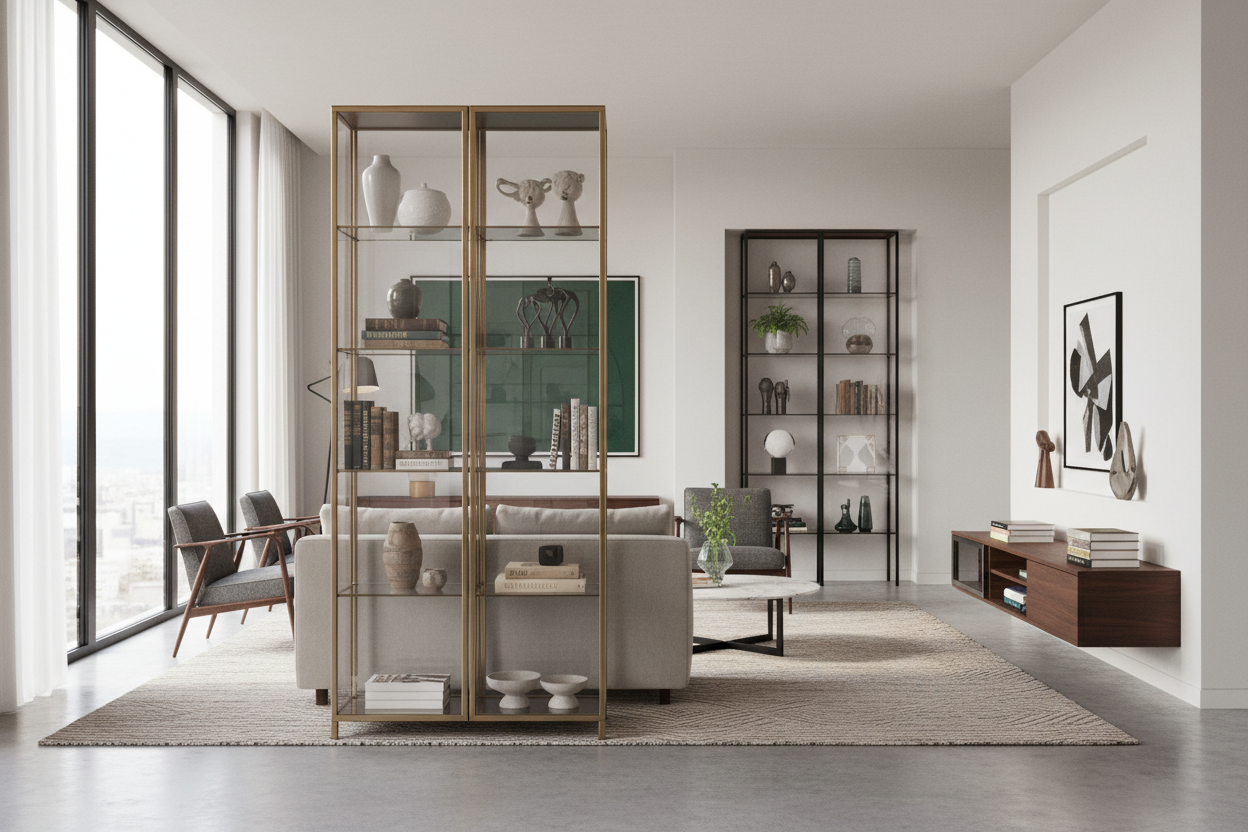
If you have a larger collection of ceramics or vintage cameras, you might be ready for a tall storage display cabinet. It’s the same logic, just vertically integrated. You get the visual museum effect without the maintenance nightmare of dusting forty individual items. I eventually swapped out a rickety shelf for an elegant glass display cabinet that actually had drawers at the bottom. I could show off my favorite vases behind the glass doors while shoving my unsightly board games and extra cables into the drawers below. It’s about creating a hierarchy of visibility.
FAQ
What if my box gets foggy or dusty inside?
Windex is your friend, but don't spray it directly on the glass if the frame is wood or unsealed metal. Spray the cloth first. Also, throw a tiny silica gel packet in the corner—the kind that comes in shoe boxes—to keep moisture from clouding the glass over time.
Can I use a display box for tech?
Sure, but keep it to one hero piece, like a vintage camera or a nice pair of headphones. Don't use it for your tangled charging cables; that just makes the mess look like it’s in prison. If you must store cables, hide them under a decorative book inside the box.
How many items should I put in a small display box?
Odd numbers always win. Three items of varying heights—something flat like a postcard, something medium like a shell, and something tall like a crystal—usually hit the sweet spot without looking crowded. If you overstuff it, you lose the museum effect.

Leave a comment
This site is protected by hCaptcha and the hCaptcha Privacy Policy and Terms of Service apply.