

















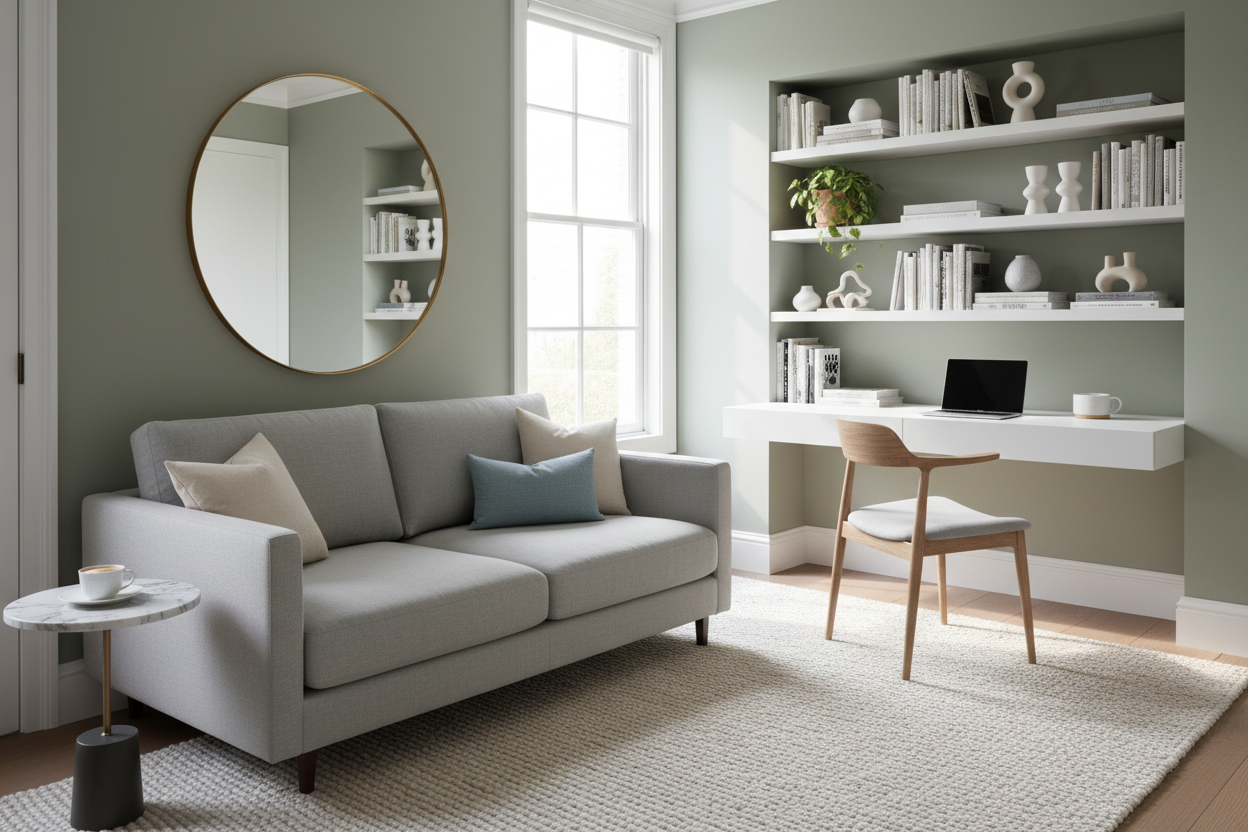
One of the most frequent requests I receive from clients is the desire for a "breakout zone" within their workspace—a place to read a contract away from the monitor or take a quick mental reset. However, the panic usually sets in the moment we look at the floor plan. Fitting a lounge area into a compact room feels like a spatial puzzle. The good news is that designing a small office with couch doesn't require knocking down walls; it requires mastering scale and visual weight.
Key Features to Look For
Before you fall in love with a showroom piece, consider these non-negotiable factors for compact workspaces. This checklist will ensure your purchase fits both physically and visually.
- Visual Weight: Opt for sofas with exposed legs. Being able to see the floor beneath the furniture tricks the eye into thinking the room is larger.
- Slim Profiles: Avoid rolled arms. track arms or armless designs save 6-10 inches of horizontal space.
- Seat Depth: For a small office with sofa layouts, a standard depth (approx. 34-36 inches) is preferable to deep lounging depths, which encroach on desk chair clearance.
- Performance Fabrics: Offices see coffee spills and ink. Look for high double-rub counts or Crypton fabrics.
Mastering the Layout: Flow and Clearance
In a limited footprint, traffic flow is everything. When brainstorming small home office with couch configurations, you must preserve the "golden triangle" between your desk, the door, and the storage units. A common error is placing the seating directly behind the desk chair without accounting for rollback space.
Ideally, you need 30 to 36 inches of clearance for a walkway. If your room is narrow, place the couch on the wall perpendicular to your desk rather than behind it. This creates a distinct "zone" without interfering with your primary workspace ergonomics.
Selecting the Right Silhouette
When sourcing small office with couch ideas, the silhouette is your most powerful tool. A heavy, skirted sofa will anchor the room too aggressively, making it feel boxy. Instead, look for mid-century modern influences or Scandinavian designs.
The "Leggy" Look
Furniture that sits flush with the floor creates a visual block. By choosing a sofa with tapered wooden or metal legs, you allow light to travel under the piece. This negative space is crucial in preventing the office from feeling claustrophobic.
Materiality and Color Palette
Your choice of upholstery dictates the mood. In a small office couch ideas board, I often steer clients toward monochromatic schemes. Matching the sofa color closely to the wall paint can make the piece "recede" into the background, reducing visual clutter.
However, if you want the couch to be a focal point, texture is key. A rich velvet or a bouclé adds depth without adding bulk. Just remember durability; a commercial-grade polyester blend often mimics the look of linen but withstands the wear and tear of daily use much better.
My Personal Take on small office with couch Layouts
I learned the hard way about "aspirational sizing" early in my career. I once specified a stunning, deep-seated English roll-arm sofa for my own 10x11 home office. On paper, it fit. In reality, it was a disaster.
The issue wasn't just the footprint; it was the volume. Every time I swiveled my desk chair, I felt the looming presence of the sofa. It absorbed all the ambient light from the window. The specific detail I regret most was the cushion fill—I chose down-wrapped foam. In a relaxing living room, that's luxury. In an office where I sat to read briefs, it looked messy and unkempt constantly, requiring fluffing between Zoom calls. I eventually swapped it for a tighter-back, firm loveseat with high legs. The room immediately felt 20% bigger, and the structured look kept the office feeling professional rather than like a bedroom annex.
Conclusion
Integrating a sofa into a modest workspace elevates the room from a utility closet to a legitimate executive suite. It provides a necessary change of posture during long workdays and softens the acoustics of the room. By respecting scale and prioritizing clean lines, you can enjoy the comfort you crave without sacrificing the functionality you need.
Frequently Asked Questions
How much space do I need between my desk and the couch?
You should aim for a minimum of 30 inches to allow for comfortable walking. If the couch is directly behind your desk chair, increase this to 48 inches to ensure you can roll back freely without hitting the upholstery.
Can I use a sleeper sofa in a small office?
Yes, but be wary of the depth. Sleeper mechanisms often require a deeper frame. Look for "twin" sleepers or convertible futon styles that fold flat, as they tend to have slimmer footprints than traditional pull-out queen sofas.
What is the best fabric for an office couch?
Wool blends and tight-weave polyesters are excellent. They resist pilling and maintain a structured, professional look. Avoid loose-weave linens or pure cottons, which can wrinkle easily and look sloppy on camera.


Leave a comment
This site is protected by hCaptcha and the hCaptcha Privacy Policy and Terms of Service apply.