

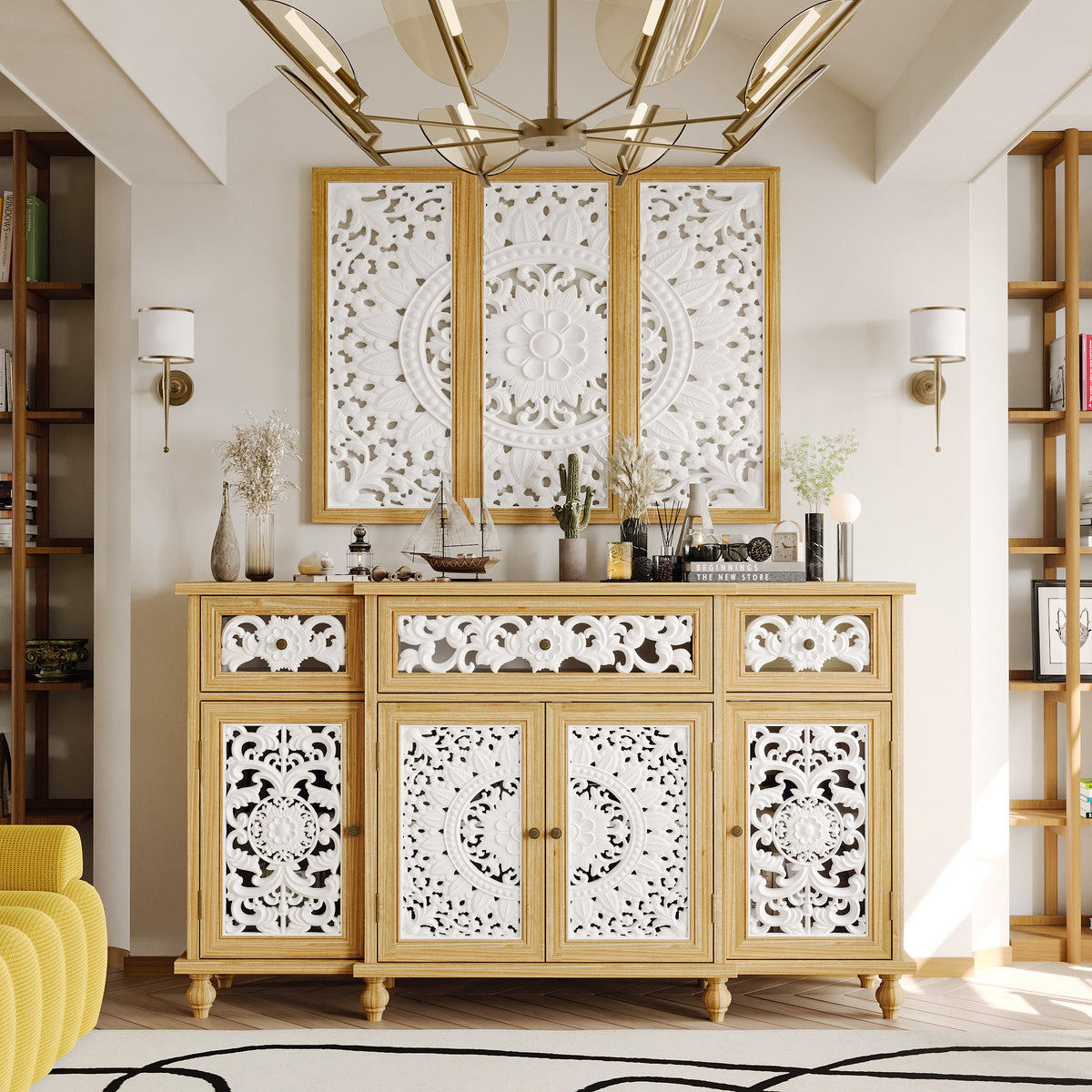
Short answer: to style a sideboard, clear the top, hang one focal point above it (art or a mirror about two-thirds the sideboard's width, 6 to 10 inches above the surface), add height at one or both ends with a lamp or tall vase, then group smaller objects in odd numbers with tall pieces at the back and low pieces in front. Leave a good share of the surface empty, often 60 to 70 percent, so the sideboard still works for serving and everyday life.
A well styled sideboard looks intentional rather than cluttered, and the method is the same whether it sits in a dining room, living room or entryway. This guide walks through each step, with ideas for buffet lamps, mirrors, trays, seasonal decor and styling glass doors, plus how to keep the piece practical. If you are still choosing the furniture itself, browse our sideboards and buffets by size and finish first.
Step 1: Clear the Surface and Decide What the Sideboard Is For
Begin decorating with an empty top. Take everything off, wipe the surface and decide what job the sideboard does day to day. That one decision shapes the right styling:
- Dining room serving station: keep the center or one end free to hold food during meals.
- Bar or coffee station: set aside a zone for a tray, glasses and a machine near an outlet.
- Entryway drop zone: plan a bowl or tray for keys and mail.
- Living room display: more room for art, books and decorative objects.
Then use the storage behind closed doors. Anything that does not improve the look of the surface belongs inside: table linens, serving trays, chargers, board games, candles and spare bulbs. Drawers are ideal for small items such as napkins, batteries and remotes. The less you keep on top by necessity, the more freedom you have to style it.
Step 2: Anchor the Wall With Art or a Mirror
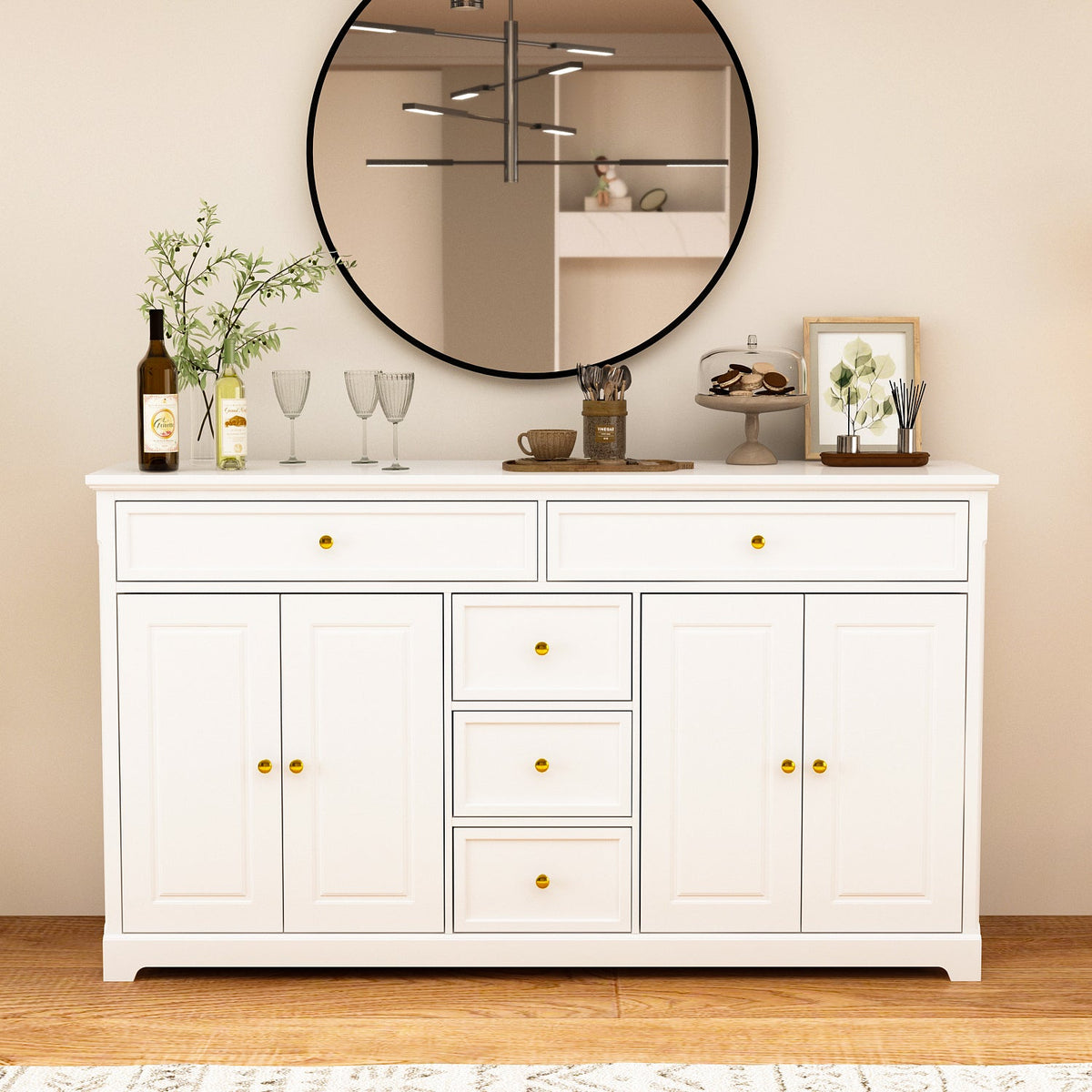
Every sideboard styling idea starts with a focal point on the wall. A large mirror bounces light around a dark dining room; a framed print or a canvas sets the color palette for everything below it. Choose a piece about two-thirds the width of the sideboard, so a 63-inch sideboard suits art roughly 40 to 44 inches wide.
Hang it low enough to connect to the furniture. Framebridge recommends hanging art 7 to 10 inches above the top of the furniture, and Chairish suggests 6 to 12 inches of space. For exact numbers by sideboard height, see our sideboard height and size guide.
Prefer not to drill? Lean art instead. Lean one large framed piece against the wall and layer a smaller framed piece in front, slightly off-center, to create depth. Leaning works best on sideboards at least 16 inches deep, and you should keep the frame away from the front edge.
Step 3: Add Height With Buffet Lamps or a Tall Vase
Height gives the arrangement structure. The classic choice is a pair of buffet lamps, which are tall, slim table lamps designed for sideboards and consoles, placed near each end. A matching pair creates symmetry and a warm glow for dinner; a single sculptural lamp at one end with a tall vase of branches at the other feels more relaxed.
- Proportion: choose lamps whose shades overlap the bottom edge of the art slightly rather than covering the middle of it.
- Power: place lamps near an outlet and run cords behind the sideboard. The 59.1" sideboard with an integrated track socket has power built in, which suits lamps or a coffee maker.
- No lamp: use tall branches, a tall vase with seasonal stems or a large ceramic vessel to add height instead.

Step 4: Group Decor Items in Odd Numbers
Groups of three objects usually look more natural than pairs or rows, because odd numbers force the eye to move around the group. The 3-5-7 rule in decorating simply means grouping items in odd numbers (three, five or seven) rather than even sets. On most sideboards, one or two groups of three are enough.
Build each group like a triangle, with different heights:
- Tall at the back: a lamp, a tall vase or a framed piece leaning on the wall.
- Medium in the middle: a bowl, a candle holder or a small sculpture.
- Low in front: a low stack of books, a small dish or a trinket box.
Stacking books under a smaller object is the easiest way to add height to low pieces. Avoid lining up items at the same height, which looks flat, and avoid scattering many tiny items, which reads as visual noise.
Step 5: Choose a Tight Color Palette and Add Texture
Pick two or three colors and repeat them. A simple approach is to echo one color from the art above in a vase or book spine below. Neutral tones such as cream, black and warm wood are easy to live with year round, and you can add an accent color with flowers or seasonal pieces.
Then add texture so a neutral scheme does not look flat: matte ceramics next to glass, a linen runner, rattan, stone, brass or a wooden bowl. On a warm wood sideboard, contrast it with black or white objects; on a white or black sideboard, bring in warm wood and greenery. Fresh flowers or a plant soften the look of any sideboard. A natural finish such as the 59.1" bohemian natural sideboard pairs well with rattan, linen and greenery.
Step 6: Leave Negative Space
The biggest difference between a cluttered top and a well styled sideboard is empty space. Many stylists aim to leave 60 to 70 percent of the surface clear. Negative space lets each piece stand out, shows off the wood grain or finish, and keeps the surface clear for serving trays when guests arrive. If the top starts feeling cluttered, remove one item from each group and step back.
How to Keep a Styled Sideboard Functional
- Use trays: a tray corrals small items, from bar tools to keys, and lifts off in one move when you need the space.
- Zone the top: keep decor at the ends and the serving zone in the middle, or the other way round.
- Respect weight limits: keep heavy stacks of plates on the lowest shelf. Shelves in our sideboards are commonly rated around 22 lb, and the product page lists the top weight capacity.
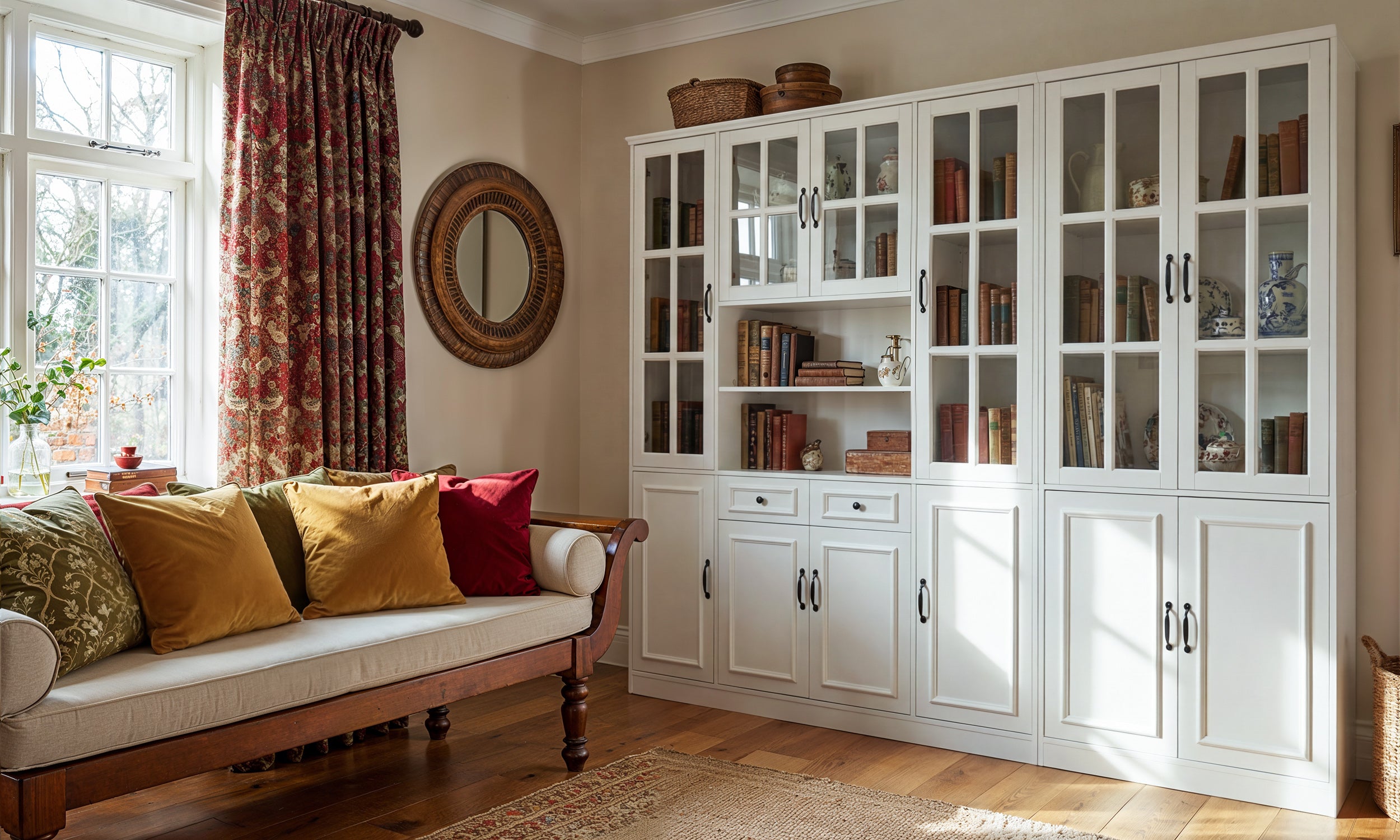
- Style glass doors too: with glass doors, the inside is part of the display. Group glassware by type, leave space between stacks and use built-in LED lighting to highlight it, as on the 55.1" black display sideboard with LED lighting.
- Anchor it: a styled top adds weight and invites little hands. The CPSC's Anchor It! campaign recommends anchoring furniture with drawers, doors and shelves; FUFU&GAGA includes a tip-over restraint kit with most of its sideboards.
Seasonal Sideboard Styling Ideas
Keep a year-round base (art, lamps and one or two anchor objects) and swap only the accents each season. That way a seasonal change takes minutes, not a full restyle.
| Season | Swap in |
|---|---|
| Spring | Fresh flowers or flowering branches in a tall vase, light linen runner |
| Summer | A bowl of fruit, glass and natural fibers, a drinks tray for entertaining |
| Fall | Small pumpkins or gourds, dried grasses, darker taper candles |
| Winter and holidays | Greenery or a garland, lanterns, serving pieces set out for gatherings |
Keep candles and greenery away from lamp bulbs and wall art, and never leave candles burning unattended.
Sideboard Styling Ideas by Room
Dining room
Prioritize function: a pair of buffet lamps, a mirror or large art, and a clear center for serving food. Store serving trays and table linens inside so you can set up quickly.
Living room
Treat the sideboard as a display surface: art, a sculptural lamp, books and a plant. If a TV sits on it, keep decor low so it does not block the screen. Our guide on using a sideboard in the living room covers TV, bar and behind-sofa layouts.
Entryway
Keep it simple: a mirror, a lamp for evening arrivals and a tray or bowl for keys. A sideboard with mirrored doors brightens a narrow hallway; in that case, choose art rather than another mirror above it.

Common Sideboard Styling Mistakes
- Hanging art too high, so it floats away from the sideboard.
- Choosing art that is much narrower than the sideboard, which makes the wall look empty.
- Lining up decor at the same height instead of varying heights.
- Covering every inch of the top so it cannot be used.
- Blocking drawers or doors with items placed on the floor in front.
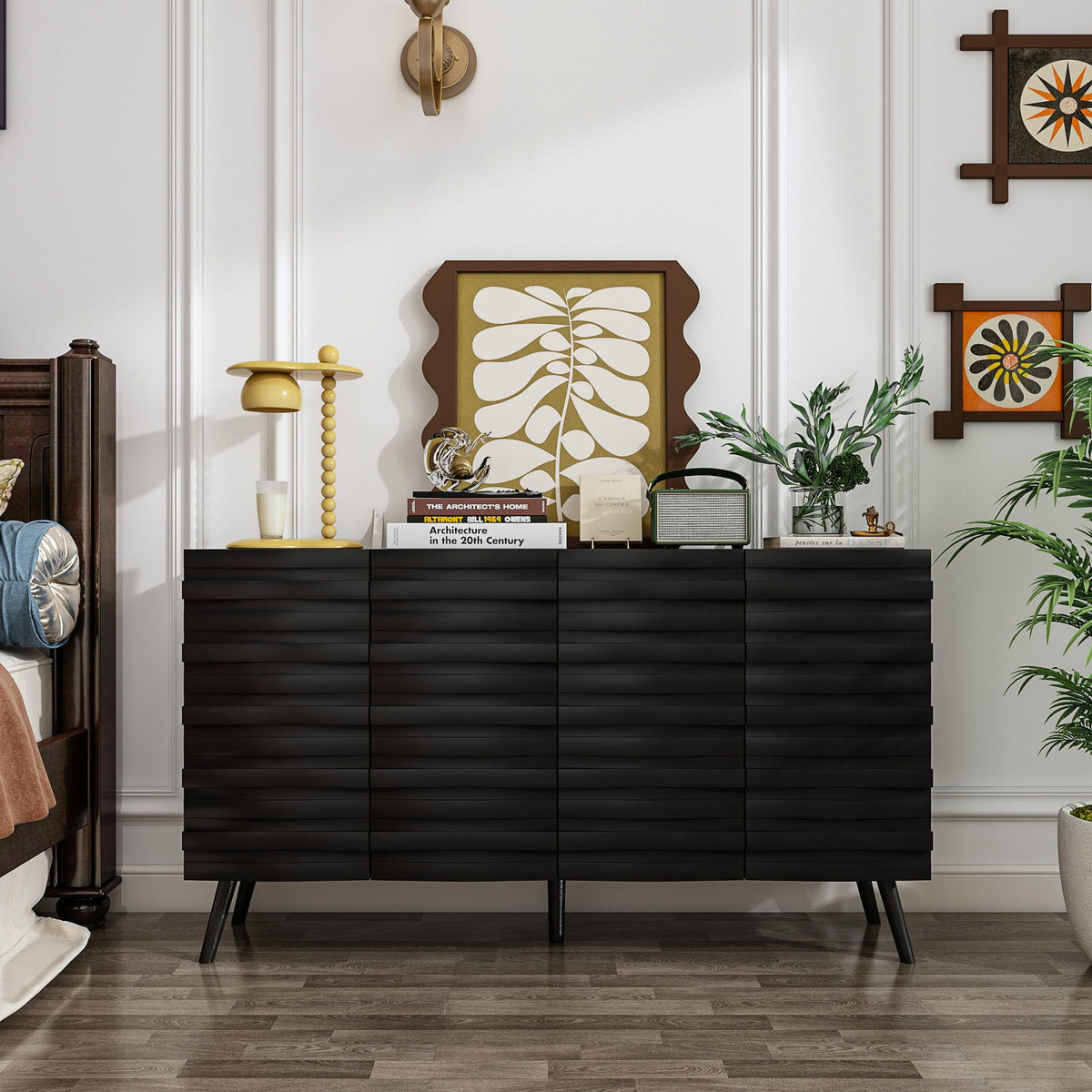
The furniture itself sets the tone: raised legs and fluted fronts, like the 63" sideboard with gold legs and fluted doors, need less decor than a plain box. Find a shape and finish that fits your room in our sideboard and buffet collection, then style it in layers.
FAQ
What looks good on a sideboard?
A mirror or art above, one or two buffet lamps or a tall vase, a low stack of books, a bowl or tray and something living, such as flowers or a plant. Keep a limited color palette and leave part of the top empty.
What is the 3-5-7 rule in decorating?
It is the habit of grouping decor in odd numbers, such as three, five or seven items, because odd groups look more balanced and natural than pairs. On a sideboard, groups of three in varied heights usually work best.
What can I put on top of a sideboard?
Lamps, art, vases, books, candles, a tray with glasses or a coffee setup, and serving dishes during meals. A TV can go on a low sideboard if the top weight capacity covers it.
Should buffet lamps on a sideboard match?
Not necessarily. A matching pair creates formal symmetry, which suits a dining room; a single lamp balanced by a tall vase or plant at the other end gives a more relaxed, asymmetrical look.

Leave a comment
This site is protected by hCaptcha and the hCaptcha Privacy Policy and Terms of Service apply.