
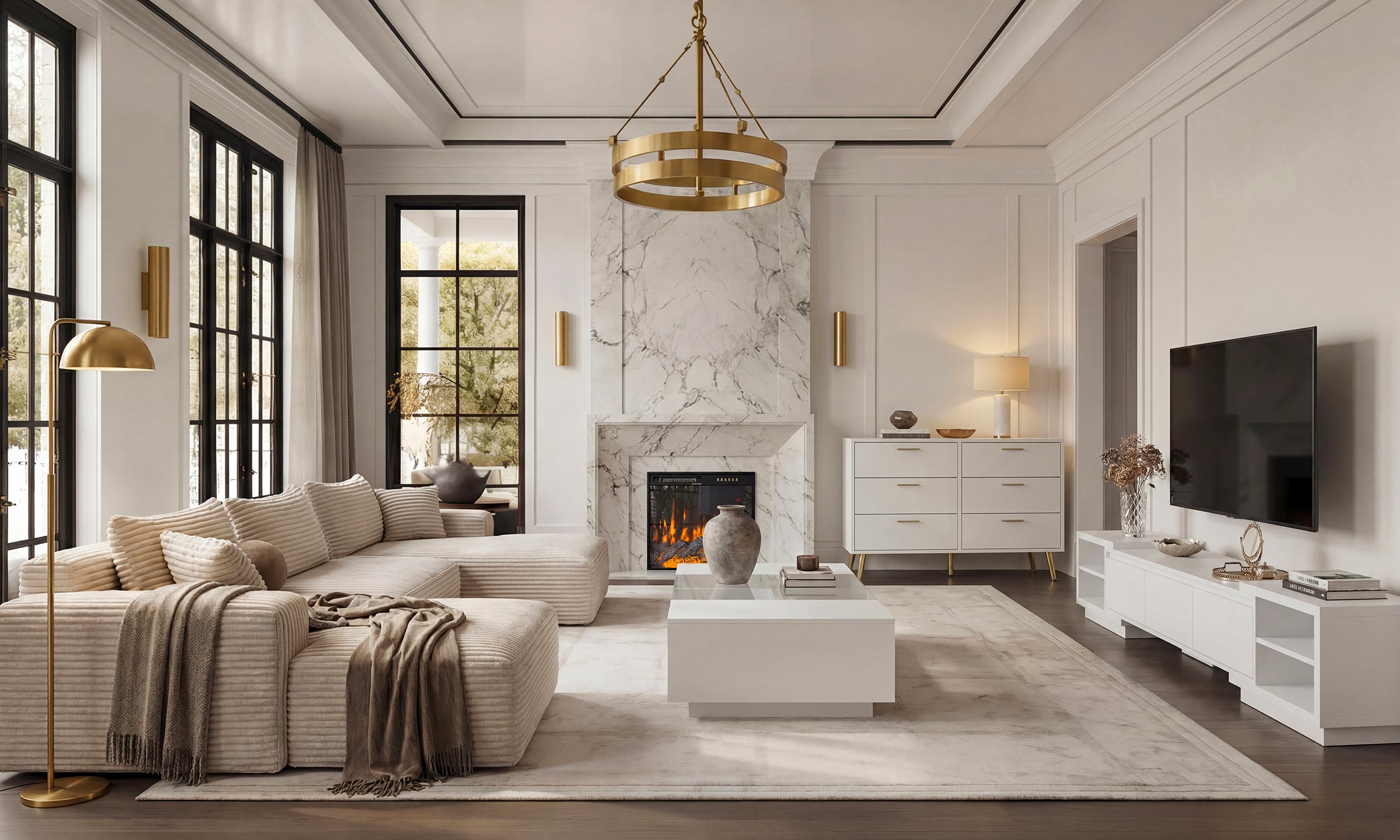




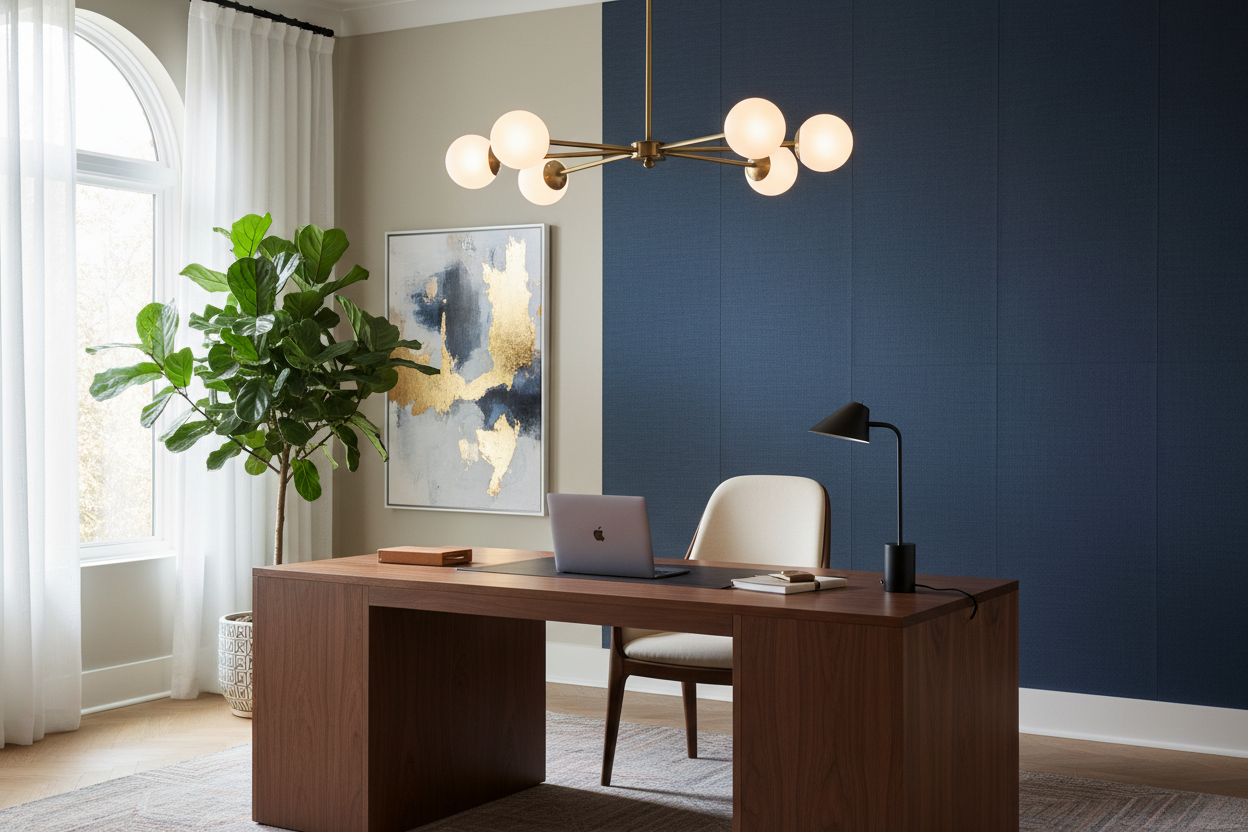
We have all experienced the fatigue of working under harsh, fluorescent strips or straining our eyes in a room lit only by the glow of a monitor. Lighting is often the afterthought in workspace design, yet it dictates your mood, energy levels, and the visual hierarchy of the room. A well-chosen home office pendant light does more than illuminate your paperwork; it acts as a piece of architectural jewelry that defines the zone as a place of serious, sophisticated work.
If you are relying solely on recessed cans or a utilitarian desk lamp, you are missing an opportunity to layer your lighting and elevate the room's aesthetic value. Let’s explore how to select a fixture that balances ergonomic function with high-end design.
Key Features to Look For
- Shade Opacity: Choose metal or opaque shades for direct task lighting (downlight) to reduce screen glare, or glass/linen for general ambient glow.
- Scale & Proportion: The fixture diameter should generally be about one-third the width of your desk to maintain visual balance.
- Color Temperature (Kelvin): Aim for 3000K to 4000K. This range mimics natural daylight, keeping you alert without the sterility of blue-tinted office lights.
- Dimmability: Essential for transitioning from high-focus mornings to moody, relaxed evenings.
Choosing the Right Material and Finish
In a home office, the material of your pendant dictates the quality of light. As a designer, I often steer clients away from clear glass globes if the fixture is positioned directly within their eyeline. While beautiful, they expose the bulb and can cause significant eye fatigue after a few hours.
Instead, consider spun metal or matte-finished ceramics. These materials direct light downward, creating a dedicated pool of illumination on your work surface while keeping the rest of the room in a softer shadow. This contrast helps focus the mind. For a softer, more residential feel—perfect for offices that double as guest rooms—linen or woven rattan adds texture and diffuses light evenly, softening the hard edges of monitors and filing cabinets.
Space Planning: Height and Placement
The most common error I see in DIY designs is hanging the pendant too high, leaving it floating aimlessly near the ceiling, or too low, where it obstructs the view.
The 30-Inch Rule
A good baseline for a pendant light for home office applications is to hang the bottom rim of the fixture approximately 30 to 36 inches above the desk surface. This places the light source close enough to be functional but high enough to clear your head when you stand up.
Visual Balance
If you have a large executive desk, a single small pendant will look lost. In these instances, I recommend a linear suspension light or a cluster of two smaller pendants. Conversely, if you are working with a compact writing desk, a single, oversized dome pendant can serve as a dramatic focal point that anchors the furniture in the room.
My Personal Take on Home Office Lighting
I want to share a specific lesson from a project I worked on in a converted loft last year. I fell in love with a stunning, high-gloss black metal pendant. It looked incredible in the showroom. However, once installed over the client's desk, we realized a fatal flaw: the high-gloss finish acted like a mirror.
Every time the client moved their hands or walked past, the reflection danced on the shade, creating a distracting peripheral flicker. Furthermore, the gloss finish was a magnet for dust and fingerprints, which are surprisingly visible on a low-hanging fixture. I had to swap it out for a matte powder-coated version within a week. Now, I always advise clients to check the finish texture. A matte or brushed finish is infinitely more forgiving and practical for a fixture you will be sitting beneath for eight hours a day.
Conclusion
Transforming your workspace isn't just about a better chair; it is about setting the atmosphere. A distinctive pendant light bridges the gap between a sterile cubicle and a curated study. By focusing on scale, material opacity, and proper hanging height, you can create a space that feels luxurious and supports your productivity.
Frequently Asked Questions
How bright should a home office pendant be?
For task lighting, aim for approximately 450 to 800 lumens per bulb. However, the key is layering; relying on a single pendant for all your light is a mistake. Combine it with recessed lighting or a floor lamp to balance the room.
Can I use a pendant light if my desk is against a wall?
Absolutely. Instead of centering the light in the middle of the room, swag the pendant so it hangs directly over the workspace. This creates a deliberate "zone" and frees up valuable desk real estate that a table lamp would occupy.
What is the best light bulb color for productivity?
Stick to a color temperature between 3000K (bright white) and 4000K (cool white). Anything lower (2700K) is too yellow and may induce drowsiness, while anything higher (5000K+) can feel harsh and clinical.

Leave a comment
This site is protected by hCaptcha and the hCaptcha Privacy Policy and Terms of Service apply.