

















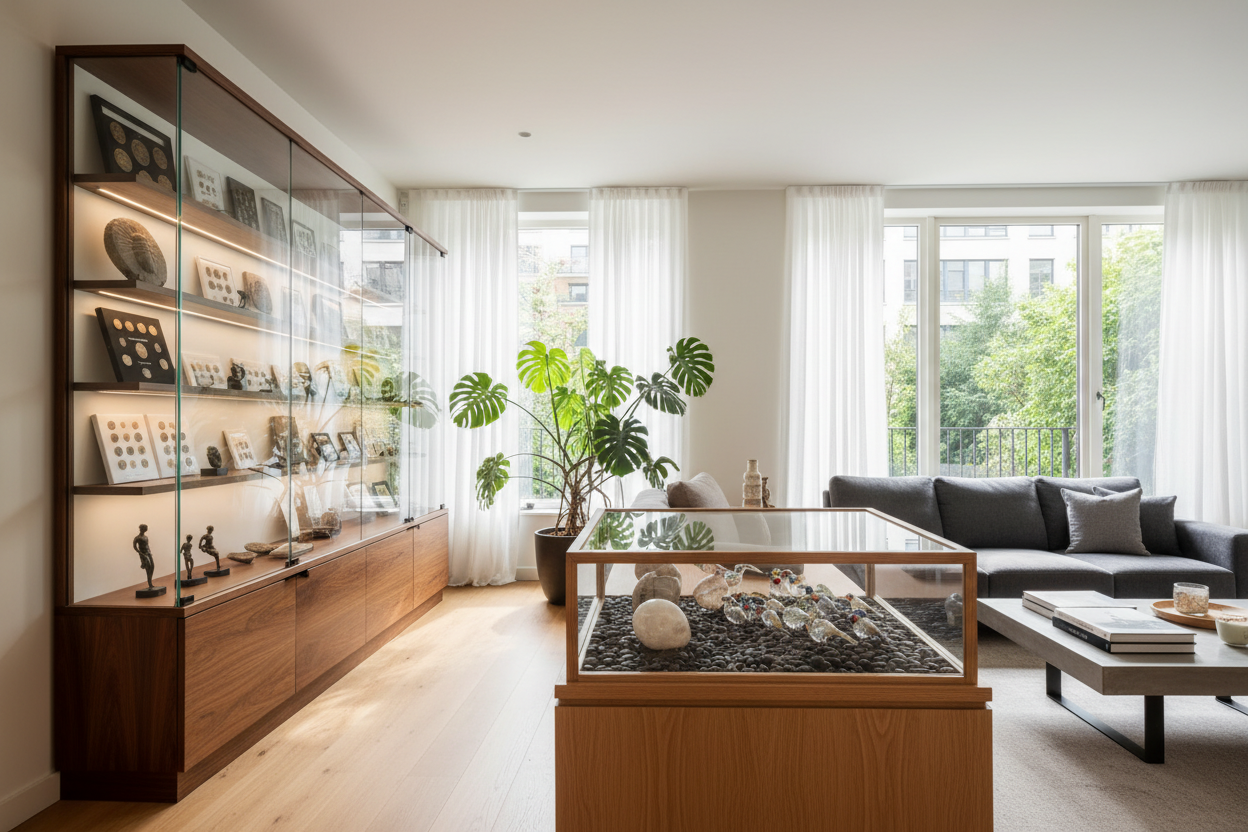
I have a bowl of tiny ceramic cats that I've been dragging from apartment to apartment for a decade. Every time I tried to display them, they ended up looking like I just forgot to clean up after a dollhouse party. It is that weird middle ground where your items are too cool to hide in a drawer, but too small to be noticed on a standard bookshelf. You need a display case small collectables actually look intentional in, otherwise, you are just hoarding in public.
Quick Takeaways
- Scale is everything—keep the enclosure size proportional to the items.
- Use clear acrylic risers to create depth and prevent 'flat' arrangements.
- Glass is superior to acrylic for long-term clarity and scratch resistance.
- Group by color or theme to avoid a cluttered 'junk drawer' vibe.
Why Tiny Treasures Are So Hard to Decorate With
The problem with miniatures—whether they are enamel pins, D&D figures, or rare rocks—is visual noise. When you scatter them across various surfaces in your home, they stop being a collection and start being clutter. I have spent years trying to make my 1-inch tall vintage dice look 'designed' on a mantle, and it never works. They just look like crumbs.
You eventually realize you need a dedicated small display box for collectibles to anchor them. By putting a physical border around your items, you are telling the eye, 'This is a single unit of art,' rather than 'Here is a pile of tiny stuff.' It creates a focal point that feels curated rather than chaotic.
The Scale Problem (And Why Big Cabinets Fail)
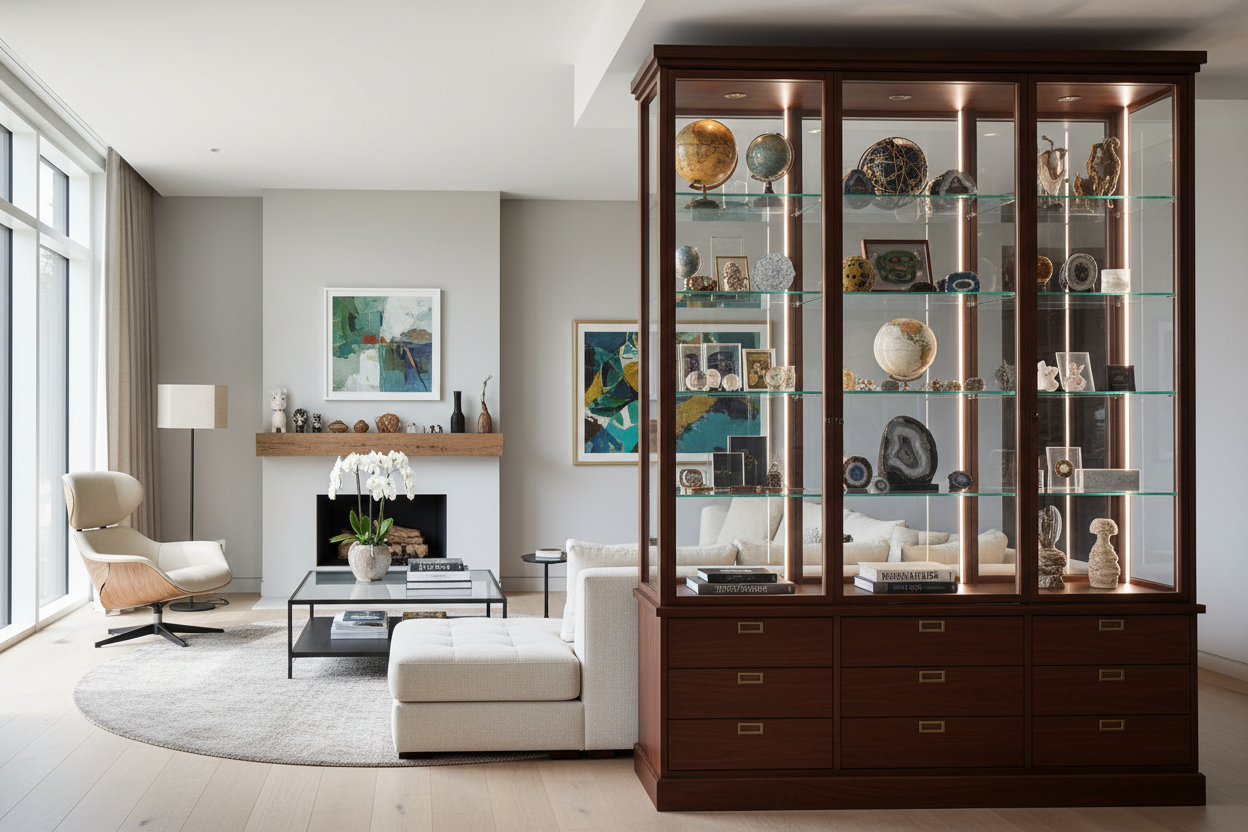
I see this mistake at estate sales all the time: someone buys a massive, floor-to-ceiling large display case for collectibles only to fill it with items the size of a postage stamp. It’s a disaster. Your prized possessions end up looking like specks of dust on a massive shelf. The negative space overwhelms the actual objects.
If you have a massive cabinet but tiny items, you have to work twice as hard to fill the gaps. Instead, I prefer tight, compact enclosures that hug the collection. When you focus on wooden display cabinet small scale styling, you realize that a smaller footprint actually gives your items more 'weight' in the room. It makes the viewer lean in to see the detail, which is exactly what you want.
Finding the Right Enclosure for Your Space
Material choice matters more than you think. I’ve gone through dozens of small glass cases for displaying collectables, and I will always choose glass over acrylic. Acrylic is light and cheap, sure, but it’s a magnet for static and scratches. One wipe with the wrong cloth and you’ve got permanent swirl marks obscuring your view.
Glass offers a museum-quality clarity that makes even a cheap plastic figure look like a high-end artifact. Also, if your collection includes anything light-sensitive (like old comic figurines or dyed minerals), look for UV-filtered glass. It costs more, but it beats watching your collection fade into a sad, beige version of its former self over three years.
My Go-To Trick for Arranging Mini Collections
Once you have your small display case for collectables, don't just shove everything in there. The 'staircase' method is my absolute favorite. I use clear acrylic risers to create different tiers. This ensures that the back row isn't hidden by the front row and adds a sense of architectural structure to the mess.
I also suggest grouping by color. If you have a bunch of random items, arranging them in a rainbow gradient makes them look like a cohesive set. This works especially well for a display box small enough for your nightstand, where you want something calming to look at before bed, not a jumble of mismatched shapes. Keep it dense, but give each piece about a half-inch of 'breathing room' so it doesn't feel like a claustrophobic mosh pit.
Keeping the Dust Out (Finally)
Let's be honest: the real reason we buy these cases isn't just for the looks. It’s because dusting 50 tiny items with a Q-tip is a special kind of hell. I once spent an entire Saturday morning cleaning a shelf of miniature lead soldiers, only for them to be covered in cat hair by Tuesday. Putting them behind a door or inside a box is the ultimate time-saver.
Enclosing your collection protects it from the elements and from 'helpful' guests who want to touch everything. It turns your hobby into a permanent fixture of your home decor rather than a chore that needs constant maintenance.
FAQ
Is glass or acrylic better for small cases?
Glass is better for clarity and durability. Acrylic is lighter and safer for wall-mounting, but it scratches easily and can yellow over time if exposed to direct sunlight.
How do I stop my miniatures from falling over?
A tiny dot of museum wax (also called earthquake putty) on the bottom of each piece will keep them perfectly upright without damaging the finish of the case or the item.
Should I use lighting inside a small case?
Only if it is LED. Halogen bulbs get way too hot for small, enclosed spaces and can actually melt plastic or damage delicate paint over time.

Leave a comment
This site is protected by hCaptcha and the hCaptcha Privacy Policy and Terms of Service apply.