

















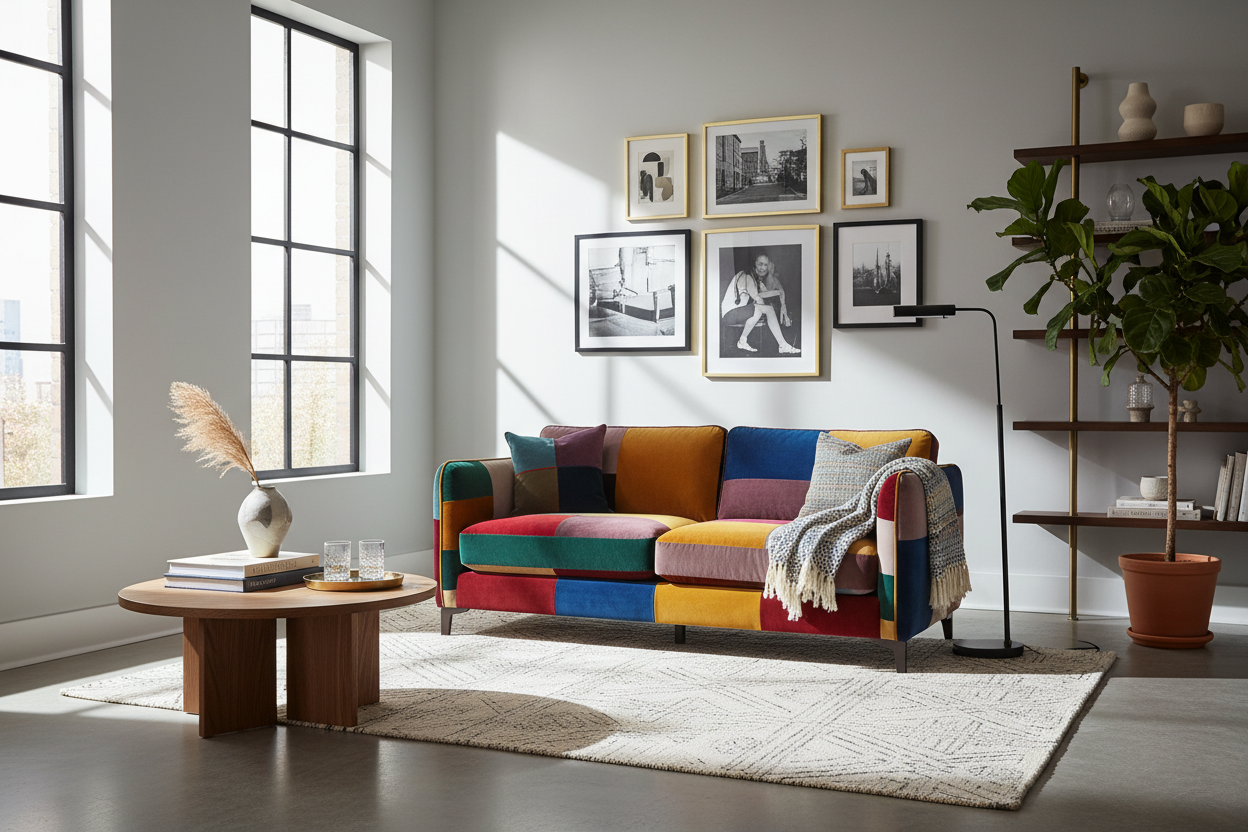
Many homeowners find themselves trapped in a sea of beige and grey, fearing that introducing bold hues will overwhelm their space or look chaotic. It is a common design paralysis: you want vibrancy, but you fear the commitment. The solution often lies in scale. A colorful loveseat offers the perfect compromise—it provides a potent punch of personality without dominating the room like a massive sectional would. It serves as a sophisticated anchor, allowing you to inject life into a living area, bedroom, or reading nook with intentionality.
Quick Decision Guide: Key Features to Look For
- Frame Construction: Always verify the frame is kiln-dried hardwood rather than particleboard to prevent warping over time.
- Fabric Durability: Look for a 'double rub' count of at least 15,000 for residential use; higher if you have pets.
- Suspension System: Eight-way hand-tied springs offer superior longevity compared to basic webbing.
- Color Fastness: If the piece sits near a window, ensure the textile is UV-resistant to prevent fading.
- Scale & Depth: Measure the seat depth (21-24 inches is standard comfort) to ensure it fits your lounging style.
Mastering Material and Texture
When selecting a statement piece, the tactile experience is just as vital as the visual impact. A colorful love seat in velvet, for instance, offers a shifting depth of color depending on how the light hits the nap, adding a layer of luxury that flat cotton simply cannot achieve. However, velvet requires maintenance.
For high-traffic areas, consider a tight-weave linen blend or a performance fabric. If you are leaning toward a multicolor loveseat—perhaps a floral or geometric weave—pay close attention to pattern matching at the seams. In high-end design, the flow of the pattern should continue uninterrupted from the seat cushion down the front skirt. Misaligned patterns are the fastest giveaway of lower-quality manufacturing.
Balancing Visual Weight and Silhouette
The silhouette of the furniture dictates how the color is perceived. A bright tangerine hue on a mid-century modern frame with tapered wooden legs feels airy and playful because the visual weight is light—you can see the floor beneath it. Conversely, a floor-length, skirted loveseat in the same color will feel much heavier and more traditional.
The Rule of Repetition
To stop your loveseat from looking like an accidental purchase, you must anchor it to the rest of the room. This doesn't mean matching the curtains to the sofa. Instead, pull a secondary tone from a multicolor loveseat pattern or the primary hue of a solid piece and repeat it in small doses: a singular vase on the mantle, a thread in the rug, or artwork on the opposing wall. This creates a 'triangulation' effect that guides the eye across the room.
Ergonomics and Long-Term Comfort
A beautiful piece that hurts your back will eventually become an expensive clothes rack. Since loveseats are intimate by design, cushion density is paramount. I always advise clients to look for high-resiliency foam cores wrapped in down or dacron. This combination maintains the crisp shape of the cushion (essential for bold colors, where sagging looks obvious) while providing that sinking-in comfort. Avoid 100% down cushions for a main sitting area, as they require constant fluffing to avoid looking sloppy.
Lessons from My Own Projects: The "Swatch vs. Reality" Trap
I once specified a stunning, deep emerald green loveseat for a client's sunroom. In the showroom, under controlled track lighting, it looked rich and moody—exactly the vibe we wanted. However, once we installed it in the client's home, which had massive south-facing windows, the intense natural light washed out the green, making it look almost teal, and worse, every single spec of dust and cat hair stood out like a beacon on the dark velvet.
The lesson I learned (and now pass to you) is two-fold: First, always view your fabric swatch in the actual room at three different times of day. Second, if you have pets, a solid dark colorful love seat is a maintenance nightmare. We eventually swapped it for a textured, multicolor weave that hid life's little messes much better. It wasn't just about the aesthetic; it was about the daily reality of living with the piece.
Conclusion
Introducing a colorful loveseat is one of the most effective ways to curate a space that feels personal and designed rather than catalog-bought. By focusing on quality construction, appropriate scale, and how the fabric interacts with your specific lighting, you can invest in a piece that offers both enduring style and genuine comfort.
Frequently Asked Questions
How do I style throw pillows on a multicolor loveseat?
If the loveseat has a busy pattern, stick to solid pillows in a texture that contrasts with the sofa fabric (e.g., leather pillows on a fabric sofa). Pull one distinct color from the loveseat's pattern for the pillows to tie the look together without clashing.
Is a loveseat enough seating for a small living room?
For a studio or small apartment, a loveseat can serve as the primary seating if paired with an ottoman or an accent chair. However, ensure the loveseat is at least 60 inches wide if two adults plan to sit together comfortably for extended periods.
How do I clean a velvet colorful loveseat?
Regular maintenance is key. Vacuum it weekly with a soft brush attachment to prevent dust from settling into the pile. For spills, blot (never rub) immediately with a clean, dry cloth. I recommend professional steam cleaning once a year to keep the color vibrant.

Leave a comment
This site is protected by hCaptcha and the hCaptcha Privacy Policy and Terms of Service apply.