

















One of the most persistent challenges in home office design is reconciling the need for extensive storage with the desire for a clean, minimalist aesthetic. When paperwork piles up and peripherals clutter the surface, productivity often stalls. This is where the cabinet desk combo serves as a sophisticated solution, bridging the gap between functional office utility and residential furniture design.
Rather than treating your workspace as an afterthought with mismatched pieces, a well-integrated combination unit anchors the room. It provides the visual weight of a library wall while maintaining the ergonomics required for an eight-hour workday. Below, I break down how to select and style these pieces to ensure they look like intentional architecture rather than bulky additions.
Key Features to Look For
- Integrated Cable Management: Look for units with pre-drilled grommets inside the cabinet backing, not just the desktop, to hide hard drives and routers completely.
- Joinery Quality: Dovetail joints in the drawer construction indicate longevity; avoid staples or simple glue construction which fail under heavy file weight.
- Return Depth: Ensure the desk portion offers at least 24 inches of depth for monitor placement, distinct from the cabinet depth.
- Modularity: A reversible configuration allows you to place the cabinet on the left or right, adapting to future room layouts.
- Material Consistency: The finish on the cabinet doors should match the grain direction of the desk surface for a high-end, cohesive look.
Choosing the Right Material and Finish
As a designer, I cannot stress enough that the material dictates the longevity of your investment. A desk and cabinet combo sees significant wear—coffee spills, mouse movement, and heavy equipment. While solid wood offers a heritage appeal and can be refinished, it is susceptible to humidity changes which can cause cabinet doors to stick.
For a balance of durability and luxury, consider high-grade architectural veneers over MDF or marine-grade plywood. These provide the rich texture of wood but remain stable. If you are leaning towards a modern aesthetic, high-pressure laminates (HPL) have come a long way; they are virtually scratch-proof and offer a matte finish that resists glare from overhead lighting.
Space Planning & Layout
The placement of your cabinet and desk combo defines the flow of the room. A common error is placing the cabinet side against a window, blocking natural light. Instead, position the desk perpendicular to the window, with the cabinet unit against the solid wall behind or beside you. This creates a \"command position\" that feels authoritative and open.
Visual Balance
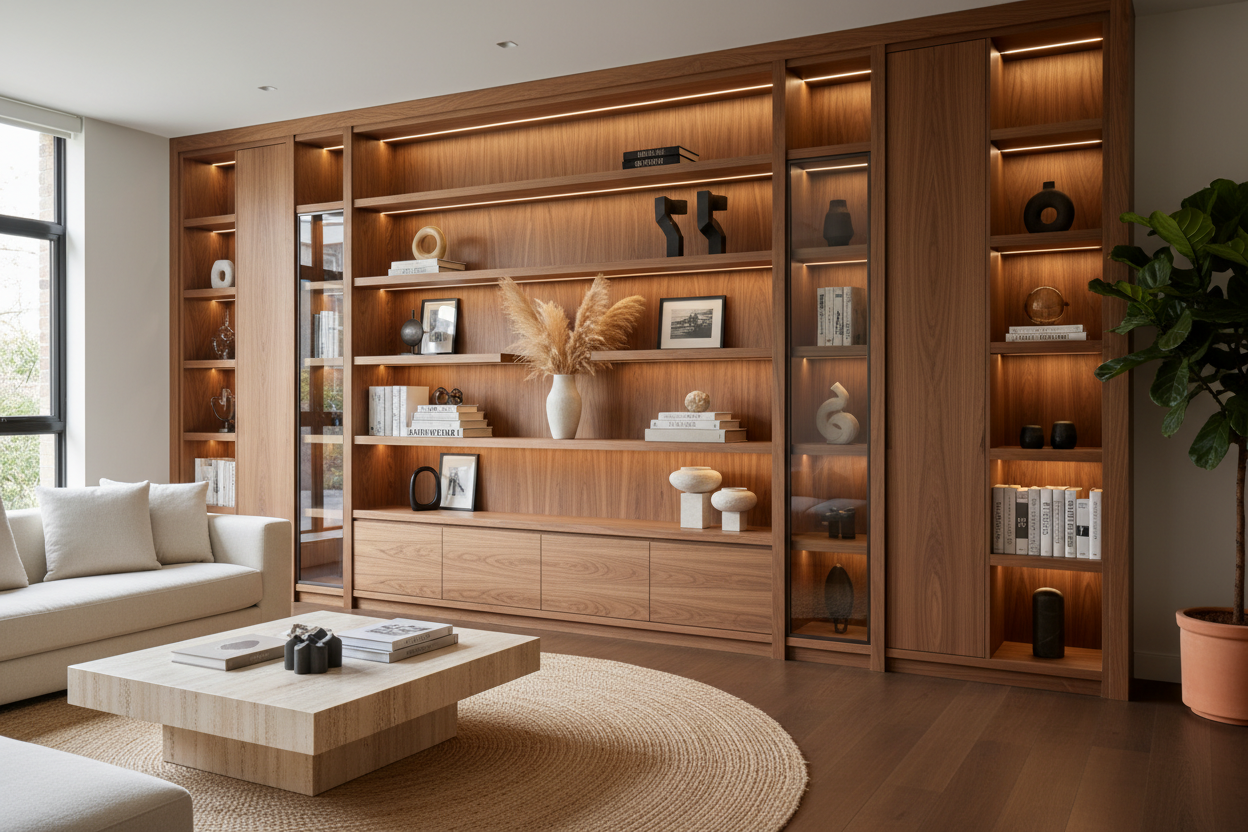
These units can feel heavy. To counteract this, look for designs that feature open shelving on the upper portion of the cabinet or floating legs on the desk side. This negative space allows light to pass through, preventing the furniture from dominating the room's footprint.
Lessons from My Own Projects
I want to share a specific realization from a project I managed last year for a client in a downtown loft. We ordered a stunning, high-gloss lacquer cabinet desk combo that looked incredible in the catalog. However, once installed, we realized a fatal flaw in the design that you rarely think about until you sit down: The Knee-Knock Factor.
The unit had a \"modesty panel\" connecting the desk to the cabinet storage that was installed too far forward. Every time the client swivelled in their chair, their knees hit the connecting hardware. We ultimately had to modify the piece on-site, moving the panel back four inches.
Furthermore, that high-gloss finish? It became a nightmare for fingerprints near the cabinet handles. If you are buying for a high-traffic home office, I always advise clients to choose a satin or matte finish, or textured wood grain. It hides the reality of daily use—dust, prints, and minor scuffs—far better than a polished surface ever will.
Conclusion
Investing in a high-quality cabinet desk combo is about more than just buying furniture; it is about curating an environment that fosters focus. By prioritizing robust materials, checking for ergonomic clearance, and selecting a finish that suits your lifestyle, you create a workspace that feels like a permanent, custom aspect of your home.
Frequently Asked Questions
How do I prevent a large cabinet desk combo from overwhelming a small room?
Focus on color and height. Choose a unit that matches your wall color to create a built-in effect, or select a \"low-profile\" combo where the cabinets are credenza-height rather than floor-to-ceiling hutches.
Can I separate a desk and cabinet combo later?
It depends on the construction. Modular units are designed to be separated, but many \"L-shaped\" combos share a structural leg or support beam. Always check the assembly manual or ask the manufacturer if the pieces are freestanding.
What is the ideal desk height for these combos?
The standard ergonomic height is between 29 and 30 inches. However, ensure the cabinet drawers don't reduce your leg clearance to less than 25 inches from the floor to the underside of the desk.

Leave a comment
This site is protected by hCaptcha and the hCaptcha Privacy Policy and Terms of Service apply.