

















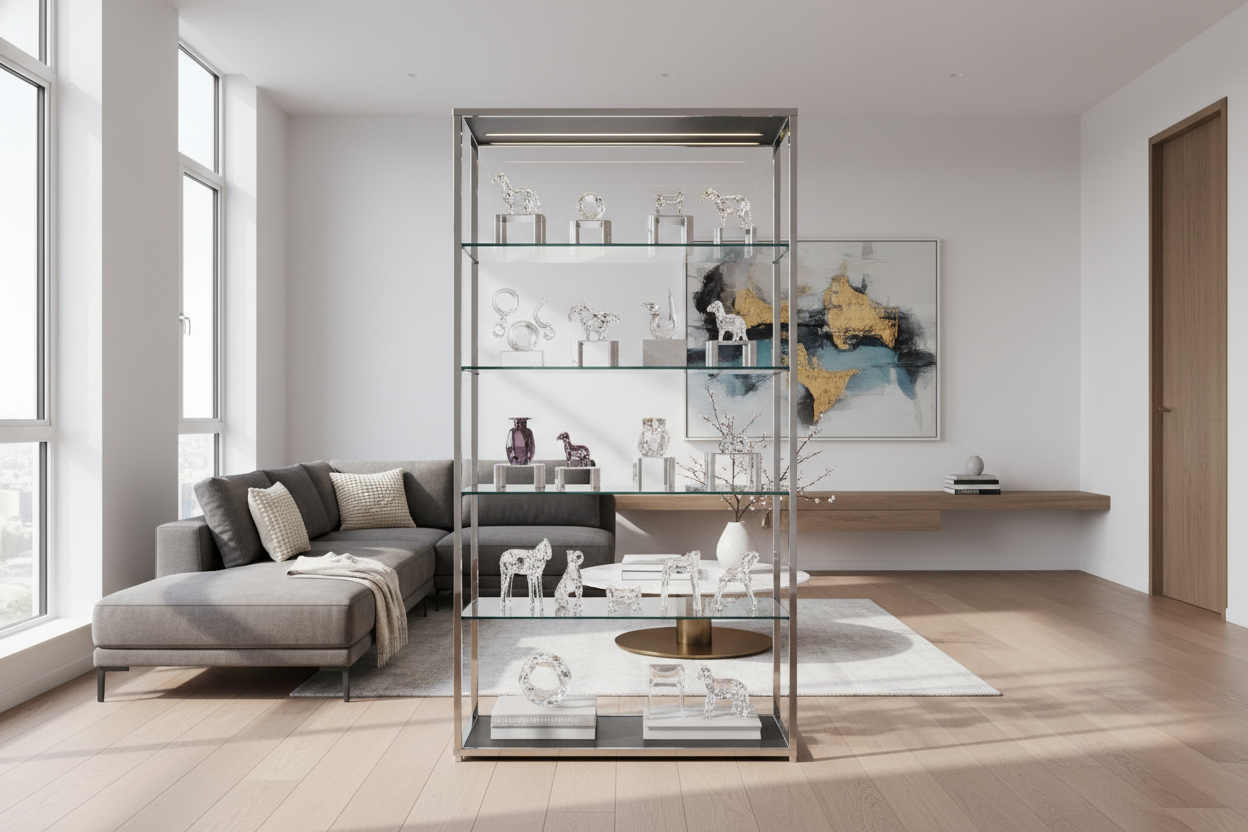
I remember the day my aunt handed over three boxes of Swarovski glass birds and Waterford bowls. My first thought wasn't gratitude; it was pure panic. I live in a condo with concrete floors and mid-century modern furniture, and I was terrified that putting these out would instantly turn my living room into a 1994 Hallmark gift shop. Finding the right crystal figurine display case felt like a high-stakes mission to save my aesthetic from the 'grandma' trap.
- Light is king: Without LEDs, crystal looks like dusty plastic.
- Negative space: If the figurines are touching, you've failed. Give them two inches of air.
- Frame choice: White or frameless glass beats heavy oak every single time.
- Location: Put them where the natural sun can actually hit the facets.
The 'Grandma's Parlor' Problem (And Why We Panic)
We've all seen the traditional setup: a massive, dark oak monolith with mirrored backs and enough lace doilies to cover a small village. It’s heavy, it’s imposing, and it makes even the most expensive glass look dated. Most of us associate crystal with 'look but don't touch' rooms that smell like potpourri. It’s no wonder we hesitate to bring these pieces out of the cardboard boxes in the attic.
But here’s the thing: crystal is basically frozen light. It’s sculptural and minimalist when you strip away the clutter. The trick is to stop treating it like a museum exhibit and start treating it like modern art. You don't need a heavy cabinet that looks like it belongs in a probate court; you need something that lets the glass breathe and catch the light.
Why Lighting is Literally Everything for Glass
Crystal dies in the dark. If you put a glass swan on a wooden shelf in a dim corner, it loses all its magic and just looks like a grey lump. You need crisp, cool-toned lighting to make those facets actually throw rainbows across the room. I’m talking 4000K to 5000K LEDs—anything warmer makes the glass look yellow and aged.
I finally stopped fighting with puck lights that require batteries and upgraded to a 4-layer glass door display case with LED light. It was a total shift. The integrated lighting hits the pieces from the top and sides, which is essential because crystal needs light passing through it, not just hitting the front. When the sun goes down and those LEDs kick in, the collection looks expensive, not inherited.
The Two-Inch Spacing Rule You Need to Memorize
The biggest mistake I see? The 'huddle.' People try to cram every single piece they own onto one shelf. When glass is crowded, the reflections bleed into each other and it just looks like a messy jumble. If you’re looking for a display case for crystal figurine, you need to account for the 'two-inch rule.'
Every piece needs at least two inches of empty space around it. This negative space is what tells the eye that the object is important. If you have too many pieces to follow this rule, rotate them. Put half in storage and swap them out every few months. It keeps the room feeling fresh and prevents your display from looking like a crowded thrift store shelf.
Ditching the Dark Wood for Something Fresh
The frame of your cabinet is the loudest thing in the room. If you go with heavy mahogany or cherry wood, you’re fighting an uphill battle against the 90s. I’m a huge advocate for a white display case with glass doors because the white frame disappears against most walls, making the crystal look like it's floating. It’s airy, it’s bright, and it doesn't weigh down the room.
If you’re working with a small apartment like mine, don't try to force a rectangular cabinet into a high-traffic walkway. A corner display case is a genius move for fragile collections. It uses that dead space in the corner of the room that usually just gathers dust bunnies, and it keeps your breakables safely tucked away from rogue vacuum cleaners or wagging dog tails.
Yes, You Can Put Them in the Living Room
Stop hiding your 'good' things for a special occasion that never comes. I used to keep my glass in a hallway where nobody ever went, but I finally made the case for living room display furniture and moved the whole collection next to the window. Now, every afternoon around 4 PM, the sun hits the cabinet and the whole room turns into a disco ball of light.
A well-styled case adds personality to your main living space. It shows that you actually live there and have a history. Just keep the styling minimal—no faux silk flowers, no velvet liners, and definitely no doilies. Just the glass, the light, and plenty of room to breathe.
How do I keep the glass from looking dusty?
Microfiber is your only friend here. Don't use heavy sprays or paper towels, which leave lint. A quick wipe once a month with a dry microfiber cloth keeps the sparkle alive without the streaks.
Should I use mirrored backs in my display case?
Mirrors can be tricky. In a modern room, a mirrored back can sometimes feel a bit '80s glitz.' If the cabinet has a very thin, minimal frame, mirrors work great to double the light. If the frame is thick wood, skip the mirror—it just adds to the bulk.
What's the best height for a display case?
Eye level is key for the 'hero' pieces. Look for a case that is at least 60 inches tall so you aren't constantly leaning over to see the detail in the smaller figurines. Anything too low feels like a side table, not a showcase.

Leave a comment
This site is protected by hCaptcha and the hCaptcha Privacy Policy and Terms of Service apply.