

















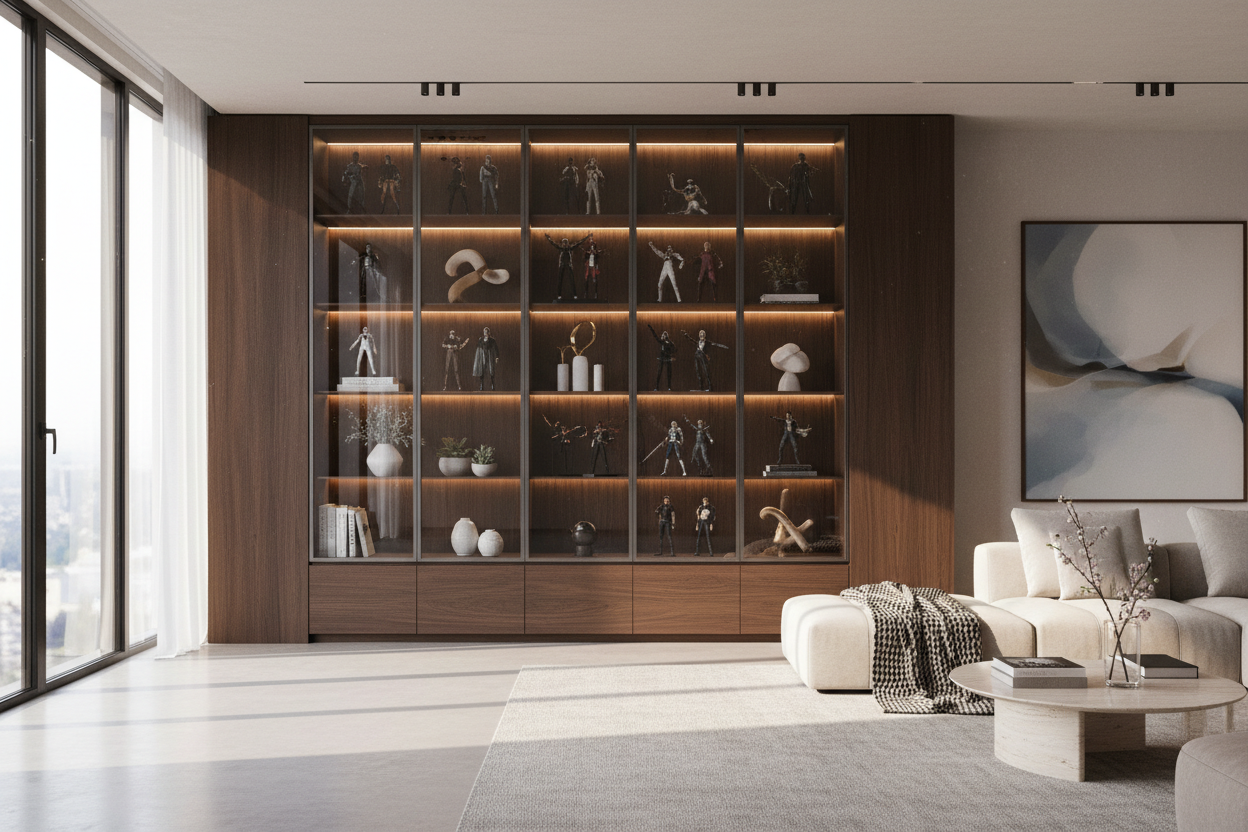
I spent three years telling myself that my Billy bookshelves were 'fine.' I had about $3,000 worth of vinyl figures and limited edition statues crammed between old college textbooks and half-dead succulents. It didn't look like a collection; it looked like a yard sale. If you're tired of your living room feeling like a teenager's bedroom, it's time to invest in a real collectible figure display case.
Quick Takeaways
- Dust is the enemy of value; sealed cases save hours of tedious cleaning.
- Integrated lighting makes the difference between a 'toy' and a 'sculpture.'
- Negative space is your best friend—don't crowd the shelves.
- Wall-mounted cases save floor space in tiny apartments while creating a focal point.
The Bookshelf Phase (And Why It's Ruining Your Living Room)
Bookshelves are the gateway drug of collecting. They're cheap, they're available, and everyone has a few lying around. But they are fundamentally wrong for figures. Most standard bookshelves are 11 to 14 inches deep, which means your figures end up in 'ranks' like a military parade. You can't see the ones in the back, and the ones in the front are magnets for cat hair and dust.
I used to spend every Saturday morning with a tiny makeup brush, dusting the micro-grooves on a 1/6 scale figure. It’s a soul-crushing way to spend a weekend. Beyond the maintenance, open shelving makes a room feel heavy and cluttered. It creates a 'wall of stuff' that eats the light and makes your living room feel five feet smaller. When your hobby looks like a storage problem, it's time to change the hardware.
What Upgrading to a Real Display Case for Collectible Figures Does
When I finally bought a real display case for collectible figures, the atmosphere of my apartment shifted instantly. Interior designers call this the 'gallery effect.' When you put a physical border—especially a glass one—around an object, you are telling the room that this item has intrinsic value. It is the same psychological trick museums use to make a pottery shard look like a treasure.
I spent weeks debating glass or acrylic materials for my first real cabinet. I eventually went with tempered glass because it feels more like 'furniture' and doesn't develop those tiny micro-scratches from cleaning. A dedicated case also allows you to control the environment. By keeping the air stagnant and the seal tight, you prevent the plastic degradation that happens when figures are exposed to constant airflow and household pollutants.
Floor Models vs. A Figure Wall Display Case
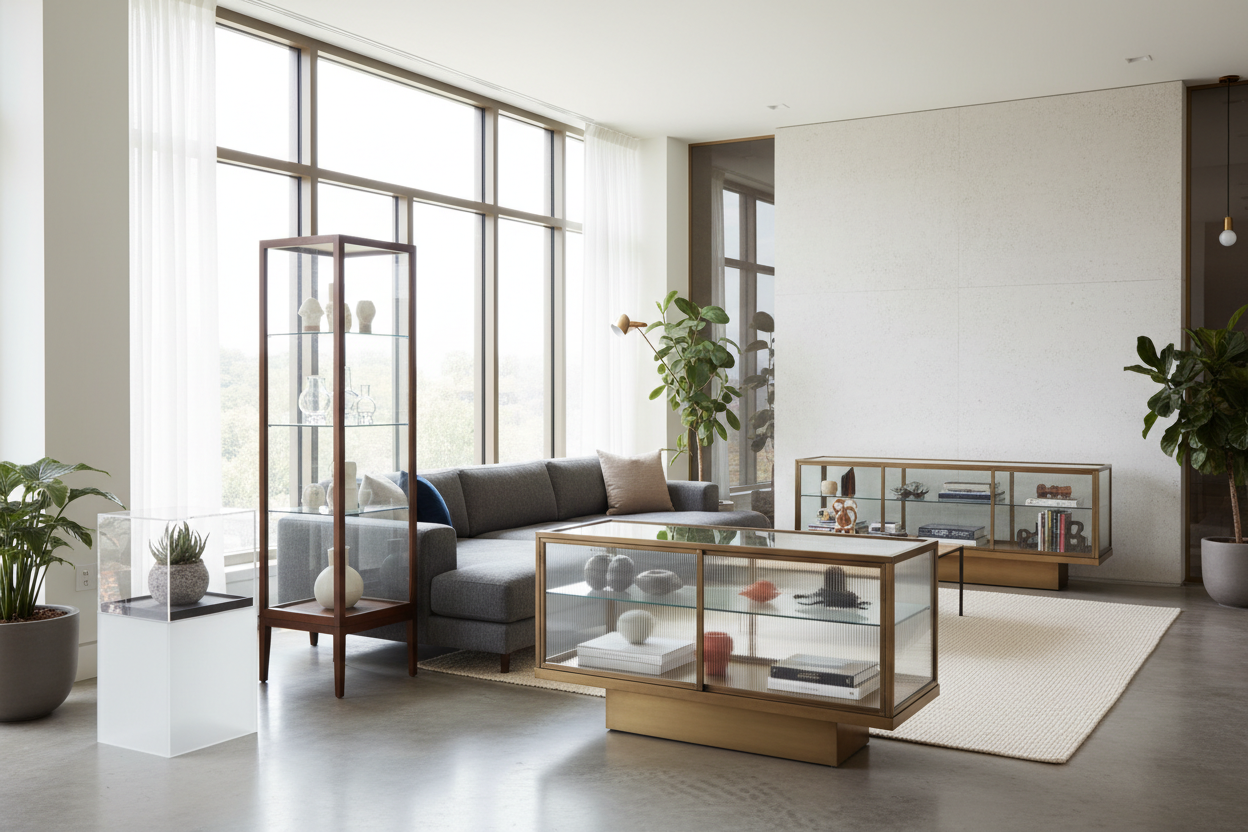
If you have the floor real estate, go big. I’m a huge fan of freestanding cases with built-in LED lighting because they act as a secondary light source for the room. In the evening, I turn off my harsh overhead lights and let the display case provide a warm, ambient glow. It makes the whole space feel intentional rather than accidental.
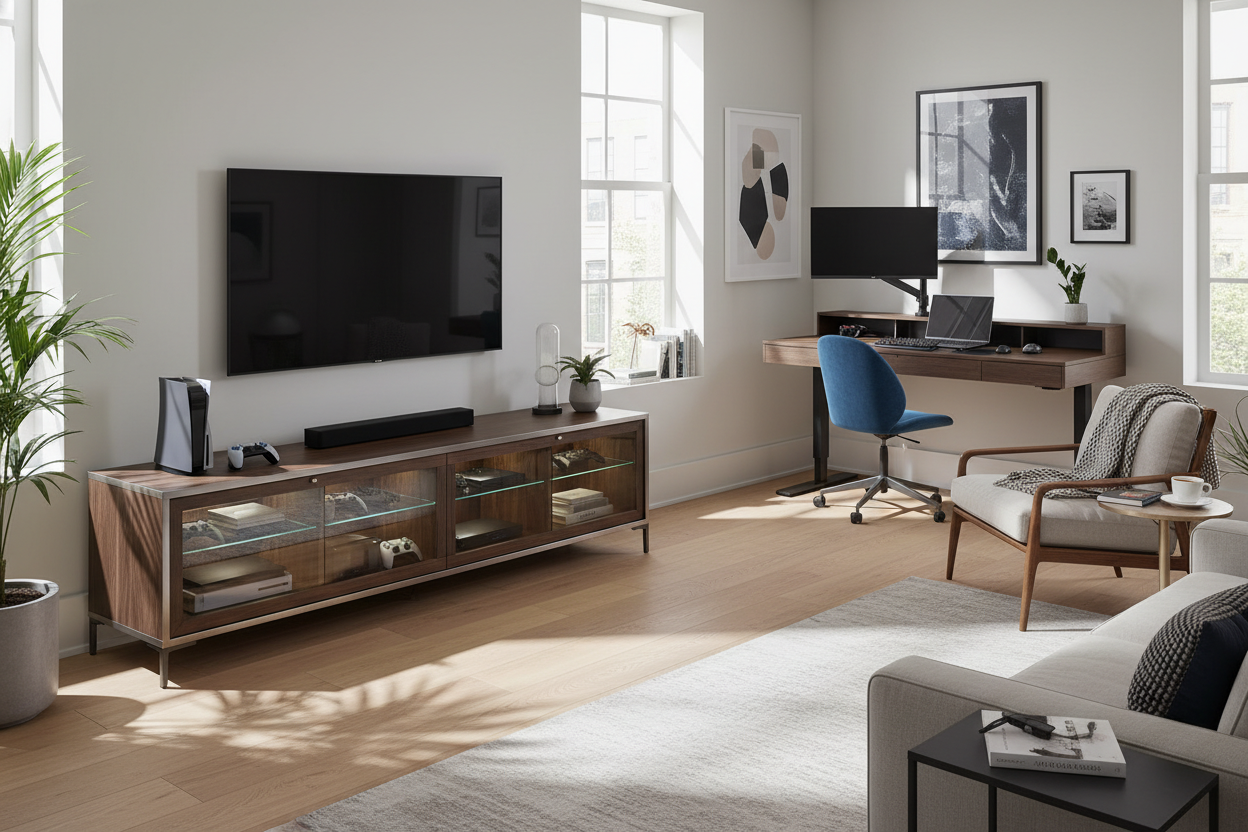
However, if you're in a 600-square-foot studio, a figure wall display case is the smarter move. It keeps your floor plan open, which is essential for maintaining a 'grown-up' aesthetic. You want people to look at the art, not trip over the furniture. Just be smart about the install. I’ve seen too many people try to use adhesive strips on a five-pound case; you really need to look into hanging a wall display case safely using actual drywall anchors or hitting a stud. There is nothing more heartbreaking than the sound of glass hitting hardwood at 3 AM.
Squeezing Your Setup Into Awkward Room Layouts
My current apartment has this weird 38-inch niche next to the radiator that was basically a graveyard for Amazon boxes and a dusty vacuum cleaner. By utilizing an empty corner or a dead-end hallway, you turn a forgotten zone into a highlight. You don't need a massive 'hobby room' to show off your stuff.
A slim, vertical tower fits into those awkward gaps between a window and a door frame perfectly. The key is to match the frame of the case to your existing trim. If your baseboards are white, go with a white-framed case. It makes the unit look built-in rather than like a piece of temporary furniture you just dragged in from a big-box store.
The Golden Rule of Displaying: Stop Crowding
The biggest mistake I see—and one I definitely made—is the 'clown car' effect. If your figures are touching shoulders, none of them are special. They just look like a pile of plastic. To make your collection look like decor, you must embrace negative space. Leave at least two to three inches of breathing room between pieces.
This 'museum style' of curation forces you to be honest about what you actually like. I ended up selling about 20% of my lower-tier figures just to make the 'grails' look better in the new case. It felt like my collection finally grew up. When you give a piece room to breathe, you're allowing the viewer to appreciate the sculpt and the silhouette rather than just the sheer volume of your spending habits.
FAQ
Should I choose glass or acrylic?
Glass is harder to scratch and feels more premium, but it's heavy and can be dangerous if you have kids or live in an earthquake zone. Acrylic is much lighter and clearer, but you have to be incredibly careful with what cleaning chemicals you use, or it will cloud up.
Is LED lighting actually necessary?
Yes. Dark shelves make collections look like clutter from across the room. Lighting adds depth and highlights the details you actually paid for. Always go for 'warm white' (around 3000K) to keep it from looking like a hospital lab.
How do I stop my display from looking like a toy store?
Stick to a theme or a color palette per shelf. Don't mix 12-inch realistic statues with 4-inch 'chibi' style figures on the same level. Visual consistency is the secret to a 'grown-up' look.

Leave a comment
This site is protected by hCaptcha and the hCaptcha Privacy Policy and Terms of Service apply.