


















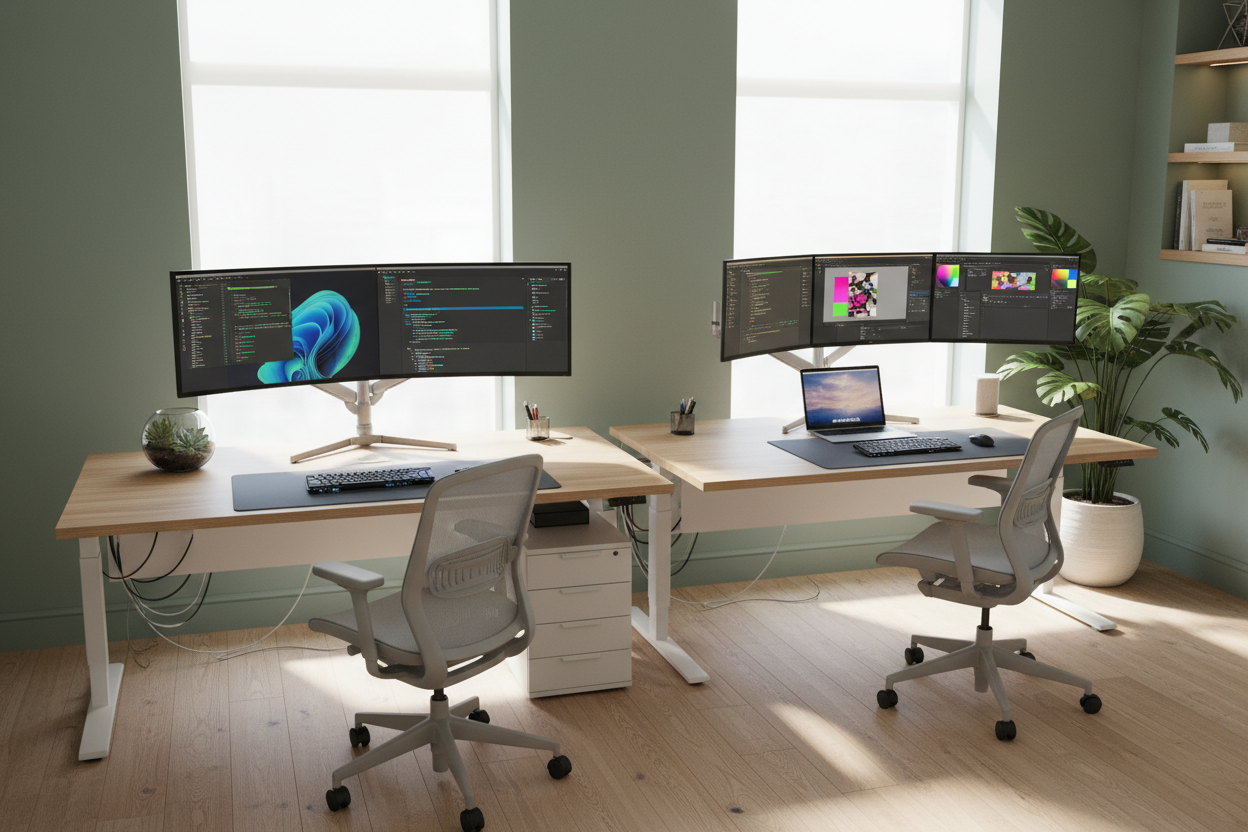
We have all experienced the "afternoon slump," but few realize how much of that fatigue is dictated by poor illumination. As a designer, I frequently walk into stunningly decorated workspaces that are functionally disastrous because the lighting was an afterthought. Relying solely on a harsh overhead fixture or a singular, weak desk lamp creates contrast issues that strain the eyes and kill productivity. Properly curated lights for offices are not just about visibility; they are about orchestrating an environment that sustains your energy levels throughout the day.
Quick Decision Guide: Key Features to Look For
If you are rushing to furnish your workspace, prioritize these four elements to ensure visual comfort and functionality:
- Color Temperature (Kelvins): Aim for 3000K to 4000K. This range mimics bright morning daylight, promoting alertness without the sterility of blue-tinged clinical lighting.
- Adjustability & Articulation: Look for fixtures with articulating arms or pivoting heads. You must be able to direct light away from screens to prevent glare.
- Dimmability: Your lighting needs change from morning focus sessions to late-night reviews. Dimmers are non-negotiable for controlling mood.
- CRI (Color Rendering Index): For creative work, choose a CRI of 90+. This ensures the colors you see on your desk match reality.
Mastering the Three Layers of Light
In interior design, we never rely on a single source. To create a professional grade environment, you must layer your illumination. This adds depth to the room and reduces eye fatigue by balancing light intensity.
1. Ambient Lighting: The Foundation
This is your general illumination. In a corporate setting, this is usually fluorescent troffers, but for a residential setting, we want something softer. A high-quality led light for home office setups should be diffused. I often recommend flush mounts with linen shades or indirect lighting that bounces off the ceiling. The goal is to establish a baseline brightness that prevents the "cave effect" where your screen is the brightest thing in the room.
2. Task Lighting: Precision and Focus
This is where functionality meets style. Workspace lights specifically dedicated to your desk surface are critical. When selecting a task lamp, consider the silhouette. An architectural task lamp with a heavy, solid base ensures stability, while a clamp-on model saves precious desk real estate. Material choice matters here; matte finishes (like brushed brass or matte black) are superior to polished chrome, which can cause distracting reflections from your monitor.
3. Accent Lighting: Visual Relief
Often ignored in workroom lighting, accent lights are what make a space feel inhabited rather than sterile. This could be a picture light over a diploma, LED strips inside a bookshelf, or a small table lamp on a credenza. These pockets of light provide a place for your eyes to rest when looking away from the screen, reducing strain.
Ergonomics and Placement Strategies
The position of your fixture is just as important as the fixture itself. A common error is placing the light source directly in front of the user, causing light to bounce off the desk and into the eyes. For right-handed writers, place the task light on the left side to eliminate shadows across the page; reverse this for left-handed users.
Furthermore, consider the "cutoff angle" of the shade. You should never be able to see the bare bulb from your seated position. A deep conical or hemispherical shade will direct the beam downward, protecting your vision from direct glare.
My Personal Take on Lights for Offices
I learned a hard lesson about office lighting early in my career during a project for a graphic designer. I specified a stunning, vintage-inspired brass lamp that looked incredible in the portfolio photos. It was a sculptural masterpiece.
However, two weeks later, the client called me. The lamp had a metal shade that wasn't vented. After an hour of use, the casing became so hot it was impossible to touch to adjust the angle. Furthermore, the switch was located on the cord, which fell behind the heavy oak desk, meaning she had to crawl under the table to turn it on. She ended up never using it.
Since then, my rule is strict: I test the heat displacement of every led light home office fixture I recommend, and I insist on touch-capacitive bases or easily accessible rotary switches. If you have to fight your furniture to use it, it’s bad design, no matter how beautiful it looks.
Conclusion
Treating your lighting as an essential tool rather than a decorative afterthought will fundamentally change how you work. By layering your light sources and prioritizing ergonomic features like color temperature and adjustability, you create a workspace that supports your focus rather than fighting against it. Invest in light that works as hard as you do.
Frequently Asked Questions
How many lumens do I need for a home office?
For general ambient lighting, aim for roughly 20-30 lumens per square foot. However, your task lighting (the light directly on your desk) should be brighter, roughly 450 to 800 lumens, to ensure clarity when reading or writing.
What is the best position for video call lighting?
Avoid placing a light directly behind you (which creates a silhouette) or directly overhead (which creates dark shadows under the eyes). The best setup is two soft light sources placed behind your monitor at 45-degree angles to your face.
Can I use warm white bulbs in an office?
You can, but be careful. Very warm light (2700K) is relaxing and can induce sleepiness. It is better suited for living rooms. For workspaces, a neutral white (3500K-4000K) strikes the best balance between comfort and alertness.

Leave a comment
This site is protected by hCaptcha and the hCaptcha Privacy Policy and Terms of Service apply.