

















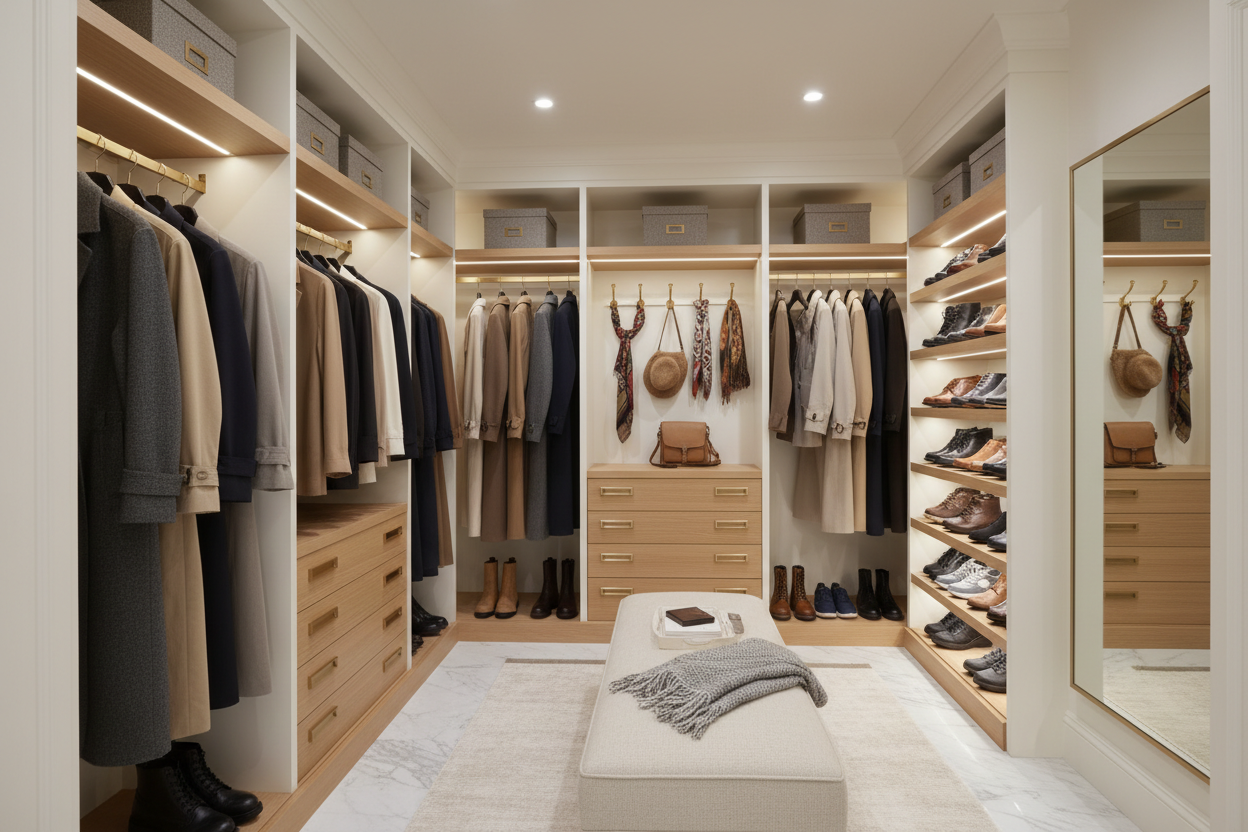
The entryway is the handshake of the home—it sets the expectation for the rest of the interior. Yet, in many residences, this critical transition zone becomes a chaotic landing pad for discarded boots and piled heavy jackets. The solution lies not just in storage, but in architectural intent. A well-executed walk in coat closet transforms the act of coming home from a chore into a seamless ritual, hiding the visual noise of daily life while preserving the elegance of your foyer.
Key Design Considerations
- Circulation Space: Ensure a minimum walkway width of 36 inches to allow movement while carrying bulky items.
- Ventilation: Essential for drying damp outerwear and preventing musty odors in enclosed spaces.
- Lighting CRI: Use high Color Rendering Index (90+) lighting to distinguish between navy and black fabrics.
- Flooring Durability: Opt for stone, porcelain, or sealed hardwood to withstand high traffic and moisture.
Mastering the Layout and Flow
When planning this space, ergonomics must take precedence over pure aesthetics. Unlike a bedroom wardrobe, a coat closet is a high-traffic utility zone. The layout needs to accommodate the "drop zone" psychology. If the hanging rod is too difficult to access, coats will end up on the nearest chair.
Divide the vertical space intelligently. You need at least 65 inches of vertical clearance for long wool trenches, but jackets and blazers only require about 40 inches. Utilizing double hanging rods on one side maximizes capacity for shorter items, while leaving a section clear for full-length garments maintains visual balance.
Materiality: Balancing Luxury with Utility
The materials you select must withstand the elements. This is where many homeowners falter, choosing delicate finishes for a wet zone. For the cabinetry, I recommend high-pressure laminates or marine-grade plywood veneers over standard particle board, which can swell if exposed to dripping umbrellas or snow-covered boots.
For walk in coat closet ideas regarding flooring, continue the foyer material into the closet for a sense of continuity. However, if your foyer is hardwood, consider a transition to a honed limestone or slate within the closet. These materials are forgiving of grit and water, preventing the scratches that inevitably plague wood floors in entry zones.
Lighting and Atmospherics
A coat closet is often windowless, making lighting design paramount. Relying on a single overhead bulb creates harsh shadows that make it difficult to find items. Instead, layer your lighting. Integrated LED joinery lighting within the shelves provides a boutique showroom feel and illuminates dark corners.
Functionally, a motion sensor switch is non-negotiable. When you walk in with hands full of groceries or luggage, fumbling for a light switch is a friction point you want to eliminate.
Lessons from My Own Projects
I learned a hard lesson early in my career regarding "wet storage." I designed a stunning, walnut-lined walk-in coat closet for a client in Chicago. It looked immaculate on install day. Three months later, I visited, and the beautiful wood veneer near the floor was warping and showing water spots.
We hadn't accounted for the runoff from snowy winter boots sitting directly against the millwork. Since then, I always design a "wet tray" detail—a recessed metal or stone lip at the bottom of the shoe shelving that catches water and keeps it away from the wood joinery. It’s an unpolished, purely functional detail that saves the furniture in the long run. Also, I now insist on a dedicated hook or rod specifically for drying wet coats before they are packed tightly into the main row; wool needs to breathe, or it will smell.
Conclusion
Designing the perfect entry storage is about anticipating the mess of real life and creating a beautiful container for it. By focusing on durable materials, smart lighting, and proper ventilation, you create a space that serves you every time you walk through the door.
Frequently Asked Questions
What is the minimum size for a walk-in coat closet?
To truly function as a "walk-in," you generally need a space at least 4 feet wide by 4 feet deep. This allows for a 24-inch deep hanging section and a tight 24-inch standing area. Ideally, a 6x6 foot footprint offers a much more comfortable experience.
How do I prevent damp smells in a coat closet?
Air circulation is key. If the closet doesn't have HVAC supply, consider installing a louvered door to allow air exchange or a small, quiet exhaust fan on a timer to pull moisture out after wet coats are hung up.
Should I use open shelving or closed cabinets?
For a coat closet, open shelving and hanging rods are usually superior for accessibility and airflow. Closed cabinets can trap moisture and make it harder to quickly grab what you need. Save the closed doors for seasonal items stored up high.



Leave a comment
This site is protected by hCaptcha and the hCaptcha Privacy Policy and Terms of Service apply.