

















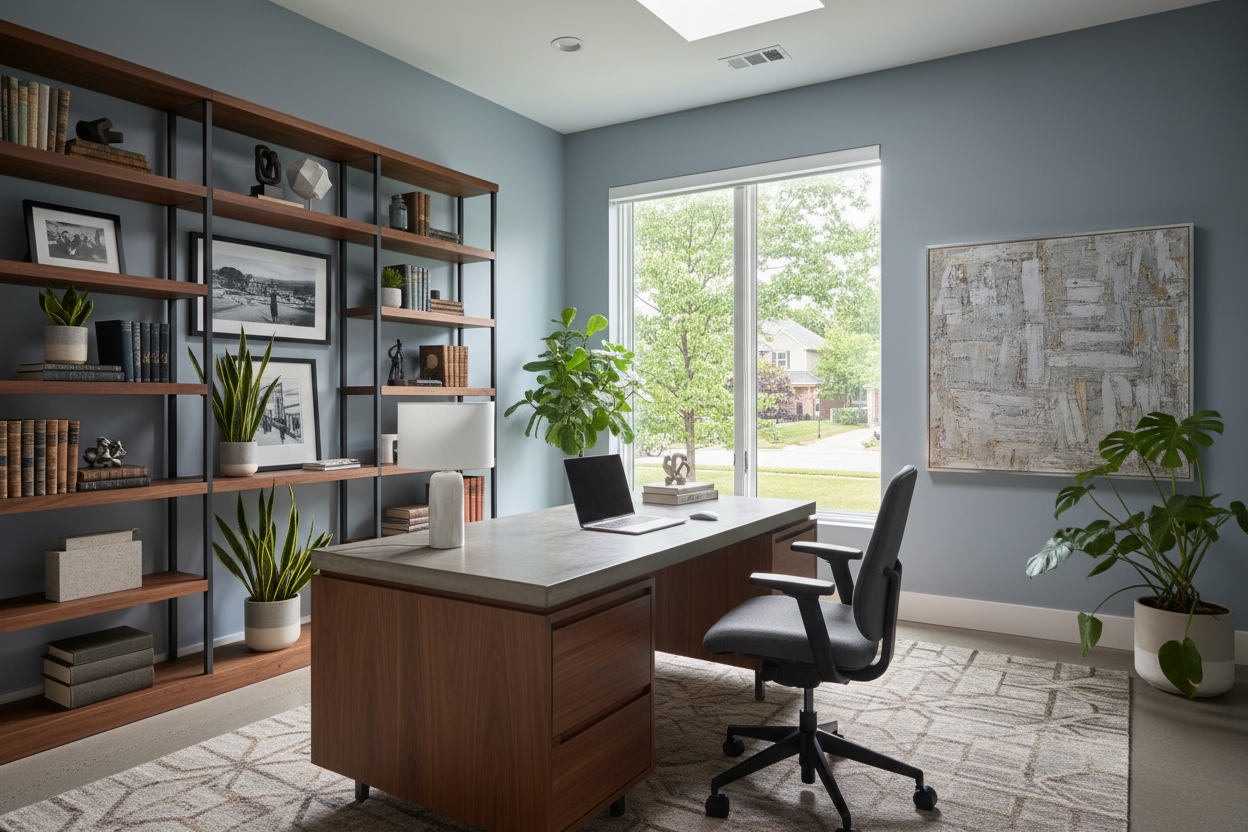
For many professionals, the shift to remote work exposed a glaring design gap: the dining room table is simply not sustainable for a forty-hour work week. Creating a dedicated home office in usa residences requires a nuanced balance between high-performance functionality and residential comfort. It is not merely about buying a desk; it is about curating an environment that supports the specific ergonomic and technological demands of the American workforce while maintaining the aesthetic integrity of your home.
Key Features for a High-Performance Workspace
- ANSI/BIFMA Standards: Ensure seating meets American safety and durability standards for 8+ hour usage.
- Spatial Dimensions: Look for a minimum desk depth of 30 inches to accommodate multiple monitors common in US workflows.
- Power Accessibility: Prioritize furniture with integrated cable management suited for standard US 110V three-prong plugs.
- Acoustic Control: Incorporate soft textures (rugs, drapery) to dampen echo during conference calls.
- Lighting Layers: Combine ambient overhead lighting with task lighting between 2700K and 3000K temperature.
Navigating US Furniture Standards and Sizing
One distinct characteristic of a usa home office is the scale. American residential architecture generally allows for larger furniture footprints compared to European counterparts. However, bigger does not always mean better. When selecting an executive desk or a standing converter, consider the "visual weight" of the piece. A heavy, solid oak desk commands authority but can suffocate a 10x10 bedroom conversion.
Material Selection: Solid Wood vs. Veneer
In the US market, you will often encounter "hardwood solids with veneers." Do not dismiss veneer immediately. High-quality wood veneer over an engineered core is often more stable in climates with drastic humidity shifts—like the Northeast winters or Southern summers—preventing the warping that can ruin a solid slab. Look for "book-matched" veneers for a luxury aesthetic.
Ergonomics: Beyond the Mesh Chair
The average us home office worker spends significant time seated. While aesthetic task chairs (often velvet or leather buckets) look stunning on Instagram, they rarely offer the lumbar support necessary for a full workday. Prioritize a chair with a synchro-tilt mechanism and adjustable seat depth. If the aesthetic is non-negotiable, look for high-end contract furniture brands that hide ergonomic engineering inside upholstered silhouettes.
Layout and Lighting Strategy
Positioning is critical. The most common error I see is facing the desk directly against a wall, which creates a visual dead-end. If space permits, float the desk in the center of the room or perpendicular to a window. This allows you to control the glare on your screens while benefiting from natural light. For video calls, avoid backlighting yourself; instead, place a soft, diffused light source behind your monitor to illuminate your face evenly.
Lessons from My Own Projects
I recently designed a workspace for a client in a pre-war apartment in Boston where we learned a hard lesson about connectivity. I had specified a stunning, imported Italian writing desk that was visually perfect for the space. However, once we started the install, we realized the cable management grommets were sized for slim European plugs, not the bulky, grounded three-prong plugs and surge protectors standard in the US. We had to drill into a $4,000 desk to make it functional.
Since then, my personal rule for any usa home office project is to physically test the cable trays with a standard American power strip before purchasing. It is these unpolished, practical details—like whether a robotic vacuum can fit between the chair legs or if the finish shows oily fingerprints from daily use—that determine if a space is actually livable.
Conclusion
Investing in your workspace is ultimately an investment in your career longevity and physical health. By selecting furniture that fits the scale of American homes and prioritizing ergonomic integrity over fleeting trends, you create a space that invites focus rather than fatigue.
Frequently Asked Questions
What is the ideal desk height for an American home office?
The standard desk height is 29 to 30 inches. However, this is often too high for proper typing ergonomics for people under 5'10". An adjustable keyboard tray or a height-adjustable desk is recommended to keep elbows at a 90-degree angle.
How do I mix office furniture with my home's decor?
Avoid the "cubicle" look by steering clear of grey laminate. Opt for residential finishes like walnut, white oak, or matte black metal. Use a task lamp that mimics living room lighting rather than an industrial architectural lamp to soften the vibe.
Is a standing desk worth the investment?
Yes, but stability is key. Many budget standing desks available in the US market wobble significantly at full height. Look for a desk with a dual-motor system and a crossbar for stability, especially if you use heavy monitor arms.

Leave a comment
This site is protected by hCaptcha and the hCaptcha Privacy Policy and Terms of Service apply.