

















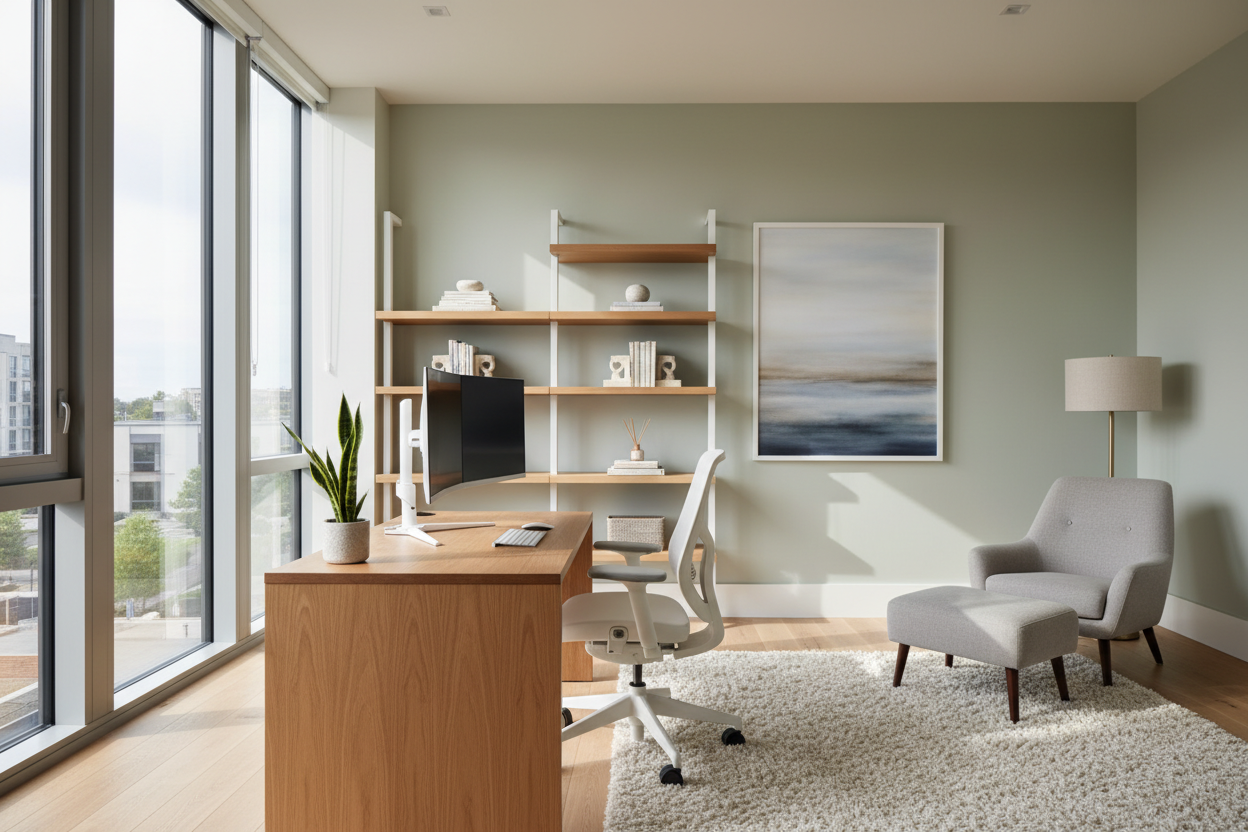
Visual noise is the silent killer of productivity. When you sit down to work, your environment should act as a quiet backdrop that supports mental clarity rather than competing for your attention. Many homeowners make the mistake of prioritizing trends over the psychological impact of their surroundings. This guide explores professional serene office decorating ideas that balance sophisticated aesthetics with the functional demands of a high-performance workspace.
Key Elements for a Calming Workflow
Before selecting furniture, review this checklist to ensure every piece contributes to a tranquil atmosphere rather than cluttering it.
- Color Temperature: Prioritize warm neutrals (greige, soft terracotta, sage) over stark whites or over-stimulating primaries.
- Tactile Feedback: Incorporate natural textures like open-grain wood, linen, and wool to soften hard tech edges.
- Acoustic Dampening: Use area rugs and upholstered seating to absorb sound reverb in a serene office space.
- Biophilic Design: Integrate living plants to improve air quality and lower physiological stress markers.
- Lighting Layers: Move beyond overhead cans; utilize task lamps and ambient floor lighting for mood control.
Establishing the Palette and Materiality
Creating a serene home office begins with the envelope of the room. We are moving away from the high-gloss lacquers that dominated corporate design in the past decade. High-gloss surfaces create glare, which causes eye strain over long periods.
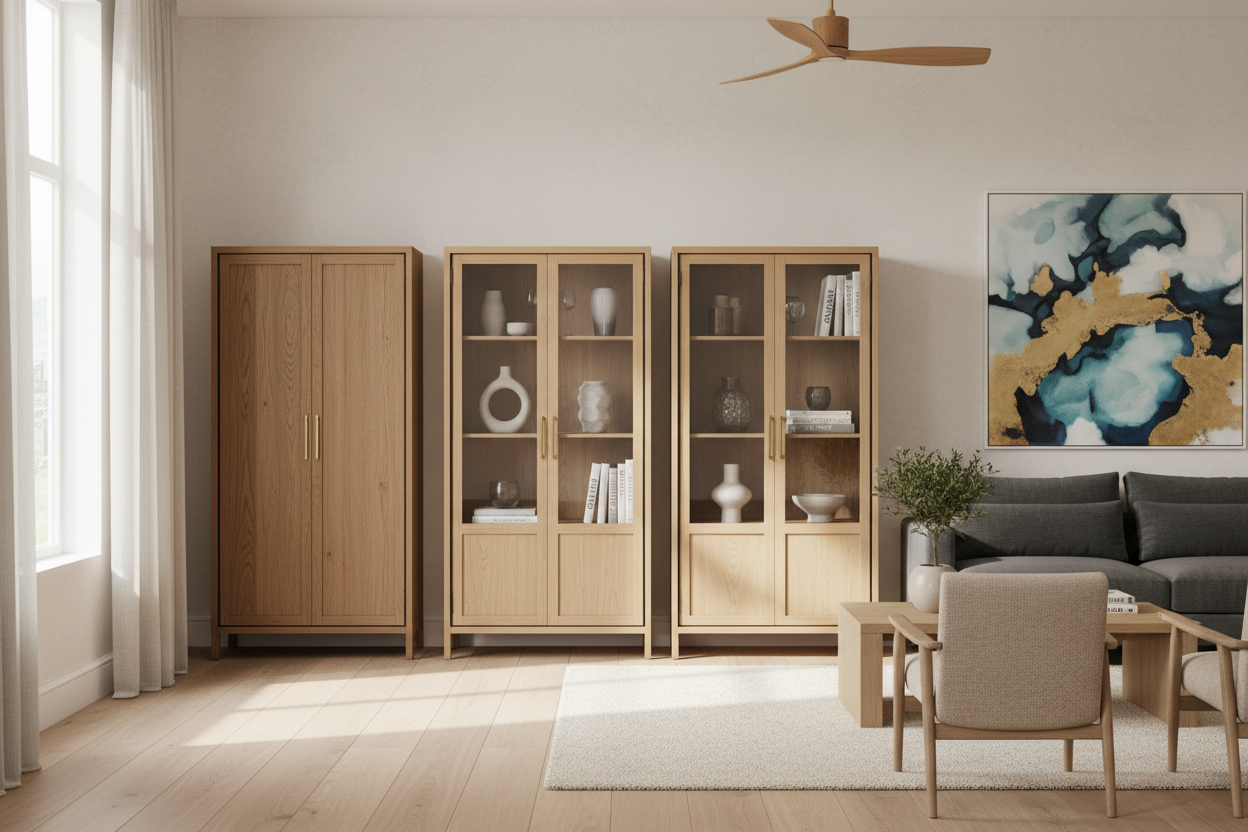
Instead, opt for matte or satin finishes. Natural timber desks—specifically walnut or white oak—provide a grounding element. When selecting shelving or storage units, consider closed cabinetry. Open shelving often invites clutter, which disrupts visual peace. If you must have open storage, use uniform baskets to hide loose items, maintaining a clean silhouette.
The Role of Textiles
Hard surfaces bounce sound, creating a subtle echo that increases cognitive load. To counter this, layer your textures. A high-quality wool rug does more than anchor the furniture; it acts as sound insulation. Similarly, opting for linen drapery over metal blinds softens the light diffusion, eliminating harsh shadows that can make a room feel clinical.
Spatial Planning and Ergonomics
A serene aesthetic falls apart if the ergonomics cause physical discomfort. The layout should facilitate flow. Position your desk in the "command position"—facing the door but not directly in line with it. This taps into a primal sense of security, allowing you to relax more deeply into your work.
For the chair, avoid style-over-substance pieces. A mid-century modern bucket chair may look sleek, but if it lacks lumbar support, your serenity will vanish after hour two. Look for task chairs that hide their mechanisms within sophisticated upholstery, blending ergonomic function with residential style.
Lighting: The Invisible Decor
Lighting is arguably the most critical factor in serene office decorating ideas. Relying solely on 4000K (cool white) overhead lighting can trigger anxiety and disrupt your circadian rhythm. Aim for a layered approach with bulbs in the 2700K to 3000K range. Use a dedicated task lamp with a dimmer for focused work, and wash the walls with soft, upward-facing floor lamps to expand the sense of space in the evenings.
My Personal Take on Serene Office Decorating Ideas
I learned the hard way that "minimalism" does not always equal "serenity." Early in my career, I designed a home office that was visually striking—floor-to-ceiling glass, polished concrete floors, and a sleek white laminate desk. It looked incredible in the portfolio photos.
However, the client called me three weeks later. The issue wasn't the look; it was the sound and the touch. Every time she set her ceramic coffee mug down on the laminate, it made a sharp clack. When she took a call, the concrete floor caused a hollow echo that made her feel like she was in a warehouse, not a sanctuary. The room was cold to the touch and visually sterile.
We fixed it by introducing a vintage Persian runner to dampen the acoustics and swapping the laminate top for a leather desk blotter. That specific tactile change—soft leather under the wrists instead of cold laminate—completely changed her experience. True serenity comes from how a room feels to the touch and ear, not just how it looks on Pinterest.
Conclusion
Designing a workspace that promotes peace requires looking beyond the furniture catalog. By prioritizing acoustic comfort, tactile materials, and warm lighting, you can build a sanctuary that nurtures your best work. Start with one change—perhaps the lighting or a rug—and feel the shift in your focus.
Frequently Asked Questions
What is the best paint finish for a serene office?
Matte or eggshell finishes are superior for calming spaces. They absorb light rather than reflecting it, creating a velvety, soft appearance that reduces glare and eye strain compared to satin or semi-gloss paints.
How do I make a small office feel serene without it feeling empty?
Focus on vertical storage and floating joinery. Keeping the floor visible creates an illusion of more space. Use a monochromatic color scheme where the furniture matches the wall color to reduce visual weight and clutter.
Are there specific plants that work best for office serenity?
Yes, look for plants with softer, rounded leaves like a Rubber Tree or a ZZ plant. Avoid spiky, aggressive-looking cacti. Additionally, Snake Plants are excellent for low-light corners and require minimal maintenance, reducing "plant parenting" stress.

Leave a comment
This site is protected by hCaptcha and the hCaptcha Privacy Policy and Terms of Service apply.