

















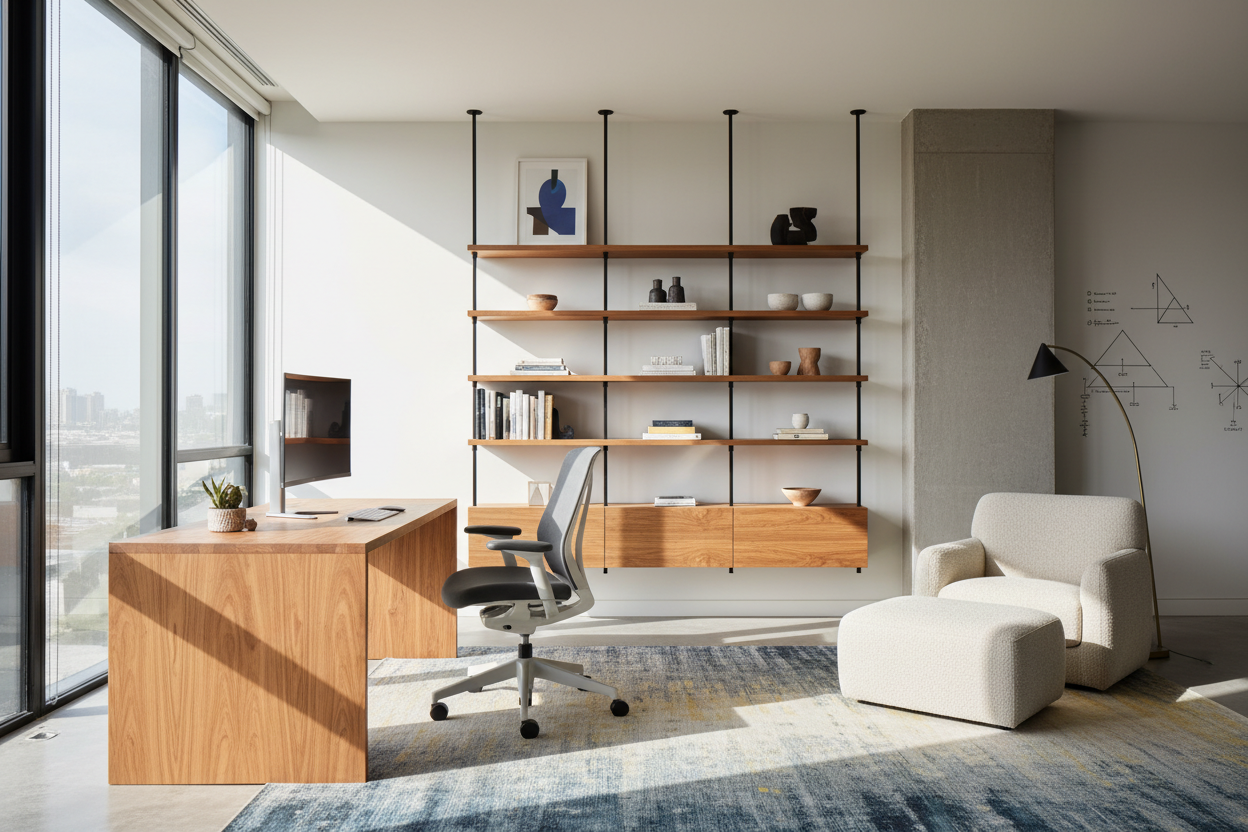
We have all experienced the fatigue that comes from working in a sterile, poorly lit environment. The difference between a room that drains your energy and one that fuels your best work lies in the intentional layering of texture, light, and layout. Designing inspiring office spaces is not merely about aesthetics; it is about creating a psychological anchor that signals to your brain that it is time to focus. Whether you are an executive refining a corporate suite or a homeowner carving out a niche, the goal is the same: a marriage of high-performance ergonomics and curated design.
Key Elements of a High-Performance Workspace
- Ergonomic Foundation: Prioritize chairs with synchro-tilt mechanisms and lumbar support over purely decorative seating.
- Lighting Layers: Combine ambient overhead lighting with task lighting (3000K-4000K) to reduce eye strain.
- Material Tactility: Choose natural materials like walnut or matte-finished oak to add warmth and reduce glare.
- Acoustic Control: Utilize rugs, curtains, or acoustic panels to dampen echo and create a hushed, professional atmosphere.
- Visual Flow: Position the desk in the "command position" facing the door, rather than staring at a blank wall.
Mastering the Layout and Flow
When clients ask me for cool office space ideas, I often have to steer them away from clutter and towards flow. The layout dictates how you move and think within the room. A common mistake is pushing the desk flush against a wall. This visual restriction can feel stifling.
Instead, float the desk in the center of the room or perpendicular to a window. This allows you to benefit from natural light without the direct glare hitting your screen. If you are looking for creative ideas for office layouts in smaller footprints, consider an L-shaped configuration. It separates your "digital zone" (computer) from your "analog zone" (sketching, writing), allowing for a mental switch between tasks.
Materiality: The Tactile Experience
A truly nice office space is defined by how it feels, not just how it looks. When selecting a desk, consider the finish carefully. High-gloss lacquers may look sleek in a catalog, but they are magnets for fingerprints and reflect overhead lights, causing subtle visual fatigue.
I always recommend matte or satin finishes on wood veneers. For a more industrial creative office inspiration, linoleum desk surfaces are excellent; they are soft to the touch, forgiving of writing pressure, and naturally anti-bacterial. Pair these robust surfaces with metals like brushed brass or matte black powder coat to create a sophisticated silhouette.
Lighting and Ambiance
Lighting is the unsung hero of office workspace ideas. Relying solely on a ceiling can creates harsh shadows. You need a hierarchy of light. Start with a dedicated task lamp that has an adjustable arm—functionality is paramount here. Then, introduce a floor lamp with a linen shade in the corner to soften the room's edges. This creates a warm, encompassing glow that makes late-night work sessions less jarring to the circadian rhythm.
Incorporating Biophilic Design
One of the most effective creative ideas for office space enhancement is biophilia. This isn't just about placing a potted plant in the corner. It is about sightlines to greenery. If you lack a view, introduce a large-scale Ficus or a Snake Plant (Sansevieria) which acts as a sculptural element while improving air quality. The irregularity of organic shapes provides a necessary visual break from the rigid lines of monitors and shelving.
My Personal Take on Inspiring Office Spaces
In my twenty years of designing, I have learned that the most "Instagrammable" offices are often the worst to actually work in. I once designed a space for myself featuring a stunning, reclaimed glass-top desk. It was visually weightless and architectural. However, after three days, I regretted it.
The glass was perpetually cold on my forearms, making typing uncomfortable during winter months. Worse, my optical mouse struggled to track on the transparent surface, forcing me to use a mousepad that ruined the clean aesthetic I was aiming for. It taught me a valuable lesson I now pass to clients: creative office spaces ideas must survive the "Tuesday Morning Test." If the space annoys you on a busy Tuesday morning—whether it’s a cold surface, a wobbly leg, or a glare on your screen—the design has failed, no matter how beautiful it looks in a photo.
Conclusion
Curating a workspace is an investment in your own efficiency. By selecting materials that age gracefully, prioritizing lighting that protects your eyes, and arranging your layout for command and control, you elevate your daily grind into a ritual. Do not settle for a makeshift setup; build a sanctuary that respects your profession.
Frequently Asked Questions
What is the best color temperature for office lighting?
For optimal focus, aim for a color temperature between 3500K and 4000K (Cool White). This mimics morning daylight and promotes alertness. However, for a home office used in the evenings, having a secondary lamp with a warmer 2700K bulb is excellent for winding down or reading.
How do I make a small office feel larger?
Utilize vertical space. Floor-to-ceiling shelving draws the eye upward, making the ceiling feel higher. Additionally, choosing furniture with "exposed legs" rather than solid block bases allows you to see the floor underneath, increasing the sense of visual openness.
Is a standing desk worth the investment?
Absolutely, but only if you pair it with an anti-fatigue mat. The ability to shift posture reduces the spinal compression that occurs from static sitting. Look for a dual-motor electric model for smooth, quiet transitions so you aren't discouraged from using the feature.

Leave a comment
This site is protected by hCaptcha and the hCaptcha Privacy Policy and Terms of Service apply.