

















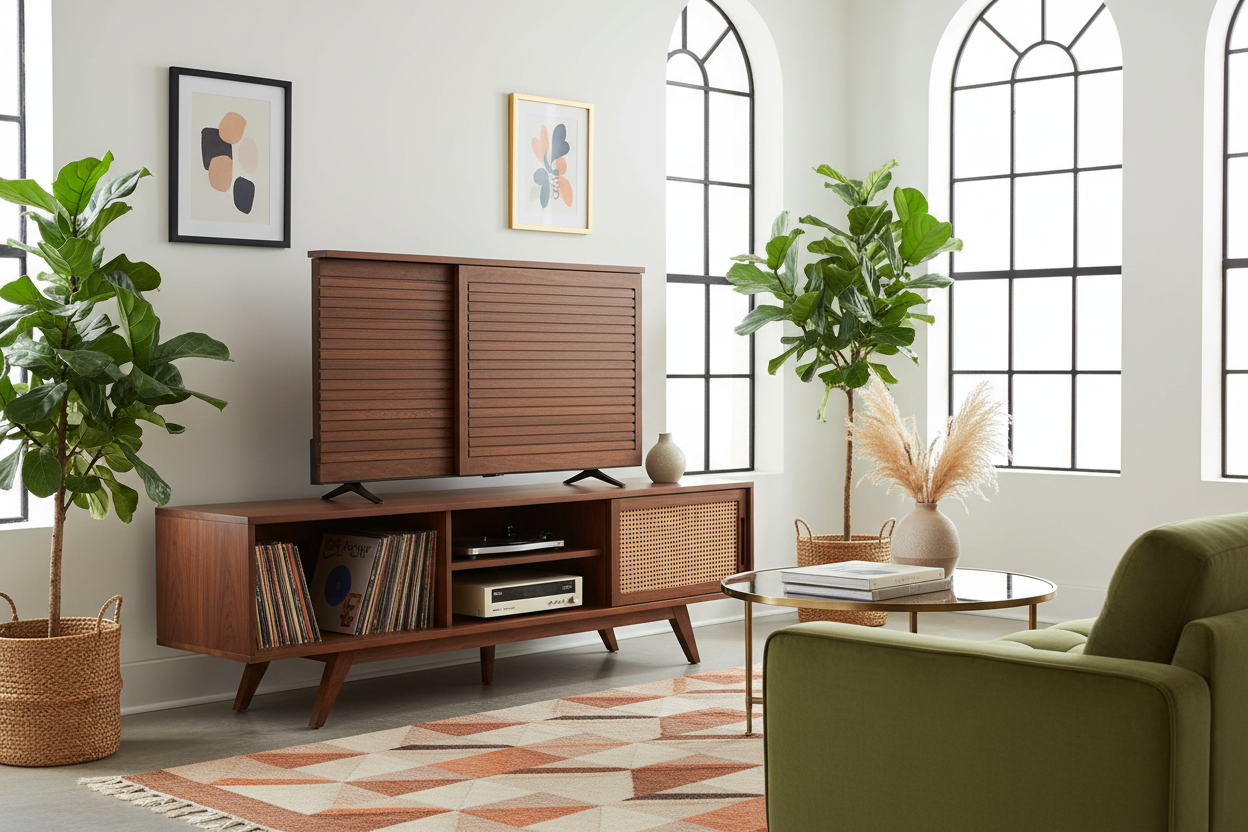
I spent three weeks staring at a 65-inch black rectangle mounted on a white wall, wondering why my living room felt like a hospital waiting room. It wasn't the paint or the rug; it was the fact that my tech was sucking the soul out of the space. That's when I realized that retro tv stands are the only thing standing between a cozy home and a sterile electronics aisle.
- Wood tones kill the 'tech-heavy' vibe instantly by adding organic warmth.
- Tapered legs create visual 'air' so your room feels larger and less cramped.
- Modern 'new retro' pieces handle cables better than true antiques.
- Don't match everything; one vintage-inspired piece is usually enough to ground the room.
The 'Black Hole' Effect of Modern Living Rooms
We’ve all seen it: the massive, ultra-thin TV that looks like a portal to nowhere when it's turned off. If you pair that cold glass with one of those generic standard TV stands made of high-gloss MDF or cheap metal, you’re basically living in a server room. It’s sterile, it’s boring, and it has zero personality.
The problem is that modern tech is designed to be invisible or industrial. When your furniture follows that same 'form follows function' rule to the extreme, the room loses its heart. You need something to fight back against the plastic and the pixels. A stand that looks like it has a history—even if you just unboxed it—changes the entire energy of the wall.
Why a TV Stand Retro Style is the Ultimate Cheat Code
Design is all about tension. If everything is modern, nothing stands out. A retro tv stand works because it provides a tactile, organic contrast to the smooth, cold surface of a flat screen. Think walnut grains, sliding tambour doors, and those iconic angled legs that give the piece a sense of lift. It’s about balance.
When you focus on styling a 1960s TV stand, you aren't just buying a box for your cables. You're bringing in a silhouette that feels human. The mid-century aesthetic was obsessed with bringing nature indoors, which is exactly what a room full of gaming consoles and soundbars needs to feel livable again.
Mixing Eras Without Looking Like a Time Capsule
You don't need to go full 'Mad Men' to make this work. In fact, if every piece of furniture in your house has a tapered leg, you’ll look like you’re living in a museum exhibit. I like to break up the wood with a retro metal TV stand if the room already has a lot of oak or walnut. Metal adds an industrial edge that keeps the 'retro' from feeling 'old.'
Keep your rug and your sofa modern. Let the entertainment center be the one 'loud' vintage statement. It grounds the tech and makes the TV look like an intentional design choice rather than an unavoidable eyesore you're trying to hide.
But Will It Actually Hold My 65-Inch Screen?
This is where the vintage dream usually dies. I once spent $400 on a gorgeous 1950s sideboard at a flea market, lugged it up three flights of stairs, and realized it was four inches too narrow for my TV legs. Old furniture wasn't built for 16:9 aspect ratios; it was built for record players and heavy tube TVs that sat inside the cabinet. Most genuine antiques are too tall and too short for today's screens.
If you have a massive screen, you need a modern 70-inch wide media console that mimics those old-school lines but actually has the footprint to keep your TV from overhanging the edges. Overhang is the fastest way to make a room look cheap and cluttered. A wider base also gives you room for a table lamp or a plant, which helps the TV blend into the decor.
Why I Recommend 'New Retro' Over Thrifted Antiques
I love a good thrift find, but for electronics, I've stopped buying 'true' vintage. Old wood doesn't handle the heat from a PS5 very well, and drilling holes for cable management into a 70-year-old heirloom feels like a crime. Plus, vintage finishes can be finicky with modern cleaning supplies, and 50-year-old legs can be surprisingly wobbly under a heavy 75-inch LED.
Going with a newly manufactured retro entertainment stand gives you the look without the headache. You get proper ventilation and pre-drilled cord ports. If walnut isn't your thing, you can find a stylish black TV stand that keeps the mid-century silhouette but feels a bit more contemporary. It’s the best of both worlds: the soul of the 60s with the structural integrity of 2024.
FAQ
Is walnut the only color for retro stands?
Not at all. While walnut is the classic MCM choice, teak, acorn, and even painted black or forest green finishes work beautifully as long as the silhouette—like those tapered legs—stays true to the era.
How do I hide my ugly cables?
Look for stands with 'cord management' in the specs. If you're using a true vintage piece, use adhesive cable clips along the back legs to keep the wires from dangling in that open space under the cabinet.
Will a 55-inch TV look weird on a 70-inch stand?
Actually, it looks better. Having extra room on the sides for a lamp, a plant, or a couple of books makes the TV feel like part of the decor rather than the main event.

Leave a comment
This site is protected by hCaptcha and the hCaptcha Privacy Policy and Terms of Service apply.