





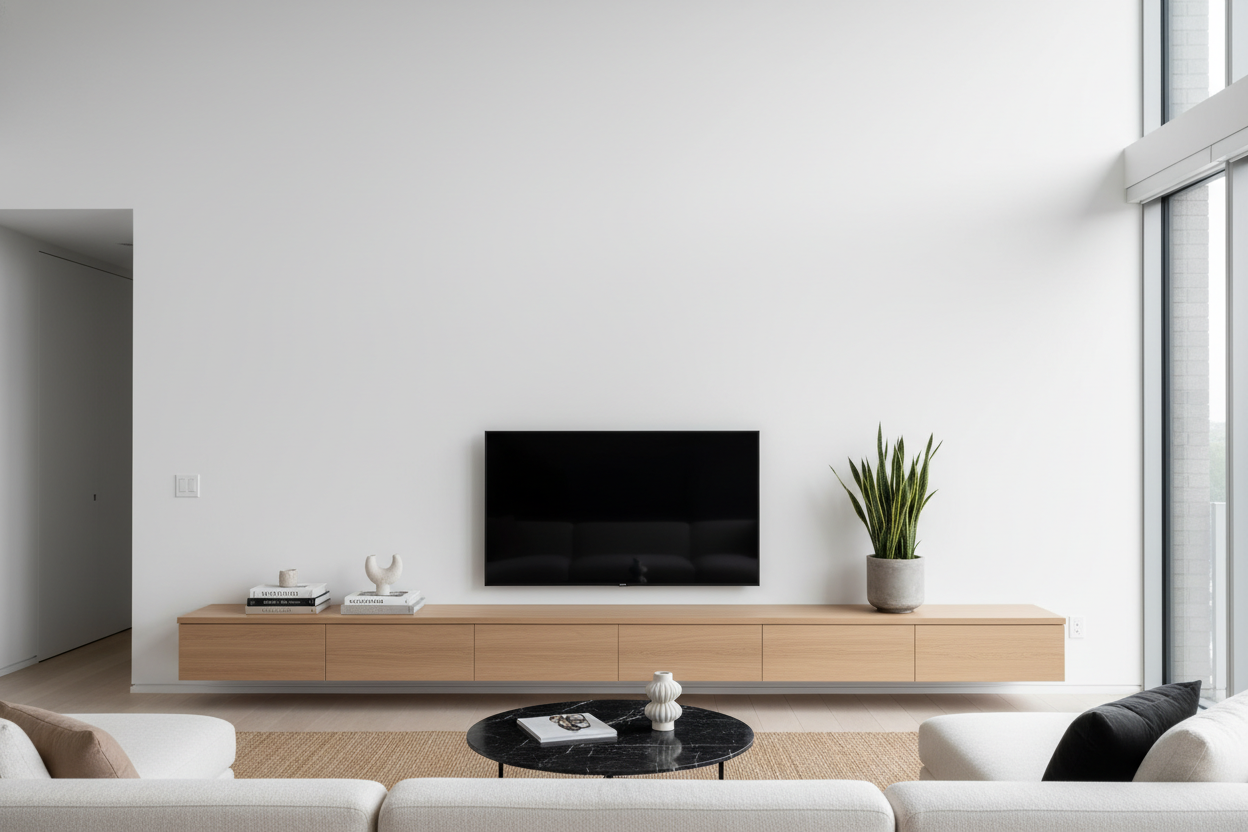
I spent six months staring at my living room wall with a mix of confusion and genuine annoyance. It was a 15-foot expanse of builder-grade drywall that made my 55-inch television look like a tiny sticky note. I tried the standard route first: a chunky, 30-inch high media console I found at a big-box store. It looked fine in the showroom, but in my house, it looked like a child’s toy lost in a warehouse. That is when I realized the problem wasn't the TV size—it was the height and width of the base. Switching to a tv stand low and incredibly wide was the only thing that finally made the room feel finished.
- Low profiles create a grounded, high-end architectural look.
- Extra-wide units anchor massive walls better than tall, narrow ones.
- Dropping the height opens up massive vertical space for art and decor.
- Horizontal storage is often more efficient for modern tech and gaming consoles.
The 'Floating Postage Stamp' Problem
We have all seen it. A perfectly nice TV sits on a perfectly nice cabinet, but because the cabinet is only a few inches wider than the screen, the whole setup looks like it is floating in a sea of empty wall space. This is the 'postage stamp' effect. When your furniture is too small for the scale of the room, it makes the entire space feel disjointed and cheap, no matter how much you spent on the rug or the sofa.
Standard media consoles are usually designed for 'average' rooms, but if you have an open-concept layout or high ceilings, those 48-inch wide units just won't cut it. They create a vertical visual break that stops the eye, making the room feel chopped up. I learned this the hard way after buying a mid-century piece that was beautiful but physically too small to command the space. It looked like it was waiting for the rest of the furniture to arrive.
Why a Low Wide TV Stand is the Ultimate Wall Anchor
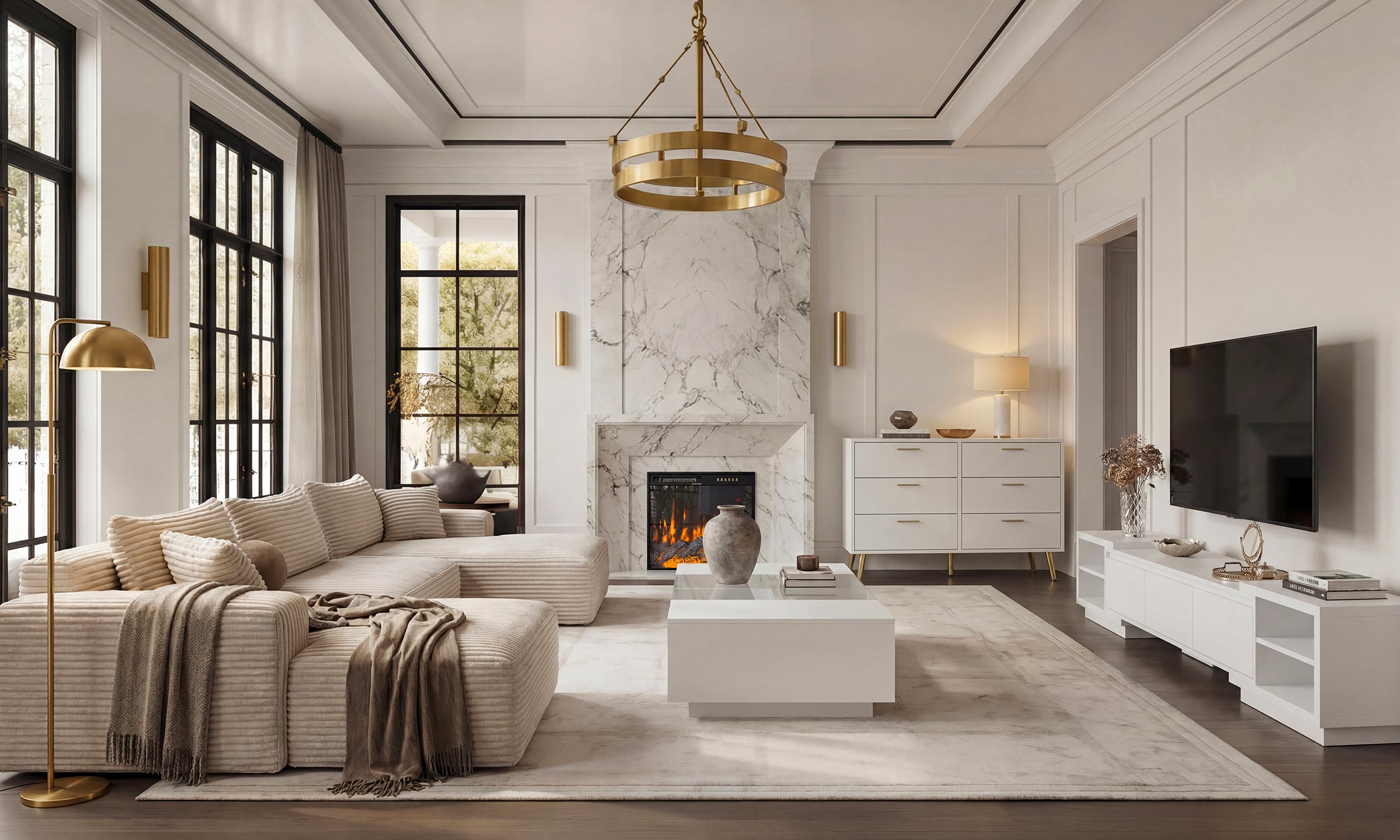
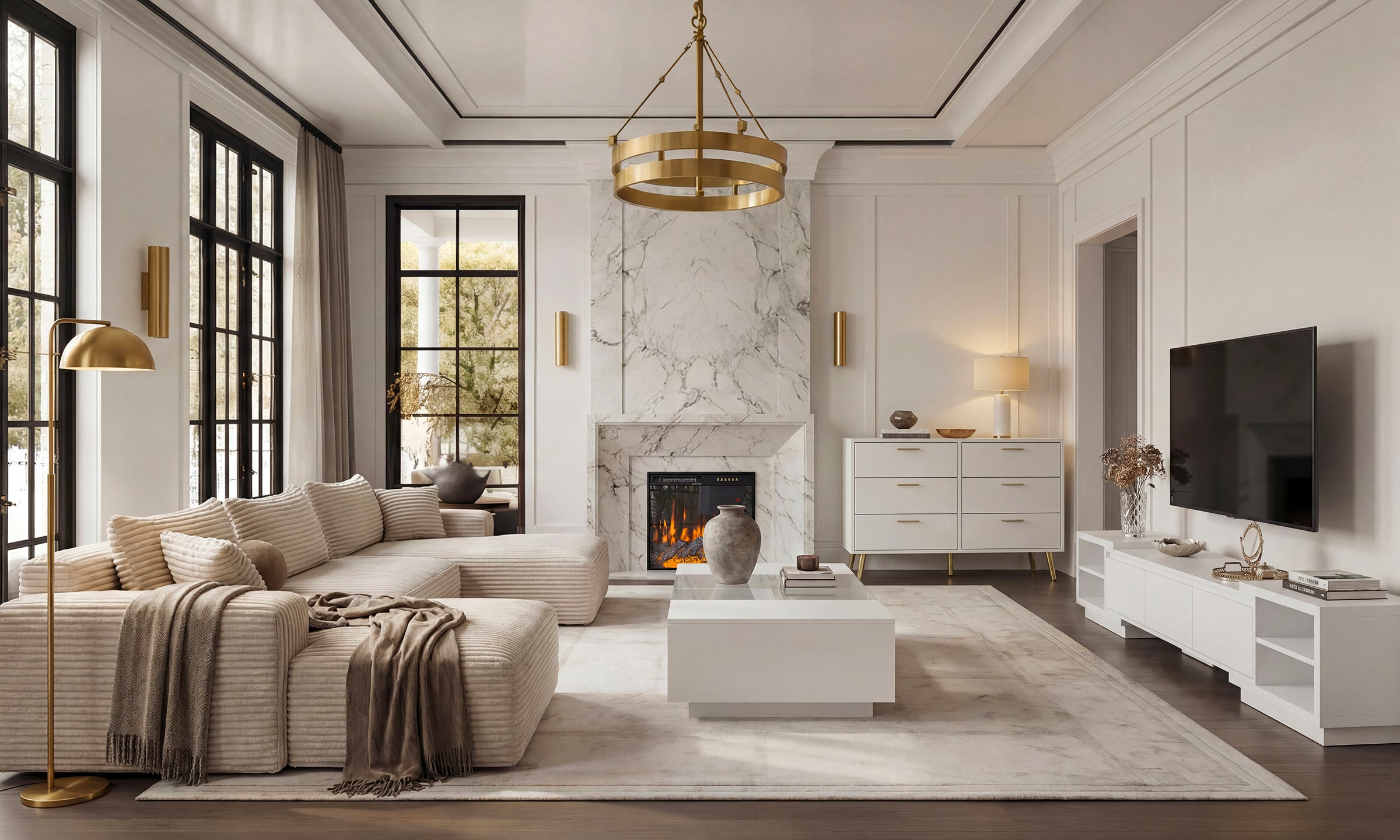
The secret to a high-end look is horizontal emphasis. When you use a low wide tv stand, you are mimicking the look of custom cabinetry. These units hug the floor, creating a long, continuous line that draws the eye across the room. This trick actually makes the room feel wider and more expansive because it doesn't obstruct your sightlines.
I eventually landed on a wide adjustable TV stand that allowed me to stretch the footprint of the furniture to nearly 100 inches. By keeping the height around 15 to 18 inches off the floor, the furniture feels like it is part of the architecture rather than just a box sitting against a wall. It provides a heavy, visual 'anchor' that makes even a standard TV feel like a deliberate design choice.
It Gives Your Art Room to Breathe
One of the biggest perks of going low is the vertical real estate you reclaim. When your TV stand is 30 inches high and your TV is another 30 inches tall, you have almost no room left for art unless you want to hang it near the ceiling. It makes the wall feel top-heavy and cluttered.
By dropping the console height, you lower the TV’s center of gravity. This leaves a massive 'white space' above the screen. I used this extra room to hang a series of oversized framed prints that I previously couldn't fit. The result is a gallery-style look where the TV is just one element of the wall, rather than the singular, overbearing focal point.
But Wait, Where Does the Clutter Go?
The most common pushback I hear is about storage. People assume that 'low' means 'less room for stuff.' In my experience, the opposite is true. Vertical cabinets are often full of wasted air; you end up stacking things on top of each other and losing the remote at the bottom of a deep cavern. A horizontal layout is much more functional.
Finding a low TV stand with storage usually means you get long, shallow drawers or flip-down cabinets. This is the sweet spot for tech. My PlayStation, soundbar, and messy pile of HDMI cables all fit perfectly in a wide, linear layout. It is much easier to organize cables when they are running side-to-side rather than being crammed into a tall, narrow tower. Plus, the top surface becomes a massive shelf for coffee table books or a record player.
The Golden Ratio for Sizing Your Setup
If you are ready to make the switch, do not just guess the size. The rule of thumb I live by now is the two-thirds rule: your media console should span at least two-thirds of the total width of the wall it lives on. If your wall is 12 feet wide, you want a stand that is at least 8 feet long. Anything smaller will look like an afterthought.
Measure your wall, then measure it again. Look for modular units or adjustable pieces that can grow with your space. If you browse a collection of modern TV stands, pay attention to the height specs first. Aim for something under 20 inches if you want that grounded, custom look. It might feel weirdly low when you first unbox it, but once it is against the wall, the proportions will finally click.
My Biggest Mistake
I have to be honest: the first low stand I bought was *too* low for my specific sofa. I bought a unit that was only 10 inches high, and because my couch has deep, plush cushions, I felt like I was looking down at the floor to watch the news. My neck was killing me. I ended up having to buy 4-inch riser feet to bring it up to a comfortable viewing angle. Always check your 'eye level' from your favorite seat before committing to a ultra-low profile.
FAQ
Is a low TV stand bad for your neck?
Not if you pair it with the right seating. Your eyes should naturally hit the top third of the screen. If you have a very tall, formal sofa, a low stand might be a strain. If you have a modern, low-slung sectional, it is actually more ergonomic.
How do I hide cables on a low unit?
Since there is less 'body' to hide wires behind, look for units with built-in cable management channels or use adhesive clips to run wires along the back edge of the frame. Keeping them off the floor is key to the minimalist look.
Can I put a large TV on a low stand?
Yes, and you probably should. Large TVs look much more stable and 'built-in' when they are sitting on a wide, low base rather than towering over the room on a tall pedestal.


Leave a comment
This site is protected by hCaptcha and the hCaptcha Privacy Policy and Terms of Service apply.