





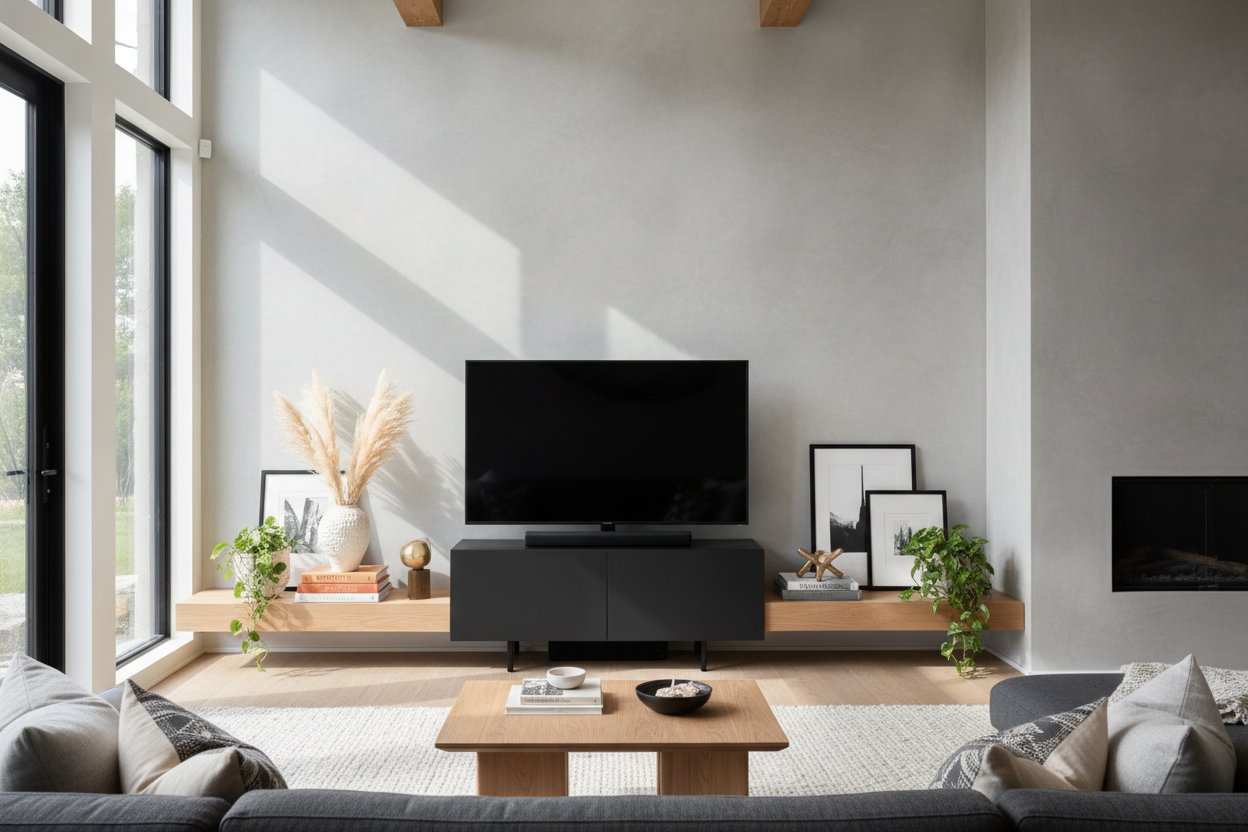
I spent weeks trying to convince my partner that a 75-inch TV was a crime against aesthetics. I wanted a breezy, Scandi-inspired living room with light oak and linen. He wanted a home theater experience that required a massive black entertainment stand to ground the tech. Eventually, I realized that if I did not find a solution, we would end up with a messy tangle of HDMI cables on a folding table, so I started hunting for a way to make dark furniture work in a light room.
- Scale is everything—always go wider than the TV screen.
- Mix materials like walnut or oak to break up the solid black mass.
- Use high-contrast decor like white ceramics and brass to draw the eye.
- Closed storage is mandatory for hiding the plastic-heavy tech gear.
The Compromise: Why I Finally Caved on a Dark Media Console
I was terrified of the 'black hole' effect. A large black entertainment center can suck the life out of a room faster than a bad paint job. I pictured a heavy, monolithic block that would make my 12x15 living room feel like a cave. My initial fear was that the furniture would dominate the space, making the walls feel like they were closing in.
But after seeing how much he cared about 'black levels' and 'immersion,' I caved—on the condition that I got total control over the styling. I had to find a way to make this massive piece of furniture feel like a design choice rather than a tech necessity. The goal was to find a piece that had enough gravity to hold a giant screen without looking like a piece of industrial equipment.
Rule 1: Break Up the Darkness With Warm Wood Tones
The biggest mistake you can make is buying a solid block of matte black laminate. It looks cheap and absorbs all the light in the room. If you are eyeing a modern black entertainment center, look for one that incorporates organic textures. I specifically looked for units with a natural wood and black finish to soften the blow.
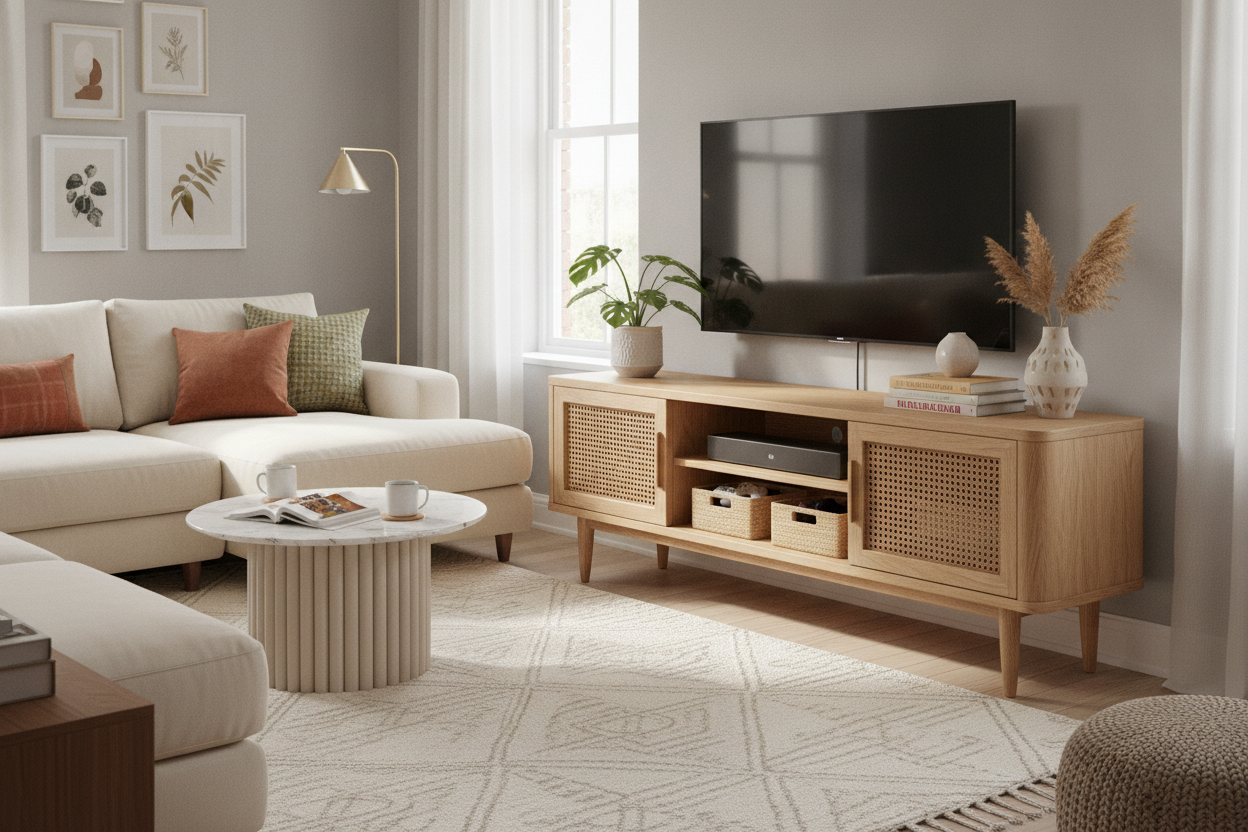
The warmth of the oak or walnut acts as a buffer. It stops the unit from looking like a piece of office furniture and makes it feel like a designed choice. When you mix a dark frame with wood-toned doors or shelving, the eye registers the texture rather than just the dark color. It feels expensive, intentional, and significantly less like a gamer den.
Rule 2: Don't Skimp on the Width
Scale is the hill I will die on. Do not make the mistake of buying a black tv stand small enough that the TV hangs over the edges or sits flush with the sides. It looks unstable, top-heavy, and frankly, a bit sad. A small stand makes the TV look like a giant head on a tiny body.
I insisted on a long black entertainment center that gave us at least 8 to 10 inches of breathing room on either side of the screen. This extra width grounds the TV and creates space for styling. It makes the whole wall feel intentional. If you have the floor space, go as wide as you can—it actually makes the room feel larger because it emphasizes the horizontal lines of the walls.
Rule 3: Use High-Contrast Decor to Draw the Eye Away From the Screen
Styling an entertainment stand black finish requires a high-contrast strategy. If you put dark books or dark vases on a dark stand, they disappear. I ditched the moody accessories and went for unlacquered brass bowls, white ceramic vases, and textured stone coasters. A trailing pothos plant is also a must—the vibrant green pops beautifully against the dark background.
Using a stylish black TV stand with closed storage meant I could hide the ugly routers and gaming consoles while using the top surface for things that actually look good. You want to create visual interest that competes with the giant black rectangle of the TV when it is turned off. Layers are your friend here.
Height Matters More Than You Think
We debated a high black tv stand versus a low-slung media console for days. Because our ceilings are only 8 feet, a high unit would have felt suffocating and made the TV sit at an awkward 'front row of the movie theater' angle. We went low, which kept the sightlines open and made the room feel taller.
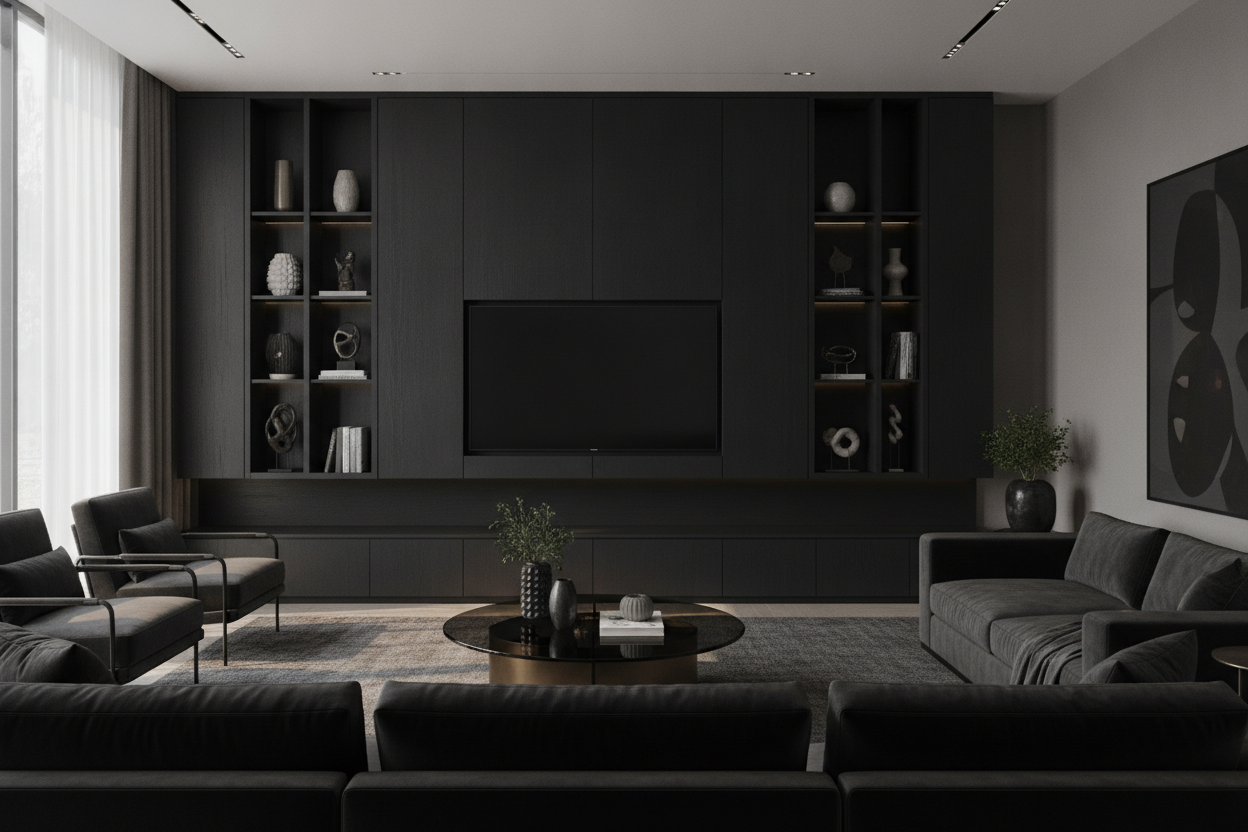
If you have 10 or 12-foot ceilings, you can get away with a taller unit or even a full library-style setup. But for the average apartment or suburban living room, a low-profile unit is usually the better bet. It keeps the 'visual weight' near the floor, leaving the upper half of the room feeling light and airy.
Where to Find One That Actually Looks Good
Stop frantically searching for a black entertainment center nearby and driving to big-box stores to look at flimsy particle board. Those units sag under the weight of a heavy TV within a year and the 'wood' grain is just a sticker. I have made that mistake before, and watching a $400 stand bow in the middle is a heartbreak I do not wish on anyone.
Instead, look for kiln-dried wood or high-quality MDF with real wood veneers. If you are ready to commit to a piece that will actually last through your next three moves, you should browse entertainment centers online where you can filter by actual material specs and weight capacities. Look for integrated cord management—it is the difference between a clean look and a bird's nest of wires.
Does black furniture show more dust?
Yes, absolutely. Every single speck of dust and every fingerprint will show up on a black surface. I keep a microfiber cloth tucked in one of the drawers for quick daily swipes. It is a small price to pay for the look.
Can I put a black stand against a dark wall?
You can, but only if you want the 'moody' look where the furniture disappears. If you want the stand to be a feature, it needs a lighter wall behind it—think light gray, cream, or even a soft sage green.
How much wider should the stand be than the TV?
Aim for at least 6 inches on each side. If your TV is 55 inches wide, your stand should be at least 67 inches wide. Anything less looks cramped and accidental.

Leave a comment
This site is protected by hCaptcha and the hCaptcha Privacy Policy and Terms of Service apply.