

















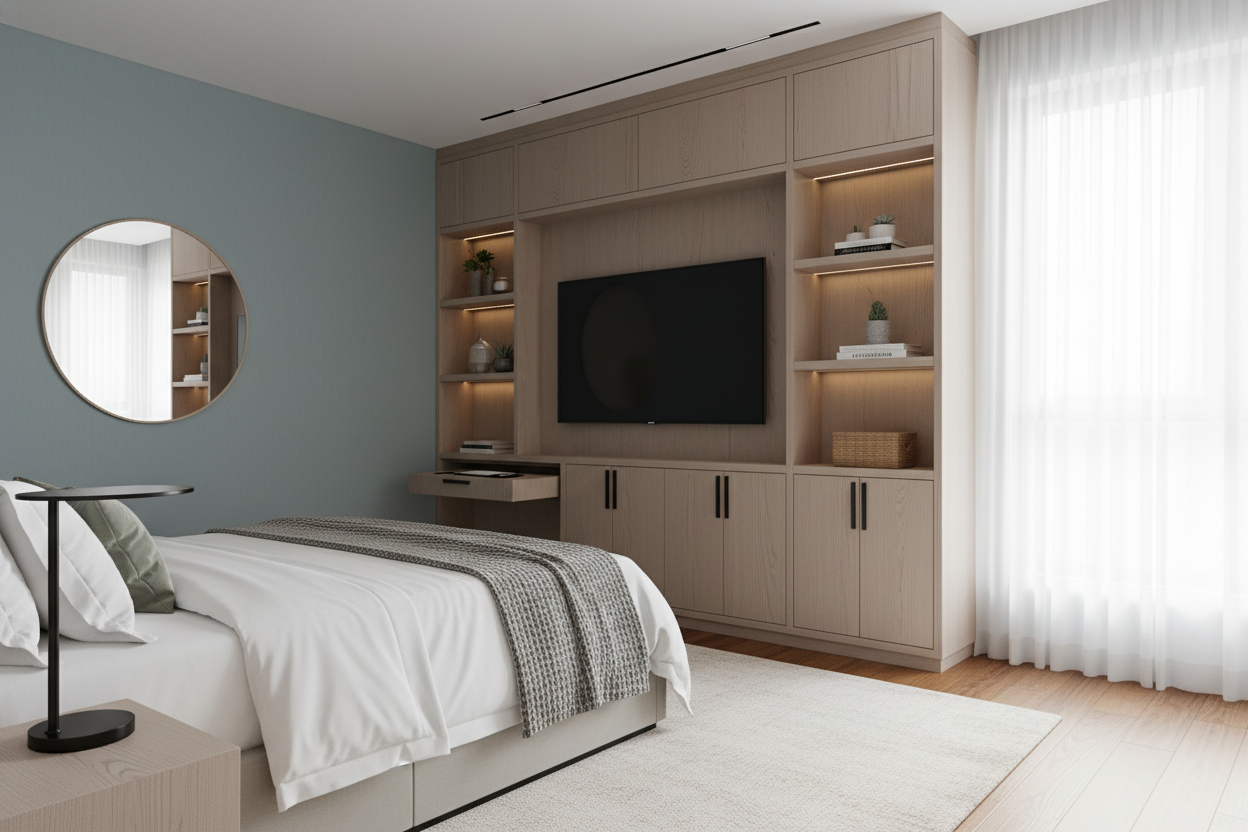
I spent three weeks staring at a tangled nest of HDMI cables and a dusty PlayStation sitting directly on my carpet. My 10x10 bedroom felt like a dorm room, but worse because I am an adult who should know better. I tried the 'minimalist' approach of mounting the TV on a blank wall, but it just looked like a lonely iPad floating in a sea of white drywall. I realized I didn't need more empty space; I needed a bedroom entertainment center that actually pulled its weight.
- Measure your 'walkway'—you need at least 22 to 24 inches to avoid bruised shins.
- Depth is more important than width in a small room; look for units under 14 inches deep.
- Opaque doors are a must to hide the visual noise of consoles and wires.
- Match wood tones to your existing furniture to prevent a 'big box store' aesthetic.
Why I Refused to Just Wall-Mount My TV
Wall-mounting is often touted as the ultimate small-space hack, but for me, it was a failure. When you mount a TV without a piece of furniture underneath it, you're left with two problems: dangling cords and no place to put your gear. I have a Nintendo Switch, a cable box, and a soundbar that actually makes movies audible. Without a bedroom entertainment unit, those things ended up in a heap on the floor or balanced precariously on a nearby chair.
In a 10x10 room, every square inch is a battleground. I found that a floating TV actually emphasized the clutter because there was nothing to anchor the gaze. It felt temporary and cheap. I wanted my bedroom to feel like a retreat, not a tech graveyard. I needed a piece of furniture that could hide the plastic and the blinking lights while providing a surface for a lamp or a plant to soften the room's edges. I once bought a 'solid wood' unit from a big-box store that turned out to be glorified cardboard; it bowed under the weight of a 42-inch TV within a month. This time, I was looking for real substance.
The Golden Rule for a Bedroom Entertainment Unit in Tight Quarters
The math of a 10x10 room is unforgiving. A queen-sized bed is roughly 60 by 80 inches. In a 120-inch wide room, that leaves you with about 40 inches of total clearance. If you put a standard 20-inch deep living room console at the foot of the bed, you are left with a 20-inch walkway. That is a recipe for a 2 AM toe-stubbing disaster. I learned that the secret is hunting for 'slim-profile' units or even sturdy entryway consoles that offer storage without the bulk.
Verticality is your best friend when horizontal real estate is at a premium. I discovered that a 48 inch tall entertainment center is the ultimate sweet spot. Most people think a media unit needs to be low, but in a bedroom, you are usually viewing from a higher vantage point—your bed. A taller unit draws the eye upward, making the ceiling feel higher while providing triple the storage of a low-slung console. It allowed me to tuck away my extra linens and tech gear without sacrificing an extra inch of floor space. If you can find something that is 12 to 14 inches deep but 48 inches high, you've hit the small-space jackpot.
Hiding the Ugly Wires (and Blinking Router Lights)
The fastest way to ruin a bedroom's vibe is a glowing red 'standby' light or a green router flicker hitting you in the eyes while you're trying to sleep. My biggest mistake in the past was buying an open-shelf unit. I spent four hours with zip ties trying to make it look decent, and it still looked like a server room. For a bedroom, you need opaque doors. Wood, cane, or even frosted glass works, but you want to block the view of the hardware entirely.
I also recommend a unit with a solid back panel. If yours doesn't have one, go to the hardware store, buy a thin sheet of 1/4 inch plywood, paint it to match the unit, and nail it on. This allows you to hide the 'spaghetti' of wires behind the consoles but inside the cabinet. I used a power strip mounted to the interior side-wall of the unit with heavy-duty Velcro. Now, only one single cord exits the back of the furniture and goes to the wall outlet. It’s clean, it’s organized, and it doesn't hum.
Tying It All Together With Nightstands and Decor
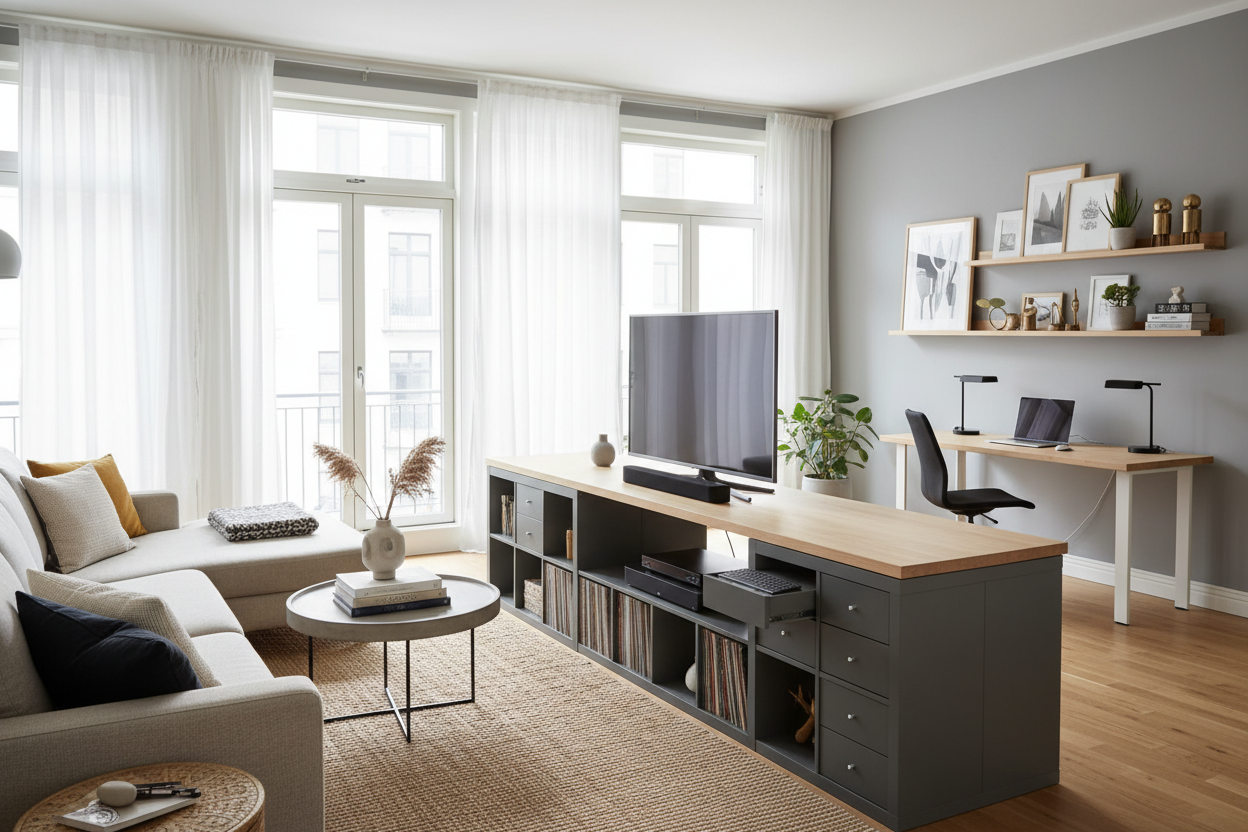
To keep the room from looking like a Best Buy showroom, you have to blend the electronics into the rest of your decor. I made the mistake of buying a high-gloss black media unit once, and it looked like a giant obsidian monolith in my cozy room. It never fit in. Now, I advocate for matching the wood species or the hardware of your media unit to your other pieces. For instance, I paired my walnut console with a storage nightstand chest that shared the same matte black metal legs.
When you are shopping for bedroom furniture, think about the visual weight. If your media center is a heavy, dark piece, keep your bedding and rug light to balance the room. I also suggest 'de-teching' the top of the unit. Don't just leave the TV there alone. Add a stack of books, a ceramic vase, or a trailing Pothos plant. These organic shapes break up the hard rectangles of the TV and the console, making the setup feel like part of a home rather than a workstation.
Was Losing Floor Space Actually Worth It?
People told me I was crazy to put a full-sized piece of furniture in a 10x10 room. They said it would make the room feel 'stuffed.' But the opposite happened. By giving my electronics, my extra blankets, and my random chargers a dedicated home, the rest of the room stayed clear. There is a psychological weight to clutter that is far heavier than the physical weight of a slim console.
Losing those 14 inches of floor space was the best decision I made for my apartment. The room feels more purposeful and, ironically, more spacious because the floor is finally clear of stray wires and 'temporary' storage bins. If you choose the right height and a slim profile, a media unit doesn't take up space—it creates it.
FAQ
Can I use a regular dresser as an entertainment center?
Yes, but be careful with the height. A standard dresser is often 30-36 inches tall. If you're watching from a high mattress, you might be looking 'down' at the TV, which causes neck strain. Also, dressers rarely have cord management holes, so you'll have to drill your own.
How much space do I really need between the bed and the TV?
At minimum, 22 inches for a walkway. If you have less than that, you'll find yourself bumping into the corners every time you make the bed. If it's really tight, look for a unit with rounded corners.
What color should I choose for a small room?
If you want the unit to 'disappear,' match it to your wall color. If you want it to look like a piece of high-end furniture, go with a natural wood tone like oak or walnut that matches your nightstands.
Do I need ventilation for my consoles?
Absolutely. If you are using a unit with doors, make sure there is at least two inches of clearance behind the console and a hole in the back for heat to escape. I've fried a PlayStation by keeping it in a sealed cabinet—don't be like me.

Leave a comment
This site is protected by hCaptcha and the hCaptcha Privacy Policy and Terms of Service apply.