

















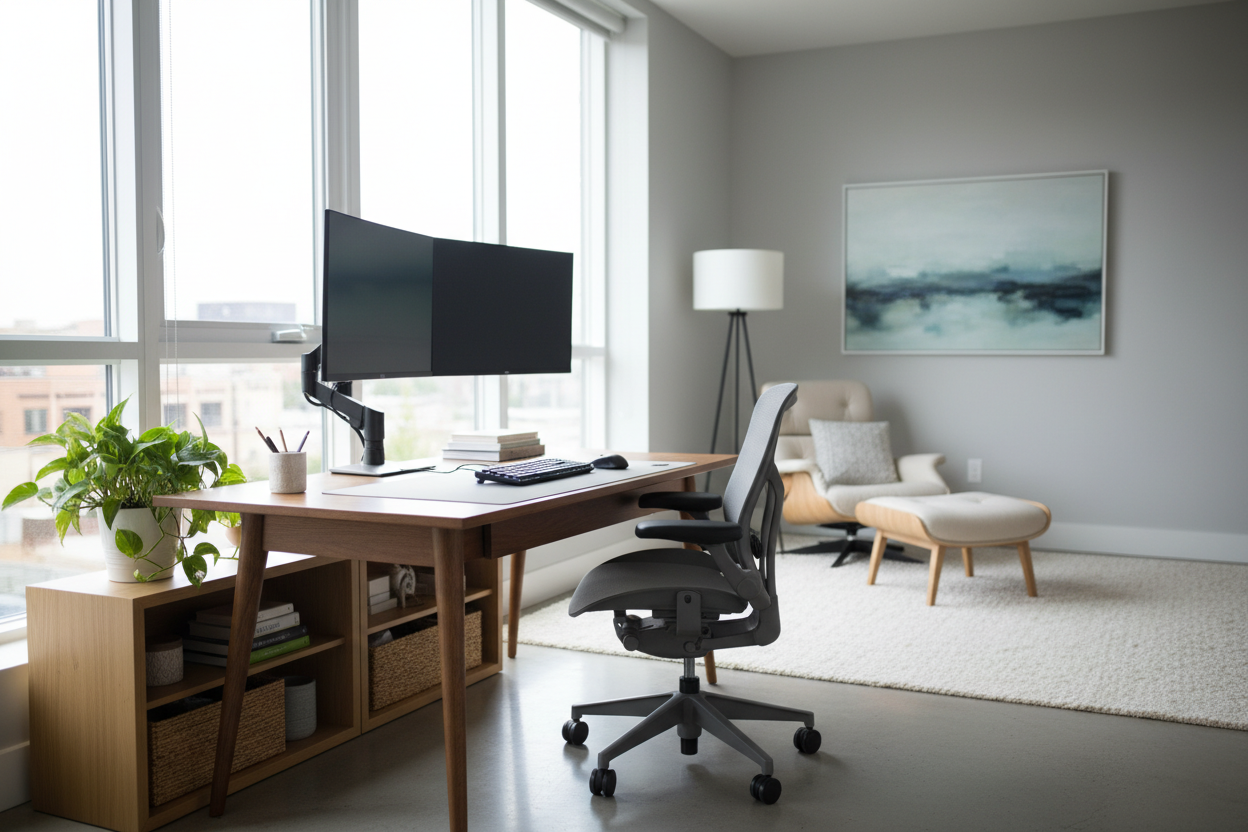
The shift to remote employment is often viewed through the lens of job applications and digital tools, but as an interior designer, I see it differently. The success of your remote career hinges on your physical environment. If you are asking how can i start work from home effectively, the answer begins with spatial zoning and ergonomic infrastructure, not just a Wi-Fi connection. A poorly designed workspace leads to fatigue and a lack of professional boundaries. This guide explores how to curate a home office that fosters productivity while maintaining the aesthetic integrity of your residence.
Quick Decision Guide: The Essentials
Before purchasing furniture or rearranging your layout, consider these foundational elements to ensure long-term comfort and focus:
- Ergonomics Over Aesthetics: Always prioritize a chair with adjustable lumbar support and seat depth over a trendy silhouette.
- Lighting Temperature: Aim for 4000K (cool white) lighting for task areas to maintain alertness, contrasted with warmer ambient light.
- Spatial Zoning: Even in open-plan living, use rugs or shelving to create a visual "commute" between living and working zones.
- Surface Depth: Ensure your desk depth is at least 24-30 inches to allow for proper monitor viewing distance.
Defining Your Workspace Architecture
When clients ask, "how do i start working from home without losing my living room," I point to intentional layout planning. You do not need a dedicated room, but you do need a dedicated zone. The psychology of space dictates that we need visual cues to switch into "work mode."
If you lack a spare room, look for alcoves or under-utilized corners. A floating console desk can turn a hallway into a functional station. The key is to position your desk perpendicular to windows to control glare while maximizing natural light intake, which is crucial for circadian rhythm regulation.
Selecting the Right Desk: Material and Scale
For those wondering how start work from home with a professional setup, the desk is your anchor. Avoid hollow-core composites that bow under the weight of dual monitors. Instead, look for solid wood or high-grade architectural veneers.
Solid Wood vs. Veneer
Solid wood offers durability and the ability to refinish surfaces over time, but it reacts to humidity. High-quality veneer over MDF provides stability and is often more resistant to warping. Whichever you choose, ensure the finish is matte or satin; high-gloss finishes create distracting reflections from overhead lighting.
The Ergonomic Chair: An Investment in Longevity
Learning how to start working at home involves protecting your physical health. The dining chair is the enemy of the remote worker. A proper task chair should feature a synchro-tilt mechanism, allowing the seat and back to move in a ratio that supports natural body movement.
Textiles matter here. Mesh backs offer breathability, which is vital for long shifts, while high-performance fabrics (like Crypton) offer stain resistance and a softer tactile experience. Avoid cheap bonded leather; it retains heat and tends to peel within a year of daily use.
Lighting and Acoustic Control
If you are thinking, "i want to work from home where do i start with technical setup," do not overlook acoustics and illumination. Hard surfaces bounce sound, creating an echo that sounds unprofessional on calls. Introduce soft furnishings—plush rugs, heavy drapery, or acoustic wall panels—to dampen noise.
For lighting, implement a layered approach. Relying solely on overhead cans creates unflattering shadows. Combine ambient lighting with a dedicated task lamp featuring an articulating arm. This allows you to direct light exactly where you need it, reducing eye strain.
My Personal Take on how can i start work from home
In my early years designing home offices, I made a classic mistake with my own setup. I fell in love with a vintage mid-century modern teak desk. It was stunning, with beautiful grain patterns and tapered legs. However, I didn't account for the "apron" (the wood strip beneath the drawer).
Every time I crossed my legs, my knees hit the wood. It was physically painful and forced me to sit too far back, ruining my posture. I learned the hard way that clearance is just as important as surface area. Now, when I advise clients on how to get started working from home, I always make them measure the clearance height of a desk, not just the top height. It’s a small, unpolished detail that determines whether you love your workspace or dread sitting in it.
Conclusion
To start working from home is to commit to a lifestyle that blends professional ambition with personal comfort. By investing in ergonomic furniture, thoughtful lighting, and durable materials, you build a foundation for success. Treat your home office not as a temporary fix, but as a permanent, high-performance design feature of your home.
Frequently Asked Questions
What is the minimum space required for a functional home office?
Ideally, you need a footprint of at least 50 inches wide by 60 inches deep. This accommodates a standard desk and allows the chair to roll back freely without hitting a wall or sofa.
How do I hide cables in a floating desk setup?
Cable management is essential for visual peace. Use vertebrae cable spines that run from the desk to the floor, or opt for furniture with integrated grommets and modesty panels to conceal power strips.
Is a standing desk worth the investment?
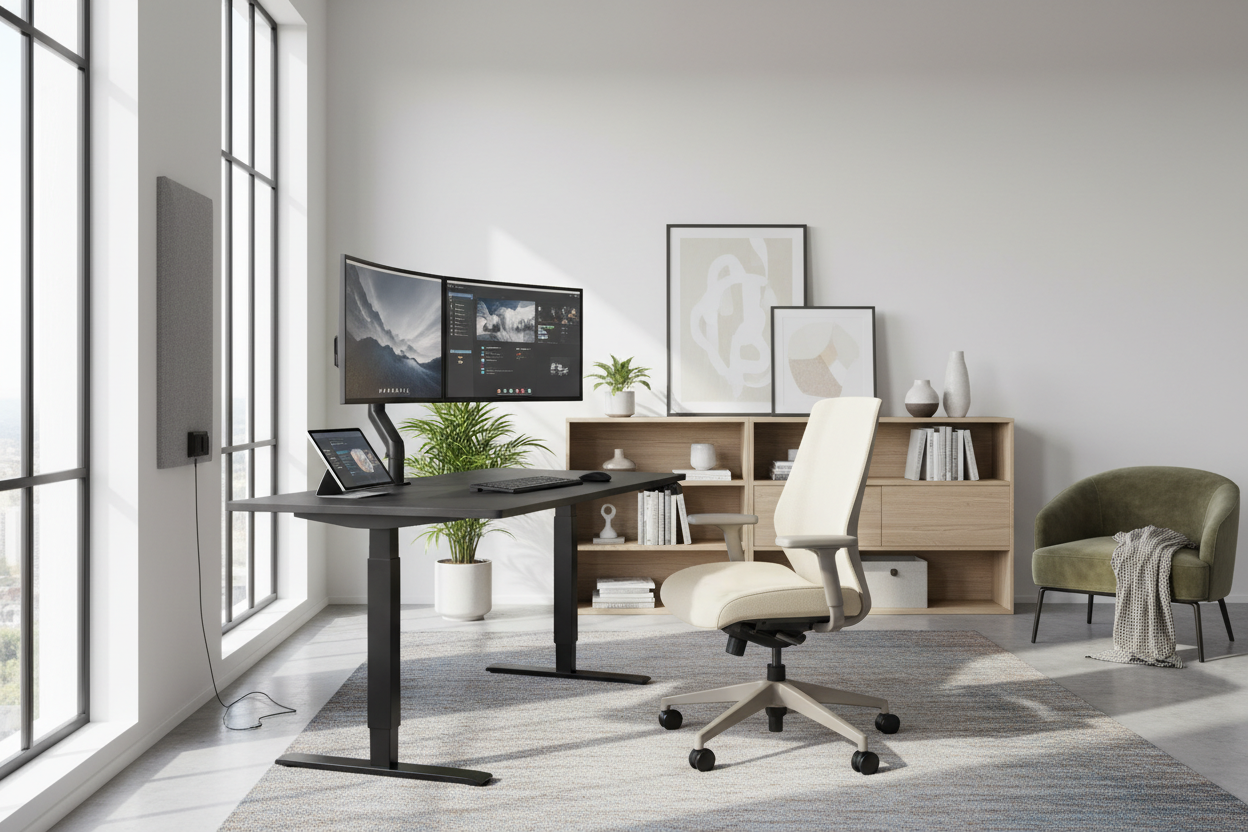
Yes, but look for a dual-motor electric model for stability. Manual cranks often wobble, and single-motor versions struggle with heavy loads. The ability to alternate posture reduces spinal compression significantly.

Leave a comment
This site is protected by hCaptcha and the hCaptcha Privacy Policy and Terms of Service apply.