

















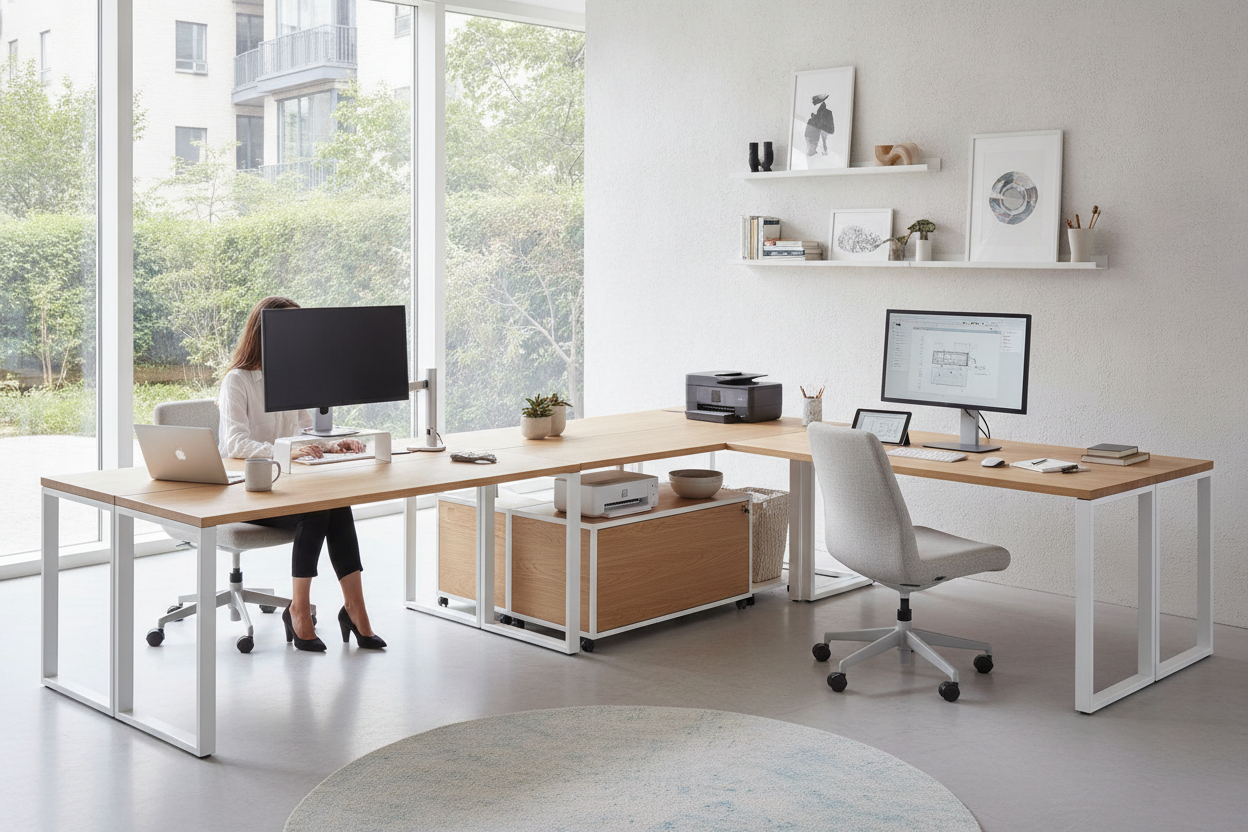
My husband and I used to share a massive 84-inch slab of walnut that we bought during the early days of remote work. We thought it was romantic—two professionals, face-to-face, collaborating in a sun-drenched spare room. The reality was a nightmare of tangled MacBook chargers, accidental foot-kicking, and my monitor vibrating every time he typed a particularly aggressive email. After six months of silent resentment, we realized the 'one big table' dream was dead. We needed a modular desk setup that actually respected our individual workflows.
Quick Takeaways
- Modular systems stop the 'monitor wobble' by giving each person their own independent support structure.
- You can utilize corners and 'dead zones' that standard rectangular desks simply can't fill.
- Modular storage units hide the ugly tech—routers and backup drives—behind stylish cabinet doors.
- It is far easier to move; modular desk pieces actually fit through standard doorways and around tight hallway corners.
The 'One Giant Table' Delusion
The Pinterest boards lied to us. They show these beautiful, clean surfaces with two chairs and zero clutter. They don't show the reality of two people trying to take Zoom calls at the same time while sitting four feet apart. When we shared one long table, every sound he made was amplified through the wood. If he tapped his pen, I felt it in my mouse hand. It was a constant battle for the 'middle zone' where the stapler and the shared charging hub lived. We were essentially living in a high-stakes game of Tetris where the pieces were coffee mugs and post-it notes.
The lack of acoustic and physical boundaries was the biggest hurdle. Without the separation provided by modular office furniture, we were constantly interrupting each other's flow. He needs three monitors; I need space for a physical notebook. A single table cannot accommodate both styles without someone feeling squeezed out. Investing in modular desk systems meant we could finally define our own borders. We stopped being 'co-workers' and went back to being a couple who just happened to work in the same zip code. It turns out, a little physical distance is the secret to a happy home office.
Why Cramming Two Standard Desks in a Room Failed
Our next bright idea was to buy two identical, standalone desks and shove them against opposite walls. This was arguably worse. Our spare bedroom is a standard 10x12, and two fixed-size workstations turned the room into a cramped obstacle course. One desk blocked the closet door halfway, and the other meant I couldn't fully open the window. It felt like a sad corporate cubicle farm rather than a home. If I could go back in time, I would tell myself to stop buying a home office furniture desk before reading this exact advice on measuring functional footprints.
Standard home office modular desk options are often too rigid. They assume your room is a perfect square with no radiators, low windows, or awkwardly placed outlets. When you try to force two 'standard' pieces into a shared space, you end up with dead zones—corners that collect dust and tangled cables because you can't actually reach them. We realized that modular office desks were the only way to hug the walls and maximize the square footage we actually had. We needed something that felt built-in without the $5,000 price tag of custom cabinetry.
Enter the Modular Desk: Breaking Down Our Setup
The breakthrough happened when we looked at modular office furniture system components as building blocks rather than fixed units. We mapped out the room and realized we didn't need two separate islands; we needed a continuous flow. We used modular desk units to create a 'J-shaped' configuration. My side is a deep corner unit that gives me plenty of room for my dual-monitor arm and a dedicated writing computer desk area for my analog planning. His side is a straight, streamlined run of modular tables for office use that connects seamlessly to my corner, but sits on its own legs to prevent vibration transfer.
This modular desk system home office setup allowed us to use the entire length of the longest wall while turning the corner to reclaim space that was previously wasted. We mixed and matched modular desk components—choosing wider tops where we needed the depth and slimmer pieces near the door to keep the walkway clear. By using office modular systems, we were able to stagger our seating. Now, we aren't looking directly at each other, which has done wonders for our focus. I opted for a modular wood desk finish that feels warm and residential, avoiding that 'temporary' look that cheap modular tables office setups often have. It’s sturdy, it’s quiet, and it actually fits the room.
Storage That Doesn't Scream 'Corporate Cubicle'
One of the biggest wins of our new modular desk furniture is the storage. Most people think of filing cabinets as those heavy, gray metal bins that belong in a basement. But modular desk cabinets today are designed to look like modern furniture. We integrated a corner desk with large storage unit at the junction where our two desks meet. This serves as the 'tech hub' where the printer, the mesh router, and all the external hard drives live, completely out of sight.
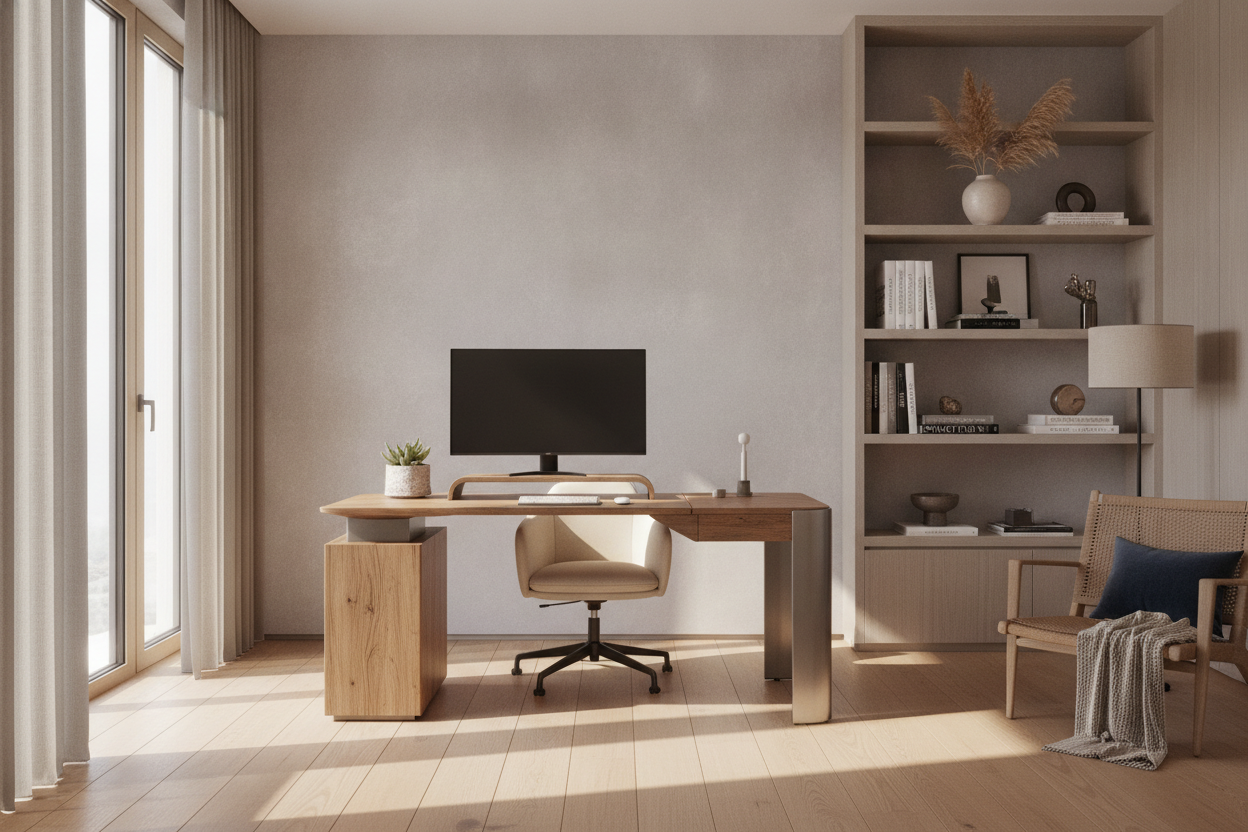
Using a modular storage desk approach means we don't have stacks of paper and random tech gear cluttering our work surfaces. We chose modular office desk furniture with soft-close drawers and clean lines. It looks more like a high-end sideboard than a workstation. The beauty of modular system office furniture is that you can place the storage exactly where you need it—under the desk to save floor space, or as a standalone unit that bridges two work surfaces. It’s about creating a modular office desk system that serves your specific mess, not some generic idea of what an office should look like.
How to Configure Yours Without Losing Your Mind
Before you start clicking 'add to cart' on every modular executive desk piece you see, you need a plan. First, measure your 'chair swing.' This is the space you need to actually push back and stand up without hitting a wall or your partner. In our office modular desk system, we prioritized this over having extra-deep desk surfaces. Second, think about your power. We chose modular desk pieces with integrated cable management channels because nothing ruins a 'clean' aesthetic faster than a spaghetti-mess of black wires hanging off a beautiful modular computer desk.
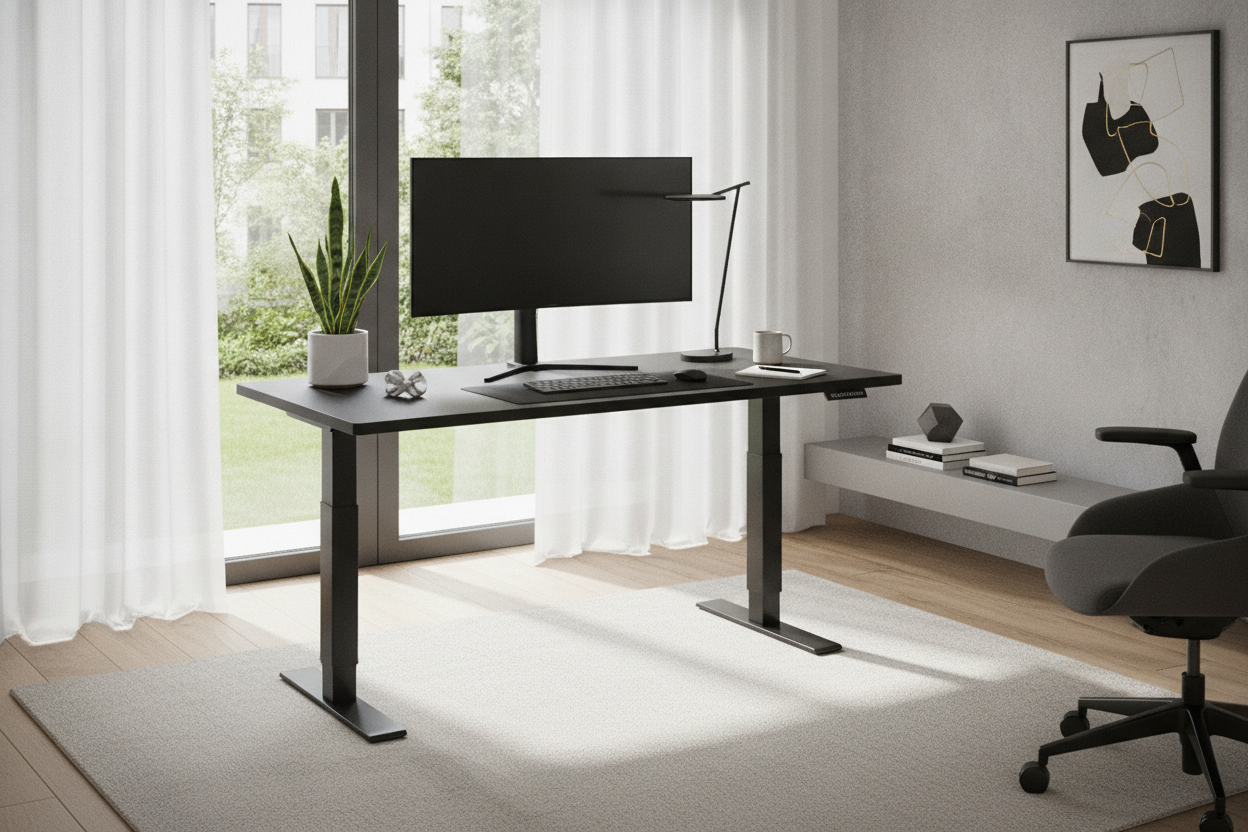
Finally, don't feel like everything has to be perfectly symmetrical. My partner needs more legroom because he’s 6'2", so his modular office desk components include taller, adjustable legs. My side is slightly lower for better ergonomics. For more on balancing these technical needs with a look you actually like, how to select a home office furniture desk that elevates your work is a great place to start. Don't be afraid to mix a modular wood desk surface with metal accents to give the room some texture. The best modular office furniture is the kind that feels like it was designed for you, not a warehouse.
FAQ
Can I add more pieces to a modular desk later?
Absolutely. That is the main selling point. If you move to a bigger house or your team grows, you can buy additional modular desk pieces or surfaces to extend your current setup without starting from scratch.
Is assembly difficult for modular office furniture?
It’s generally no harder than standard flat-pack furniture. The main difference is that you have more pieces to connect. If you can use a screwdriver and a level, you can handle a modular desk system.
Does a modular desk feel as sturdy as a solid one-piece desk?
If you buy quality modular office desk components, yes. Look for heavy-duty steel connectors and thick work surfaces (at least 1 inch thick). Avoid the paper-thin particle board found at big-box retailers if you want it to last more than a year.

Leave a comment
This site is protected by hCaptcha and the hCaptcha Privacy Policy and Terms of Service apply.