


















I used to stare at my bookshelf and feel a low-grade fever of annoyance. I had these great vintage cameras and hand-painted figurines, but half of them were essentially invisible. If you have more than five items on a shelf, you know the drill: the stuff in the back gets swallowed by shadows and dust, never to be seen again unless you physically move the front row.
I tried rotating my collection every month, but that just felt like a chore I didn't sign up for. Then I finally caved and bought a multi-level display box. It sounds like such a basic organizational tool, but it changed how I see my own things. It’s the difference between a cluttered pile and a curated gallery.
- Verticality is king: Tiered steps use the 'dead air' at the top of your shelf.
- Visibility: Every item gets its own 'stadium seat' so nothing is hidden.
- Dust protection: Fully enclosed boxes mean you stop spending your Saturdays with a microfiber cloth.
- Footprint: You can fit roughly 40 percent more items in the same square inch of shelf space.
The 'Hidden in the Back' Problem Every Collector Knows
Flat shelving is a lie. We buy these deep, 12-inch bookcases thinking we have all this room, but unless your items are the size of dinner plates, you’re only using the front three inches. The rest is a dark abyss. I had a collection of small ceramics that looked like a disorganized crowd at a bus stop because I was trying to squeeze them all onto one level.
When things are hidden, you stop appreciating them. You forget what you own. I actually bought a duplicate of a small brass trinket because I couldn't see the original one tucked behind a larger vase. That was my breaking point. A standard flat shelf forces a hierarchy where the tall stuff wins and the small stuff disappears.
Why the Stadium Seating Approach Actually Works
The mechanics of a multi level display case are borrowed straight from architecture. By creating tiers—usually three or four steps—you are utilizing the vertical volume of your furniture rather than just the horizontal area. It’s the same logic behind why a glass door display case with LED light looks so much more professional than a dark cupboard; it forces the eye to travel upward and ensures light hits every layer.
In my experience, 3mm thick acrylic is the sweet spot. Anything thinner feels like a takeout container and will bow under the weight of even light resin figures. When you lift those back-row items up by just two or three inches, they suddenly catch the ambient light in the room. You aren't just storing things anymore; you're actually displaying them.
Where Tiered Acrylic Boxes Work Best in Small Homes
I started with one box in my living room, but the 'stadium' logic quickly migrated to other parts of my 700-square-foot apartment. If you have a surface that feels cluttered no matter how many times you straighten it, you probably need a tier.
The Bathroom Vanity (For Skincare and Perfume)
My bathroom vanity used to be a disaster zone. Every time I reached for my moisturizer in the back, I’d knock over three glass perfume bottles like a set of expensive dominos. Putting a small multi-level box on the counter stopped the chaos. Now, the tall hairsprays live in the back, and the tiny eye creams sit front and center. No more 7 AM bottle-toppling stress.
The Awkward Corner Shelf
Corner shelves are the black holes of interior design. They are deep, dark, and impossible to style without it looking like a junk drawer. I’ve found that a corner display case or a tiered insert is the only way to make that space functional. If you're wondering if a corner cabinet display case worth it, the answer is usually yes if you have a collection that thrives on depth.
Does It Look Too Much Like a Retail Store?
This was my biggest fear. I didn't want my living room to feel like a high-end vape shop or a jewelry counter. Clear acrylic can feel a bit sterile if you overdo it. To keep the vibe residential, I mix textures. I’ll place a sleek acrylic box next to a stack of linen-bound books or a potted trailing plant. The greenery softens the hard edges of the plastic.
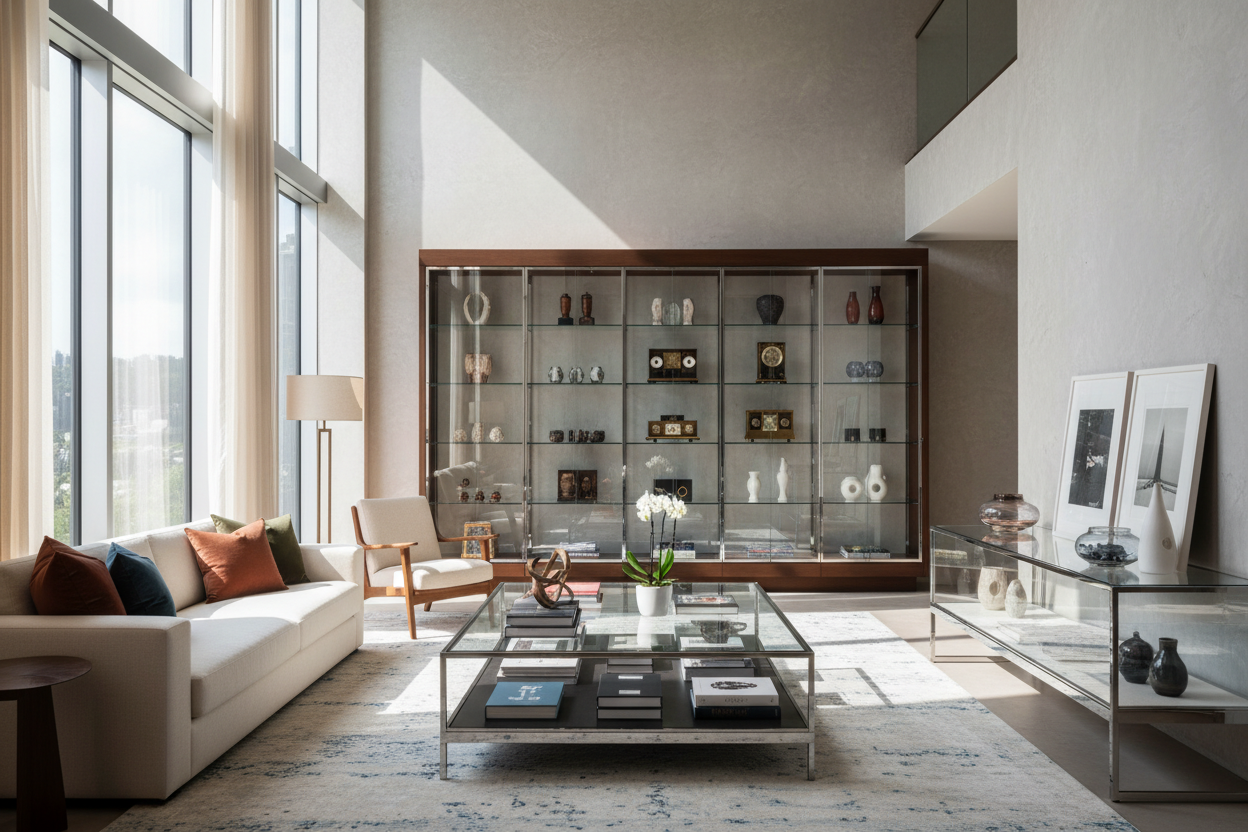
If the 'clear' look still feels too much like a display case for retail, you can always go the traditional route. A white display case with glass doors gives you those same tiered benefits but with a much softer, 'homey' aesthetic. The goal is to see your stuff, not just the container it's in.
FAQ
Will acrylic display boxes yellow over time?
Cheap plastic will, but high-quality acrylic (look for 'UV-resistant' in the specs) stays clear for years. Keep them out of direct, pounding sunlight to be safe.
How do I clean the tiers without scratching them?
Never use Windex or paper towels. They create micro-scratches that make the plastic look cloudy. Use a microfiber cloth and a dedicated acrylic cleaner, or just a tiny bit of dish soap and water.
Are these boxes sturdy enough for heavy items?
For heavy die-cast cars or stone carvings, skip the thin snap-together boxes. Look for 'museum grade' or solid-molded units. If the steps flex when you press them with your thumb, they aren't for your heavy stuff.

Leave a comment
This site is protected by hCaptcha and the hCaptcha Privacy Policy and Terms of Service apply.