

















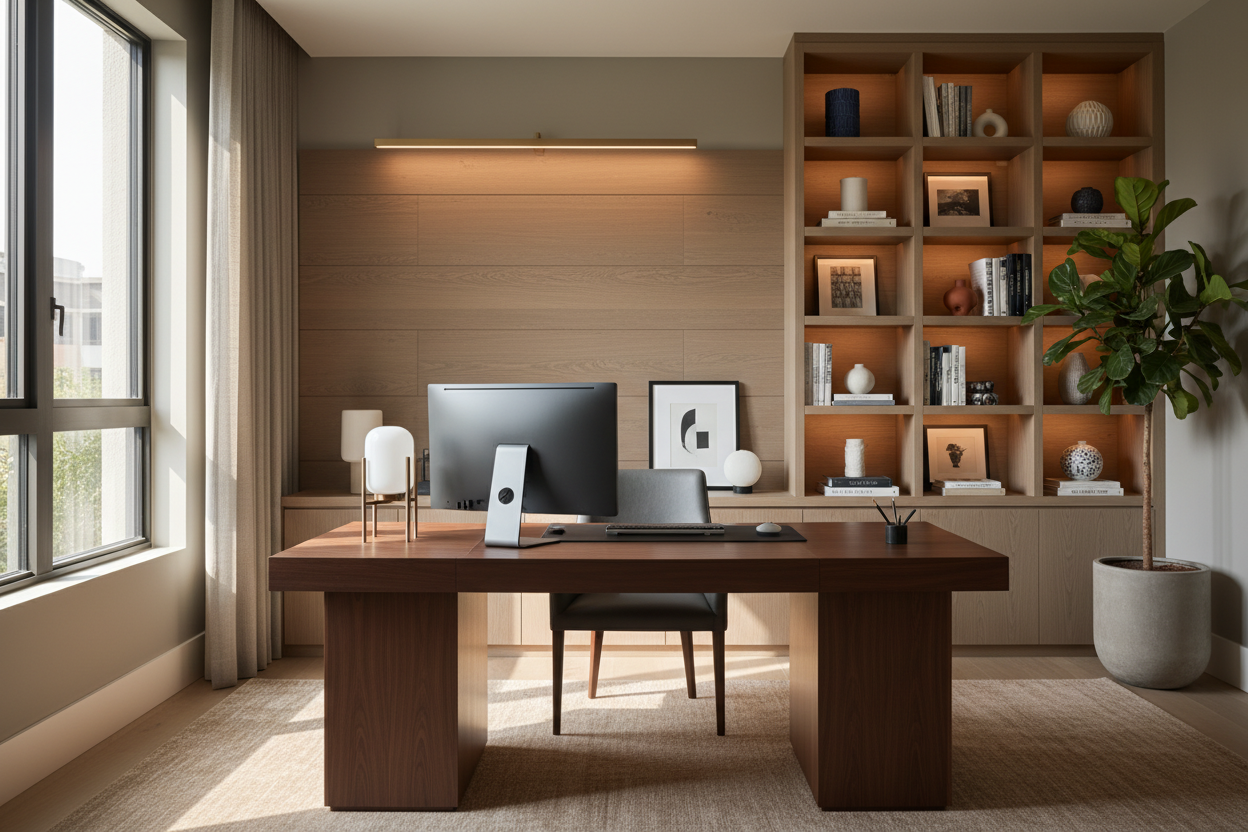
We have all been there: trying to knock out a few hours of deep work at the dining table, surrounded by mail, or squeezed into a spare bedroom that doubles as a chaotic storage unit. If your workspace feels like an afterthought, your focus will inevitably suffer. Getting your home study design right is about more than just buying a desk and a chair; it requires a deliberate approach to layout, ergonomics, and visual balance.
In this guide, I will walk you through the structural rules of creating a workspace that actually supports your daily routine. You will walk away knowing how to position your furniture, scale your pieces to your room, and avoid the costly mistakes that plague most residential offices.
Quick Decision Guide
- Face the door: Position your desk in the 'command position' facing the entrance to reduce subconscious anxiety.
- Mind the clearance: Always leave at least 36 to 42 inches of space behind your desk to comfortably roll back your chair.
- Prioritize task lighting: Relying solely on overhead flush mounts creates harsh shadows; layer with a dedicated desk lamp.
- Control the cords: Plan for wire management before buying furniture to avoid visual clutter.
Space Planning and the Command Position
The biggest mistake I see in North American floor plans is the instinct to shove a desk flat against a blank wall. While this might seem like a space-saver, staring at drywall is visually restrictive and mentally draining.
Mastering the Layout
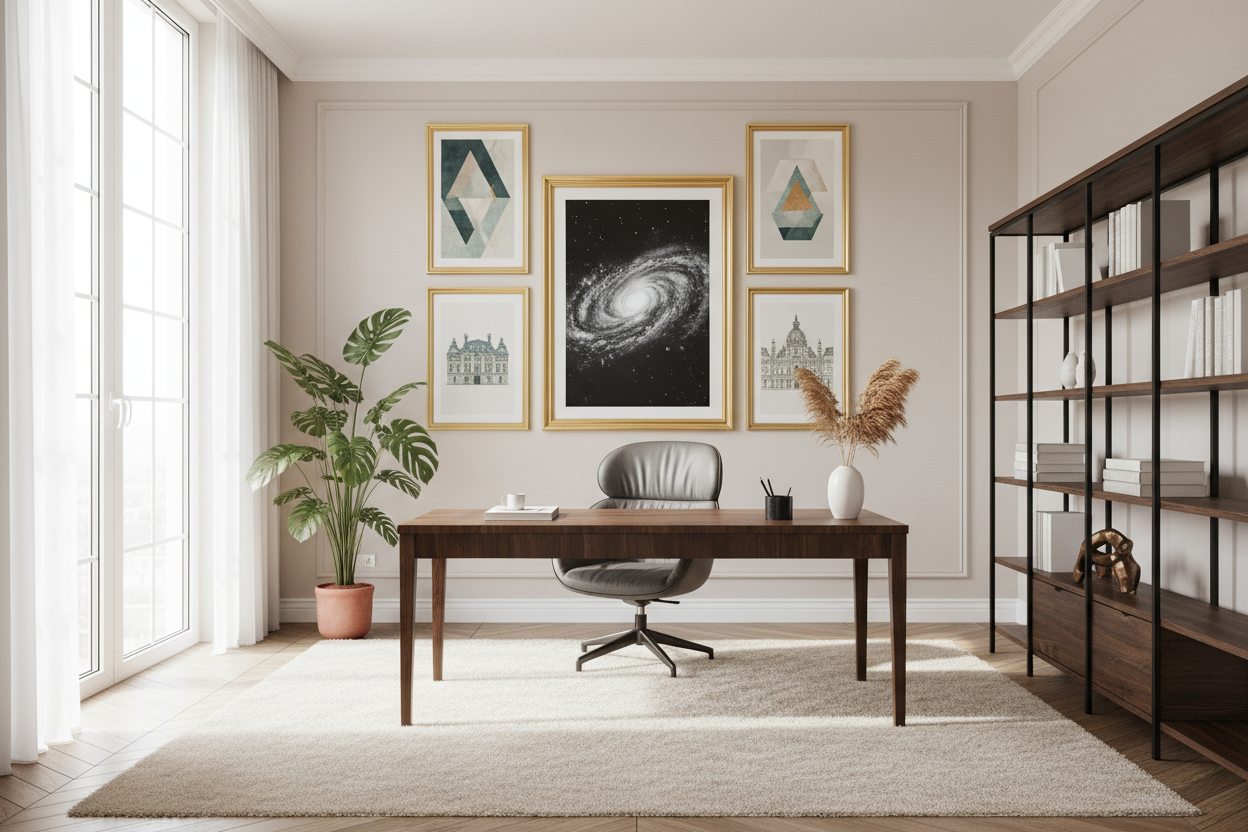
Whenever dimensions allow, float your desk in the center of the room, facing the door. This layout technique gives you a clear view of the space and anchors the room. If you are browsing home study design ideas for smaller footprints, and floating the desk is impossible, try positioning it perpendicular to a window. This gives you a view without the harsh glare of direct sunlight hitting your monitor.
Clearance Rules to Live By
Scale and proportion dictate how a room functions. A common residential pitfall is buying a massive executive desk that suffocates the room. Leave a minimum of 36 inches behind the desk for chair clearance. If you have bookshelves or filing cabinets behind the seating area, increase that to 48 inches so you can open drawers without slamming into your chair.
Comfort and Ergonomics
A study can look magazine-ready, but if your back aches after an hour of emails, the design has failed. The relationship between your desk height, chair seat, and monitor placement is non-negotiable.
The Desk and Chair Relationship
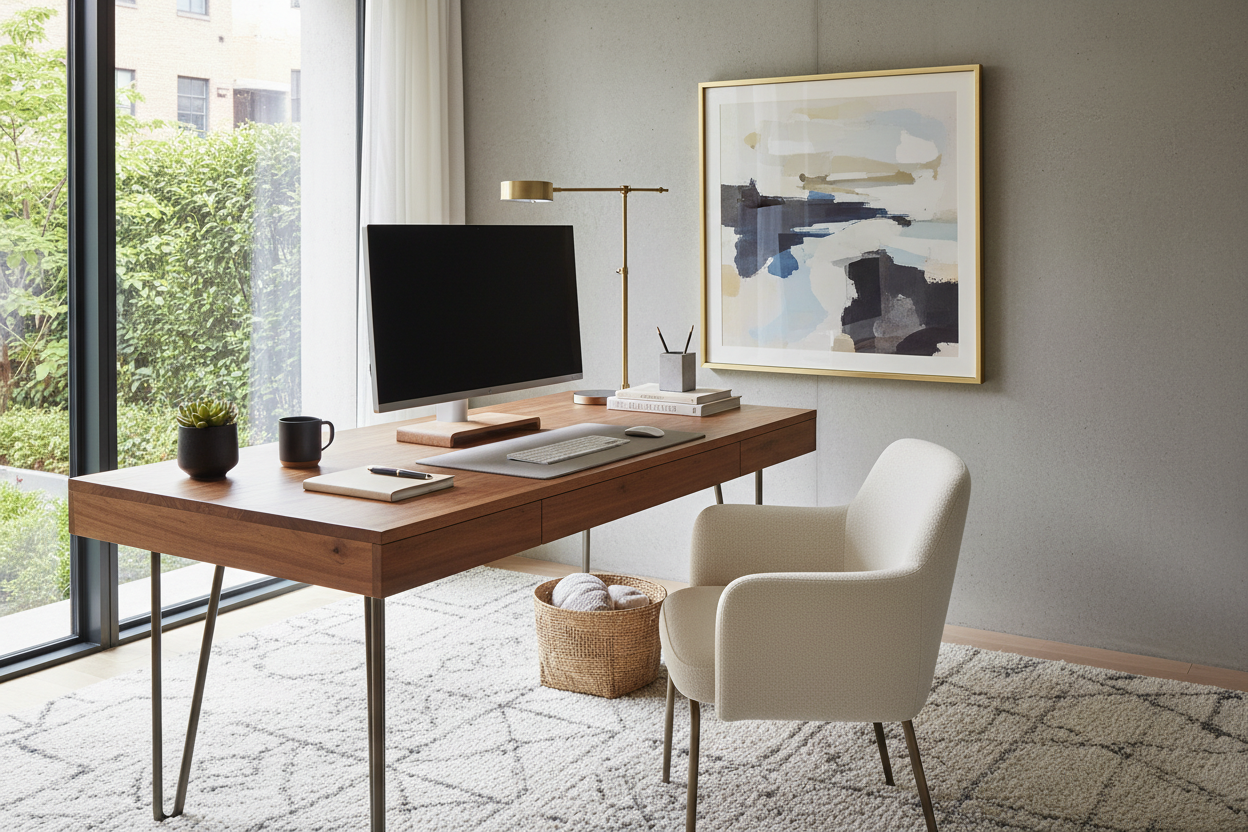
Standard North American desks sit at about 29 to 30 inches high. To maintain proper posture, your chair needs adjustable seat height and firm lumbar support. Unfortunately, many highly styled chairs lack these features. If you opt for an upholstered dining chair for aesthetic reasons, expect to compromise heavily on physical comfort. Look for transitional office chairs that marry ergonomic mechanisms with residential fabrics like textured bouclé or warm leathers.
Style and Visual Weight
Your workspace should feel like a natural extension of your home, not a sterile corporate cubicle. Managing the visual weight of your furniture is critical here.
Balancing Heavy and Light Pieces
If you choose a heavy, solid wood desk with closed sides, balance it with a visually light chair that has slim metal legs or an open silhouette. Conversely, if your desk is a minimalist glass or thin metal structure, you can ground the space with a heavier, fully upholstered chair or a chunky wool rug. Layering textures—like pairing a sleek walnut veneer desk with a matte linen drapery—adds warmth and prevents the room from feeling stark.
Designer's Honest Take: Lessons from My Own Projects
Early in my career, I designed a spectacular home office for a client in a historic Boston brownstone. We sourced a breathtaking vintage French writing desk. It had incredible patina, delicate brass hardware, and a gorgeous leather top. It photographed beautifully.
It was also a functional disaster. Because it was an antique, there was zero cord management. Within a week, the beautiful negative space beneath the desk was a tangled web of black power cords, monitor cables, and a bulky power strip. Worse, the heat from the client's laptop began to warp the vintage leather inlay. I learned the hard way that a workspace must prioritize modern utility first. I ended up having a custom, matching modesty panel built to hide the cords and sourced a thick, protective desk mat. Always check how a piece handles the ugly reality of modern technology before falling in love with its silhouette.
Frequently Asked Questions
Where should I put a desk in a small home study?
In tight spaces, utilize verticality. An alcove or a closet conversion works beautifully. Ensure you use floating shelves above the desk to draw the eye up and save precious floor space.
What are the best colors for focus?
Warm, muted tones like sage green, dusty blue, or deep charcoal reduce eye strain and promote calm. Avoid stark hospital whites or high-energy reds, which can cause visual fatigue over long periods.
How do I hide cords in my home study design?
Use cable management trays that mount to the underside of the desk. For floating desks, run cords down a single desk leg using zip ties or a cord sleeve, and route them to a floor outlet if possible.

Leave a comment
This site is protected by hCaptcha and the hCaptcha Privacy Policy and Terms of Service apply.