

















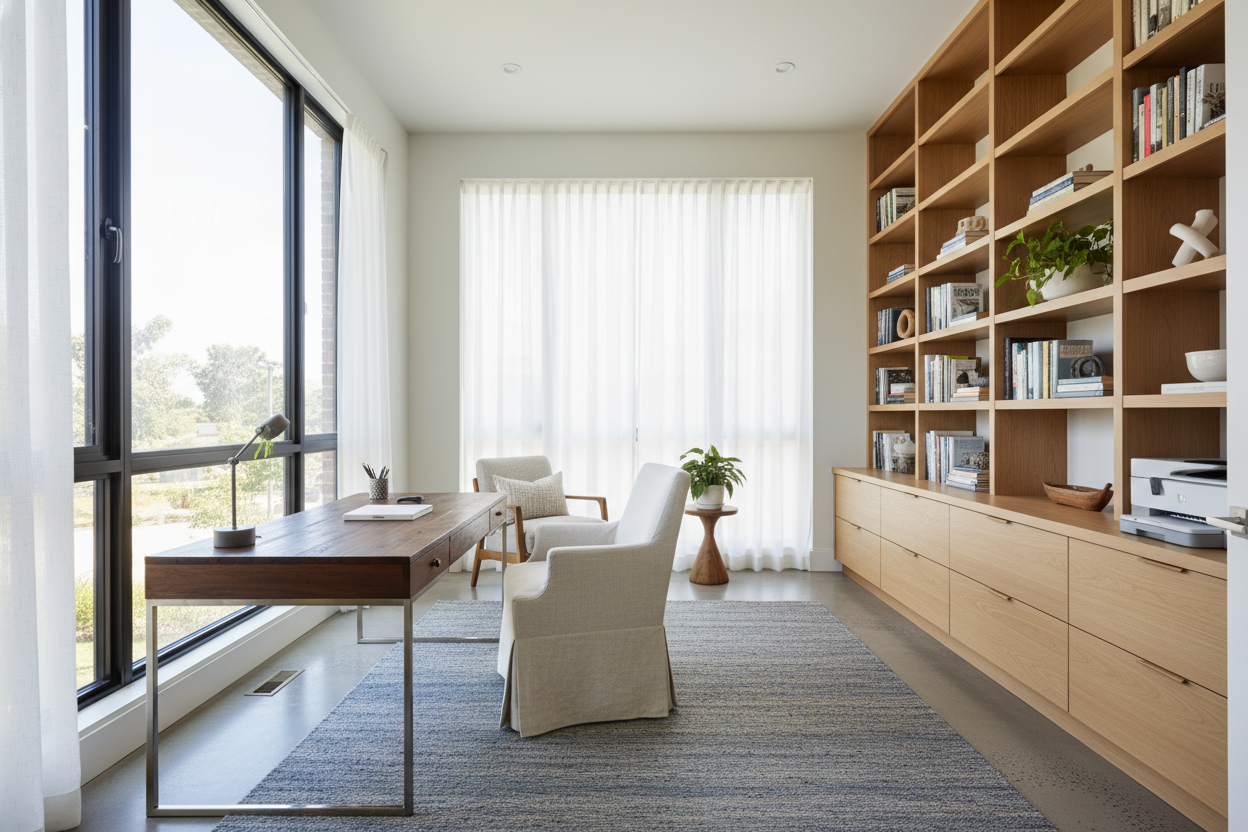
We have all been there—squinting at a laptop screen while the afternoon sun aggressively bounces off the glass, or joining a video call looking like a shadowy silhouette. When setting up a workspace, the home office window is often treated as a mere backdrop. But in reality, it dictates the entire layout, lighting, and thermal comfort of your room.
Getting the orientation wrong can lead to daily eye strain, awkward room flow, and a space you actively avoid using. Whether you are dealing with a tiny apartment nook or a spacious suburban spare bedroom, you will walk away from this guide knowing exactly how to position your furniture and treat your glass for maximum productivity.
Quick Decision Guide
- The Perpendicular Rule: Always aim to place your desk perpendicular to the window. This provides natural side-lighting without direct screen glare or backlighting.
- Control the Glare: Invest in solar shades with a 1% to 3% openness factor. They cut the harsh UV rays while preserving your view to the outside.
- Mind the Vents: Standard North American residential builds often place HVAC registers directly under windows. Do not block these with heavy solid-backed desks.
- Layer Your Treatments: Pair functional roller shades with decorative drapery to add acoustic dampening, which drastically improves audio quality on calls.
Space Planning & Layout
The Desk-to-Window Relationship
The biggest mistake I see in residential workspaces is the instinct to push the desk right up against the glass. While looking out at the neighborhood feels romantic in theory, a home office with windows directly in front of your monitors is an ergonomic nightmare. Your eyes are forced to constantly adjust between the bright daylight and the backlit screen, leading to severe fatigue by 2 PM.
Instead, float the desk in the room or anchor it to a side wall. If you must face the window due to square footage constraints, leave at least 18 to 24 inches of negative space between the back of the desk and the sill. This breathing room allows for proper air circulation and gives you space to drop a curtain without it pooling on your cables.
Light Control & Window Treatments
Layering for Function and Style
When clients ask me for home office window ideas, I always steer them away from heavy, static treatments like plantation shutters, which can cast distracting, zebra-like shadows across your workspace. You need dynamic light control.
Start with a functional base layer. Motorized or manual solar shades are ideal because they filter glare while maintaining your connection to the outdoors. Layer this with a lightweight linen drape. The fabric softens the hard architectural lines of the window casing, absorbs echoing sound, and adds necessary visual warmth to a room that is often dominated by hard tech equipment.
Designer's Honest Take: Lessons from My Own Projects
Early in my career, I designed a stunning executive space in a modern farmhouse build outside of Austin. The client insisted on placing a massive, heavy walnut desk directly facing a gorgeous, floor-to-ceiling south-facing window. It looked incredible in the portfolio photos.
But I learned the hard way that aesthetics do not always translate to livability. Within a week, the client was miserable. The afternoon glare was so brutal he had to wear sunglasses to read his emails, and the heat gain through the glass made the room a sauna. We ended up having to retrofit expensive, hard-wired motorized blackout shades just to make the room usable during working hours. It was a costly lesson: never fight the sun. Always prioritize the functional geometry of the room over a magazine-cover layout.
Frequently Asked Questions
Should my desk face the window?
Ideally, no. Facing the window causes eye strain due to the contrast between the bright outdoors and your monitor. The best placement is perpendicular to the window, allowing natural light to illuminate your face from the side.
What are the best window treatments for an office?
Solar roller shades are the gold standard. They block UV rays and harsh glare while still letting you see outside. Pair them with fabric drapery to help absorb sound and reduce echo during video calls.
How do I reduce glare without losing natural light?
Use sheer curtains or light-filtering cellular shades. Additionally, position your computer monitor so the screen is at a 90-degree angle to the light source, which naturally eliminates reflection without requiring you to plunge the room into darkness.


Leave a comment
This site is protected by hCaptcha and the hCaptcha Privacy Policy and Terms of Service apply.