

















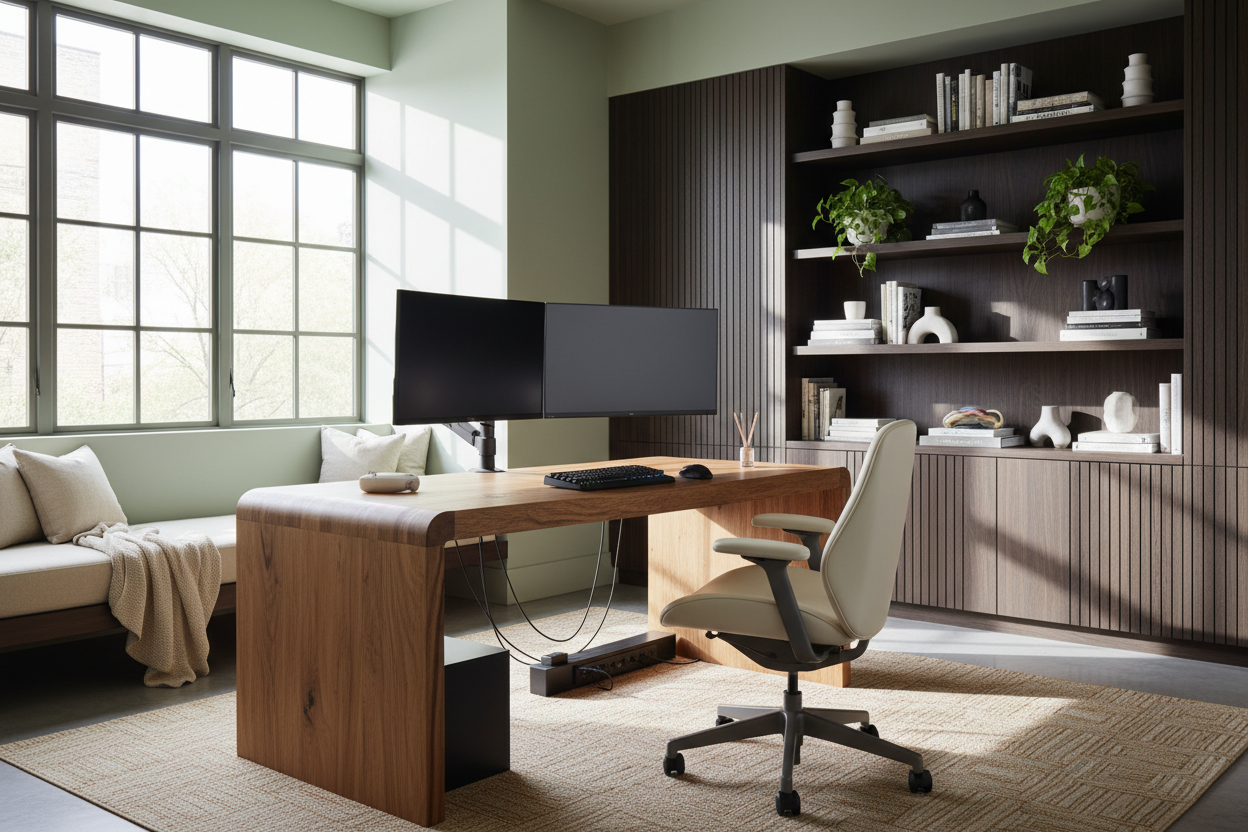
We have all been there: sitting at the dining table, surrounded by mail, trying to look professional on a video call while the dog barks at the delivery driver. If your current workspace feels chaotic, you are not alone. Finding the right home office setup ideas is about more than just buying a desk and a chair; it is about creating an environment that supports focus, comfort, and your home's existing aesthetic.
A well-planned workspace balances visual weight with daily function. By the end of this guide, you will know exactly how to plan a layout that looks intentional and functions beautifully, whether you have a dedicated room or just an empty alcove to work with.
Quick Decision Guide
- Face the light: Always position your desk perpendicular to a window to reduce glare and maximize natural daylight on your face.
- Prioritize ergonomics over aesthetics: A beautiful vintage chair will ruin your back. Invest in an adjustable ergonomic chair first.
- Leave breathing room: Ensure at least 36 inches of clearance behind your desk so you can push your chair back comfortably without hitting a wall.
- Hide the clutter: Incorporate closed storage for paperwork and cables to reduce visual noise and mental fatigue.
Space Planning and Layout Strategies
Exploring Home Office Configuration Ideas
The biggest mistake I see clients make is shoving a desk against a blank wall. While this might seem like a space-saver, staring at drywall all day drains creativity. Instead, consider floating your desk in the center of the room, facing the door. This 'command position' provides a psychological sense of control and makes the room feel larger. If you are working with a shared living area, use visual dividers like an open bookcase or a strategically placed rug to define the workspace boundaries.
Adapting Office Setup Ideas for Home Environments
Not everyone has a spare bedroom to dedicate to work. When looking at office setup ideas for home use in tight quarters, focus on verticality. Wall-mounted floating desks or ladder shelving with an integrated workspace can maximize a tight alcove. Remember to measure your walkways. You need a minimum of 36 inches behind the desk and at least 30 inches of clearance for any main traffic paths so the room does not feel cramped.
Comfort and Ergonomics
Home Office Workstation Ideas That Support Your Body
Let us talk about the physical reality of sitting for eight hours a day. The foundation of any good workstation is the relationship between your desk height, monitor height, and chair. Standard desks sit at 29 to 30 inches high, which is actually too tall for many people unless they use a keyboard tray or an adjustable chair with a footrest. Your monitor should be at eye level to prevent neck strain. When considering home setup ideas, a standing desk converter or a full sit-stand desk is worth the investment, allowing you to shift postures throughout the day.
Blending Your Workspace with Existing Decor
If your desk is in the living room or bedroom, you do not want it looking like a corporate cubicle dropped into your personal space. Choose materials that speak to your home's architecture. A warm walnut desk pairs beautifully with mid-century or transitional spaces, while a sleek metal and glass table leans modern. Use negative space to your advantage. A visually light desk with open legs will make a small room feel airier than a heavy, solid-wood executive desk that blocks sightlines.
Designer's Honest Take: Lessons from My Own Projects
I will be completely honest: I used to prioritize aesthetic chairs in my own home office. I bought a stunning, vintage cane-back chair that looked incredible in photos. Three months later, I was paying for physical therapy. I learned the hard way that a beautiful silhouette does not pay the bills if you cannot sit in it for more than an hour.
Now, I always specify highly adjustable, ergonomic chairs for my clients, even if they look a bit more tech than chic. Another hard truth? Cable management is a nightmare. Do not buy a glass desk unless you are prepared to look at a tangled mess of black cords every single day. Stick to opaque surfaces where you can mount a cable tray underneath and keep the visual clutter hidden.
Frequently Asked Questions
What are the best office setup ideas at home for tight budgets?
Focus your budget on a high-quality ergonomic chair; this is non-negotiable for your health. You can easily save money by purchasing a simple, sturdy table base and attaching an inexpensive butcher block or laminate top from a local hardware store.
How much space do I actually need?
At a bare minimum, you need a footprint of about 5 by 5 feet. This accommodates a standard 48-inch desk and provides the necessary 36 inches of push-back clearance for your chair.
Where should my desk face?
Ideally, your desk should be placed perpendicular to a window. This gives you the benefit of natural light for video calls without the harsh glare on your monitor that comes from having the window directly behind you.

Leave a comment
This site is protected by hCaptcha and the hCaptcha Privacy Policy and Terms of Service apply.