

















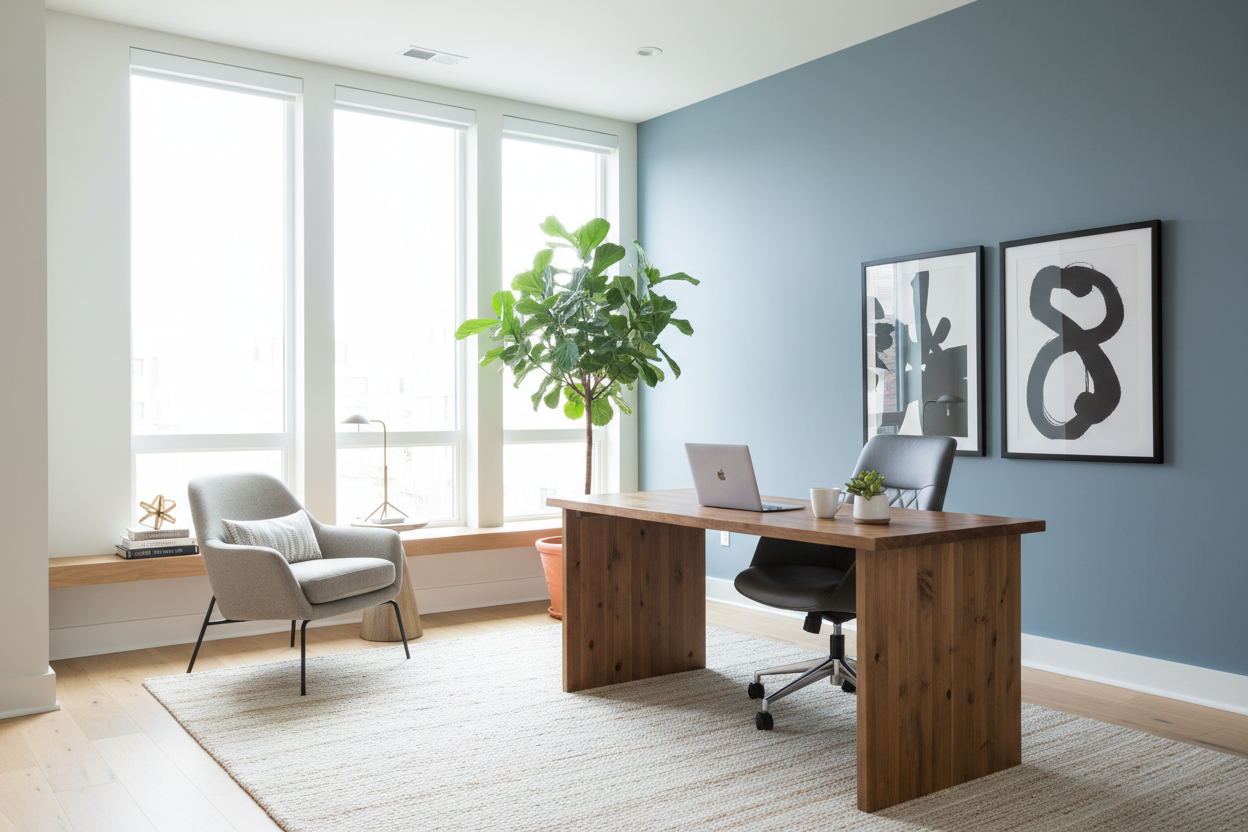
We've all been there. You're staring at an empty spare bedroom or a blank living room alcove, endlessly scrolling through home office pictures hoping for a spark of inspiration. But there is a massive disconnect between a perfectly styled photoshoot and a workspace that can handle eight hours of video calls, stray coffee mugs, and a mess of monitor cables.
In my 15 years designing residential interiors, I've seen countless clients purchase furniture based entirely on aesthetics, only to realize the setup is functionally impossible to live with. I'm going to show you how to look at photos of home office ideas like a designer, separating the practical layouts from the purely aesthetic fantasies, so you can build a space that actually works for your daily grind.
Quick Decision Guide
- Look past the styling: Strip away the plants and art in home office ideas photos to evaluate the actual desk depth and chair ergonomics.
- Check the cord management: If you don't see a single wire in images home office design, it's heavily staged. Plan for real-world cable routing before buying a floating desk.
- Measure the clearances: Beautiful pictures of home office ideas often cheat the negative space. Ensure you have at least 36 inches behind your desk to roll your chair back comfortably.
- Prioritize function over form: A vintage wooden chair looks great on camera but will ruin your back by noon. Invest in ergonomics, even if it disrupts a simple home office design.
Decoding Home Office Design Pictures
The Lighting Illusion
When browsing home office design pictures, pay close attention to the windows. Natural light is a massive selling point in photography, but placing your monitor directly facing a window leads to severe eye strain. Conversely, having a window directly behind you turns you into a dark silhouette on video calls. The most realistic home office ideas position the desk perpendicular to the primary light source, allowing for balanced illumination without the glare.
The Scale of the Room
Many pictures of home office designs are shot with wide-angle lenses, making a standard 10x10 suburban bedroom look like a massive executive suite. When you look at home office design photos, use standard elements like interior doors, baseboards, or electrical outlets to gauge the true scale. This helps you figure out if that massive L-shaped solid oak desk will actually fit your space or completely overwhelm the room's visual weight.
Transitioning from Inspiration to a Functional Workspace
Keeping it Simple
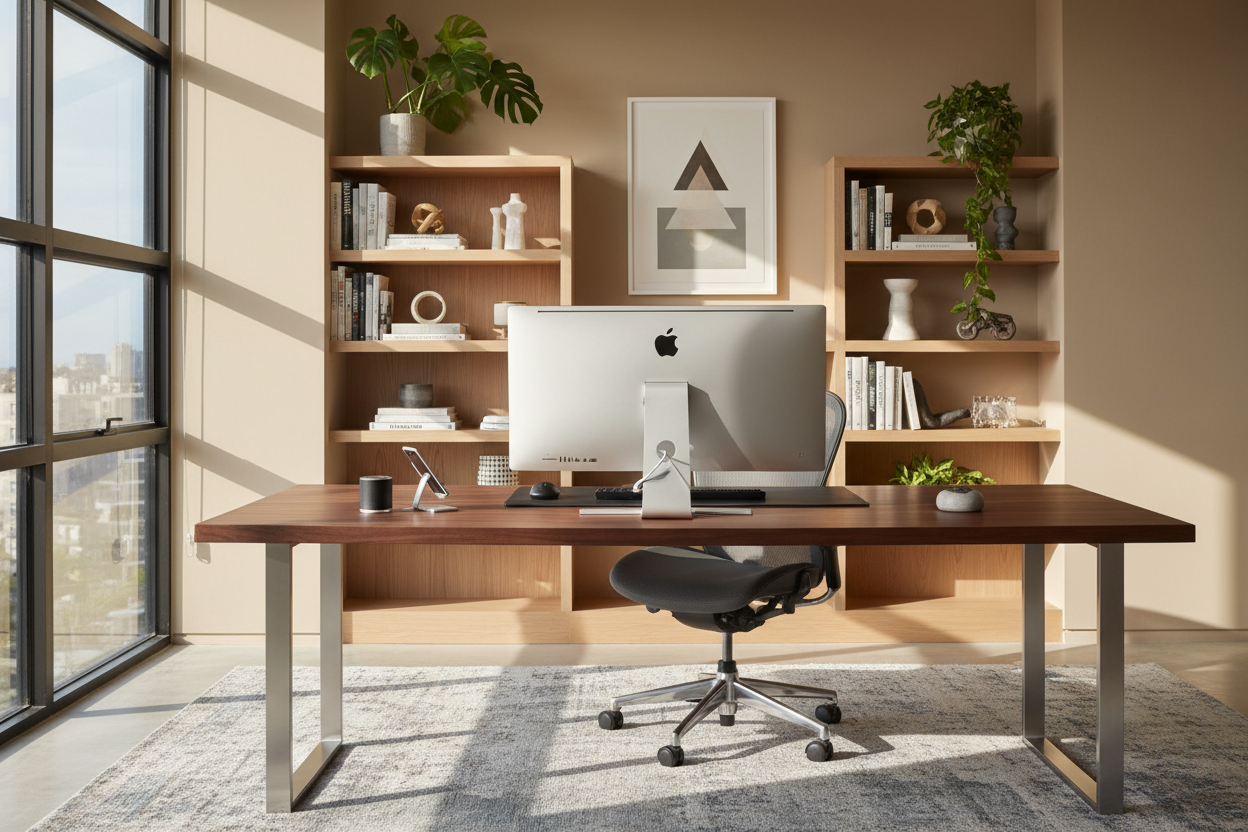
Sometimes the best approach is a home office simple layout. A sturdy desk, a supportive chair, and closed storage can do wonders for your productivity. When clients show me pictures of home offices decorated with open shelving full of knick-knacks and decorative boxes, I gently remind them about visual clutter and dusting. A simple home office design with filing cabinets or solid-door credenzas hides the mess of daily work, keeping your stress levels down and your background looking professional.
Designer's Honest Take
Early in my career, I designed a stunning workspace for a client based entirely on home office ideas pictures they had saved on Pinterest. We used a beautiful, custom-built matte walnut parsons table positioned right in the center of the room. It looked incredible on installation day.
But I learned a hard lesson about practicality: the client had a dual-monitor setup, a heavy-duty docking station, and a metal desk lamp. Because the desk was floating in the middle of the room with no floor outlets, we had to run a thick, ugly extension cord under a rug, which became a constant tripping hazard. Furthermore, the matte walnut finish showed every single fingerprint and coffee ring within a week. Now, I always prioritize wire management and durable finishes—like high-quality engineered wood or thermofused laminate—over a purely photogenic silhouette. If a piece of furniture can't handle a spilled cup of coffee, it doesn't belong in a working office.
Frequently Asked Questions
How do I make my home office look like the photos?
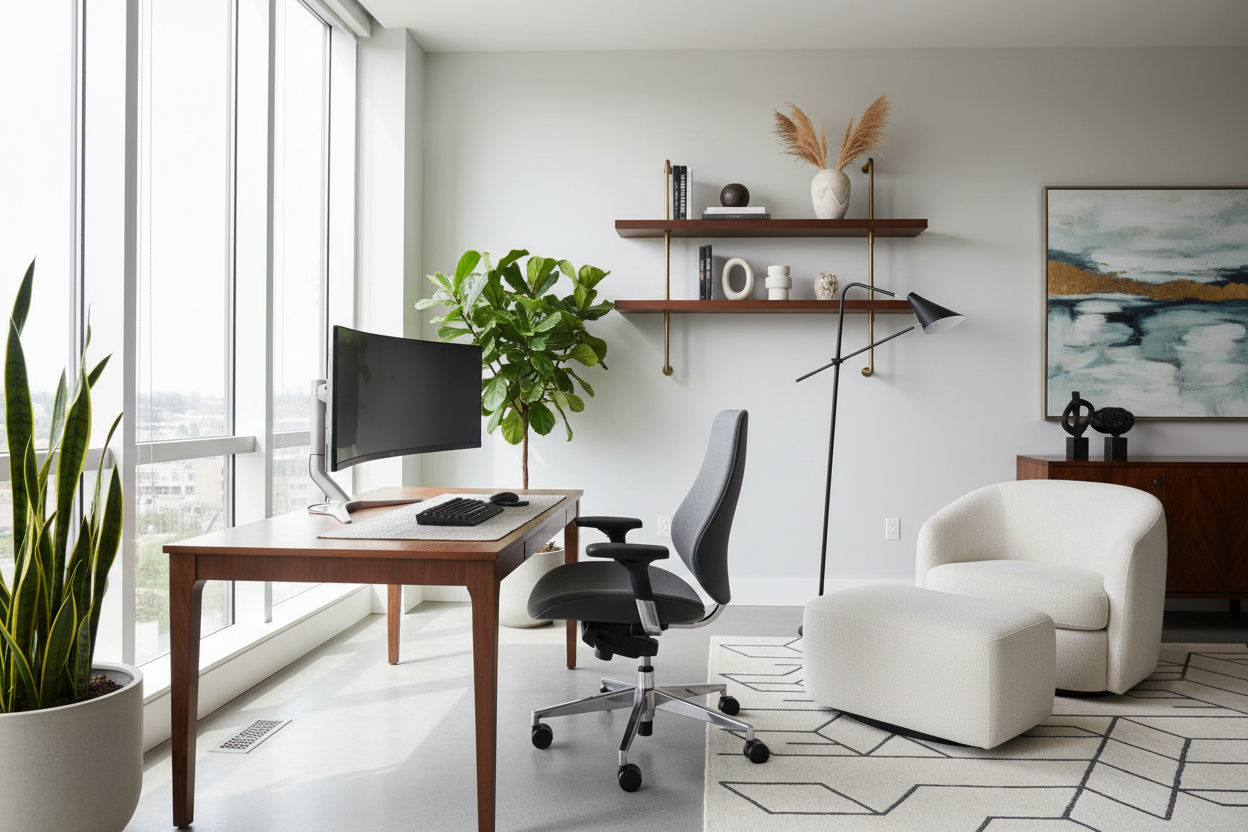
The secret to those magazine-worthy spaces is aggressive decluttering and hidden wiring. Use cable management trays mounted under your desk and hide your printer or shredder inside a closed cabinet. Keep the desktop surface limited to your computer, a lamp, and one or two curated items.
What is the most important piece of furniture in a home office?
Your office chair. You can compromise on the desk material or the bookshelf styling, but never skimp on seating. A beautifully styled vintage chair might look incredible in photos, but it will cost you in physical discomfort later. Look for adjustable lumbar support and proper seat depth.
How do I design a small home office?
For tight spaces, utilize vertical real estate. Wall-mounted floating desks or tall, narrow bookcases draw the eye upward and preserve precious floor clearance. Keep the visual weight light by choosing furniture with slim metal legs rather than bulky wooden bases.

Leave a comment
This site is protected by hCaptcha and the hCaptcha Privacy Policy and Terms of Service apply.