


Understanding the Role of a High Top Table in Modern Workspaces
Modern workplaces thrive on fluid spatial transitions. Introducing a high top table for office environments shifts the dynamic of conventional meeting areas, moving away from formal conference seating toward spontaneous collaboration. Standing-height and elevated surfaces serve as intuitive touch-down zones where team members can conduct brief morning check-ins, review documents, or work on laptops without committing to long, sedentary sessions.
Unlike standard sit-down desks that define primary individual workstations, an office high top table occupies a distinct secondary tier in workplace architecture. It bridges the gap between active lounge areas and focused task desks. When placed within open-plan offices, creative studios, or home executive suites, elevated tables invite natural physical variation throughout the workday. Team members can easily alternate between perching on stools and standing freely while discussing shared project plans.
For remote professionals designing a hybrid home workspace, an elevated work table offers a dedicated transition zone that keeps quick administrative reviews separate from concentrated deep-work desks. Exploring comprehensive layout strategies such as our work high office guide helps integrate elevated pieces into cohesive, high-end interior aesthetics without disrupting existing workflow corridors.
Height Classifications and Ergonomic Stool Pairings
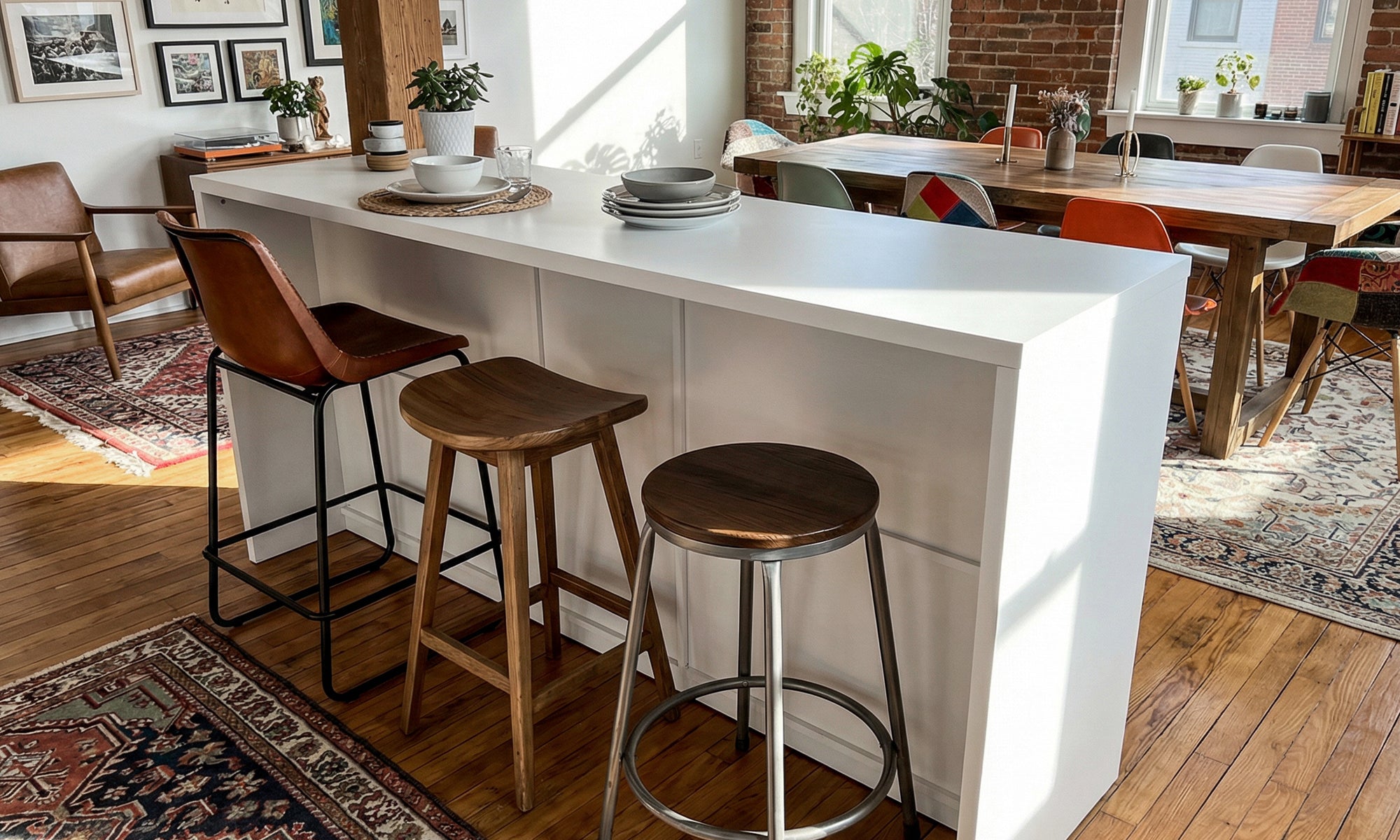
Selecting the right elevated furniture requires understanding proportional tiers and their corresponding seating pairings. Commercial high tables generally follow two primary elevated standards: counter height and standard bar height. Counter-height surfaces provide an approachable elevation suited for transitional kitchenettes and open collaborative banks, whereas true bar-height designs establish an assertive standing posture ideal for brief discussions and energetic team gatherings.
Achieving ergonomic balance around an office bar table depends heavily on the vertical relationship between the tabletop and the stool seating surface. When configuring seating, maintain comfortable knee clearance beneath the table apron so seated users can slide in without obstruction. Stools must allow legs to rest comfortably beneath the surface, while the tabletop should sit at an intuitive forearm-resting level for typing or note-taking.
Base support design plays an equally vital role in physical comfort during extended discussions. High-profile tables benefit significantly from integrated footrest bars or structural stretchers positioned along the lower frame. A well-placed foot rail gives seated users a stable anchor point for their feet, mitigating leg fatigue when perching on tall stools. Similarly, standing users frequently utilize lower frame rails to shift their weight naturally during team huddles.
Footprint Proportions and Room Clearance Planning
Integrating a high table for office productivity demands careful perimeter planning. Because bar stools require wider push-back trajectories and occupants frequently stand alongside the table during meetings, perimeter clearances must accommodate both seated bodies and open pedestrian flow. Cramping an elevated table against heavy circulation paths leads to friction and diminishes the table's inviting utility.
Geometric silhouette influences how an elevated table behaves within a floor plan:
- Rectangular Profiles: Linear rectangular tables excel along structural walls or dividing zones between open desk rows and lounge areas. They provide ample continuous surface space for multi-device collaboration, shared blueprints, and team presentations.
- Round and Square Profiles: Compact circular or square tops work exceptionally well in corner alcoves, window niches, and open executive offices. Their curved footprint eliminates sharp corners, facilitating easy movement in tight architectural layouts.
For executive suites and home offices, elevated tables preserve clear sightlines across the room. Because their structural mass sits higher off the floor with elongated leg profiles, they lend an airy visual openness to compact rooms. Reviewing thoughtful spatial setups in our work office high guide illustrates how vertical furniture balances heavier low-profile executive storage pieces.
Material Architecture and Base Stability for Elevated Frames
Elevated furniture carries a higher center of gravity than standard desks, making structural integrity and base engineering paramount. A poorly anchored high top work table can produce micro-wobbles during typing, sketching, or leaning. Reliable office designs address this structural demand through widened base spans, reinforced trestles, or heavy weighted pedestals.
Frame joinery should incorporate robust corner gussets, welded metal junctions, or thick transverse aprons directly beneath the tabletop. Lower H-stretchers or perimeter foot rails not only enhance user ergonomics but also serve as structural tie-bars that prevent tall legs from flexing outward under lateral pressure. Adjustable leveling glides installed at the base of each leg are essential for stabilizing the frame across uneven commercial carpeting, hardwood, or tile flooring.
Surface material selection should align with the anticipated usage intensity of the workspace:
- High-Pressure Laminates: Provide superior resistance to daily laptop abrasion, ballpoint pen pressure, and thermal contact from hot coffee mugs.
- Sealed Hardwood and Veneer: Offer rich warmth and sophisticated grain patterns, ideal for executive environments and boutique agency studios.
- Powder-Coated Metal: Delivers durable edges and structural resilience for industrial aesthetics and high-traffic breakout areas.
Multipurpose Workstation Scenarios and Storage Integration
The versatility of a high table office setup is evident when paired with thoughtful utility and storage modules. Modern offices increasingly blend administrative tasks with casual hospitality, using bar-height configurations as dual-purpose breakroom and project sprint zones. During morning hours, the elevated table hosts quick team status updates; later in the afternoon, it transforms into an informal coffee or hospitality bar.
To support this hybrid workflow, coordinate your high table setup alongside multipurpose storage credenzas. Pairing your meeting hub with a dedicated bar product provides concealed organization for office refreshments, glassware, presentation accessories, and secondary tech components. This pairing keeps the elevated table top uncluttered, ensuring it remains ready for immediate collaboration.
Cable management requires deliberate routing around tall furniture frames. Loose cords trailing from elevated desktops down to baseboards create visual clutter and potential snagging hazards. Incorporating cable sleeves, under-mount wire troughs, or routing channels alongside the interior profile of table legs maintains clean architectural lines, harmonizing with modern tech integration strategies outlined in our office high guide.
Assembly Management and Long-Term Maintenance Checklist
Ensuring that an elevated work table remains sturdy and visually pristine over years of continuous commercial or home use begins with methodical initial assembly and consistent preventive care. The extended leverage on tall legs means mechanical fasteners experience greater rotational torque during daily movement.
Follow this maintenance checklist to safeguard your investment:
- Staged Hardware Fastening: When assembling tall support legs, hand-thread all connecting bolts partially before fully tightening. Once the table stands upright on a level floor, systematically tighten all hardware in an alternating sequence to ensure square alignment.
- Periodic Fastener Checks: Conduct routine hardware inspections to retighten leg brackets, crossbars, and footrest stretchers. Tightening connection points every few months prevents the loosening that causes table rocking.
- Floor Glide Calibration: Inspect leveling glides periodically to verify that the table does not tilt or rock when weight shifts from one edge to another.
- Gentle Surface Care: Clean surfaces using soft microfiber cloths and pH-neutral, non-abrasive cleaners. Avoid harsh chemical solvents that can degrade protective topcoats, matte powder-coating, or natural wood grain seals.


Leave a comment
This site is protected by hCaptcha and the hCaptcha Privacy Policy and Terms of Service apply.