

















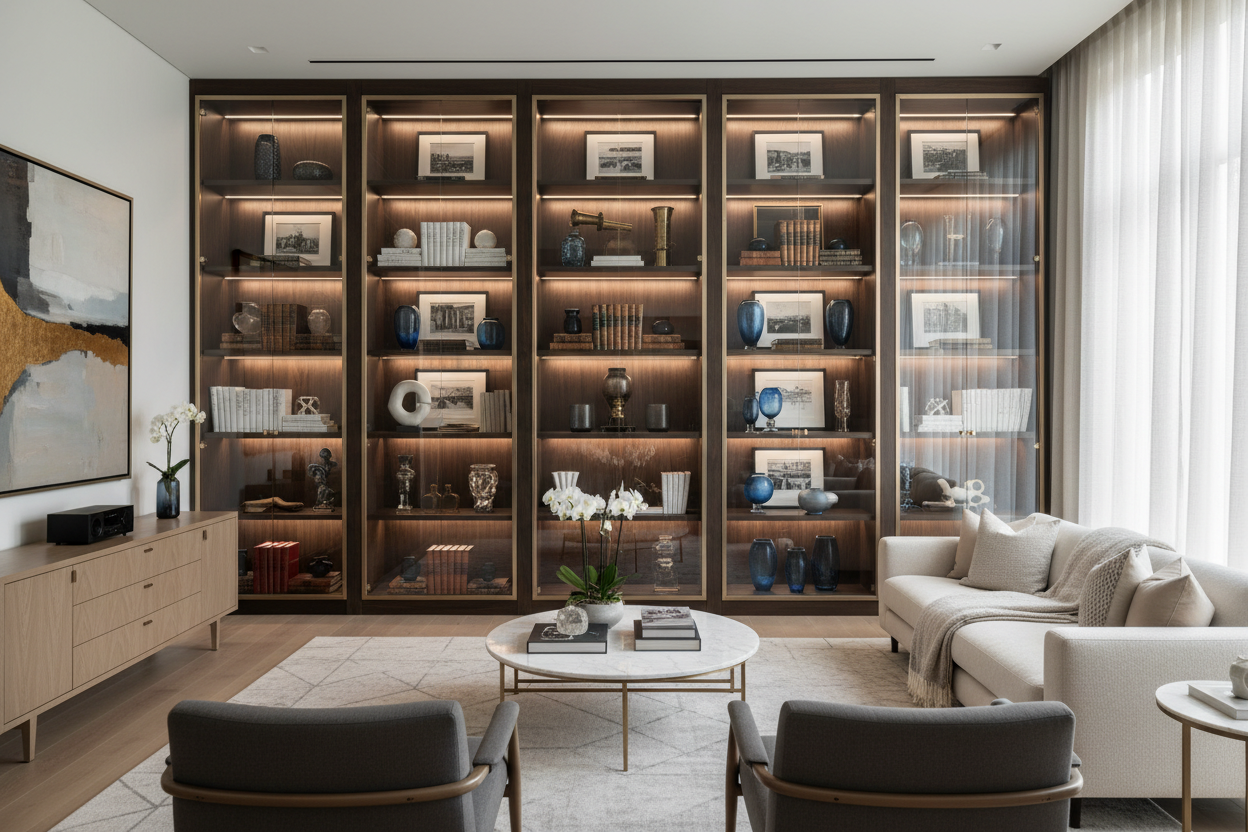
We have all stared at that one massive, blank wall in an open-concept living room and wondered what to do with it. A gallery wall feels too busy, a single piece of art looks swallowed up by the sheer square footage, and standard consoles just leave awkward, empty vertical space. This is exactly where full wall display cabinets step in to solve the problem. They anchor the room, provide incredible storage, and give standard builder-grade homes a distinctly custom, architectural feel.
But buying and installing a piece of furniture that spans ten to twelve feet is a major commitment. If you get the proportions or styling wrong, it can easily overwhelm the room and feel like a looming monolith. In this guide, I will walk you through exactly how to plan, scale, and style these massive pieces so they look intentional, balanced, and perfectly suited to your home.
Key Takeaways
- Measure your ceiling height and account for existing crown molding or baseboards before finalizing dimensions.
- Mix open shelving on top with closed storage on the bottom to hide everyday clutter while displaying curated decor.
- Always plan for integrated lighting; without it, deep shelves turn into dark, shadowy voids.
- Leave at least 30 percent of your shelf space empty to balance visual weight and avoid a cluttered, heavy look.
Nailing the Proportions in Your Room
Scale is the most critical factor when dealing with floor-to-ceiling furniture. If a cabinet is too shallow, it looks flimsy; if it is too deep, it eats up your walkable floor space.
Measuring for Built-in vs. Freestanding
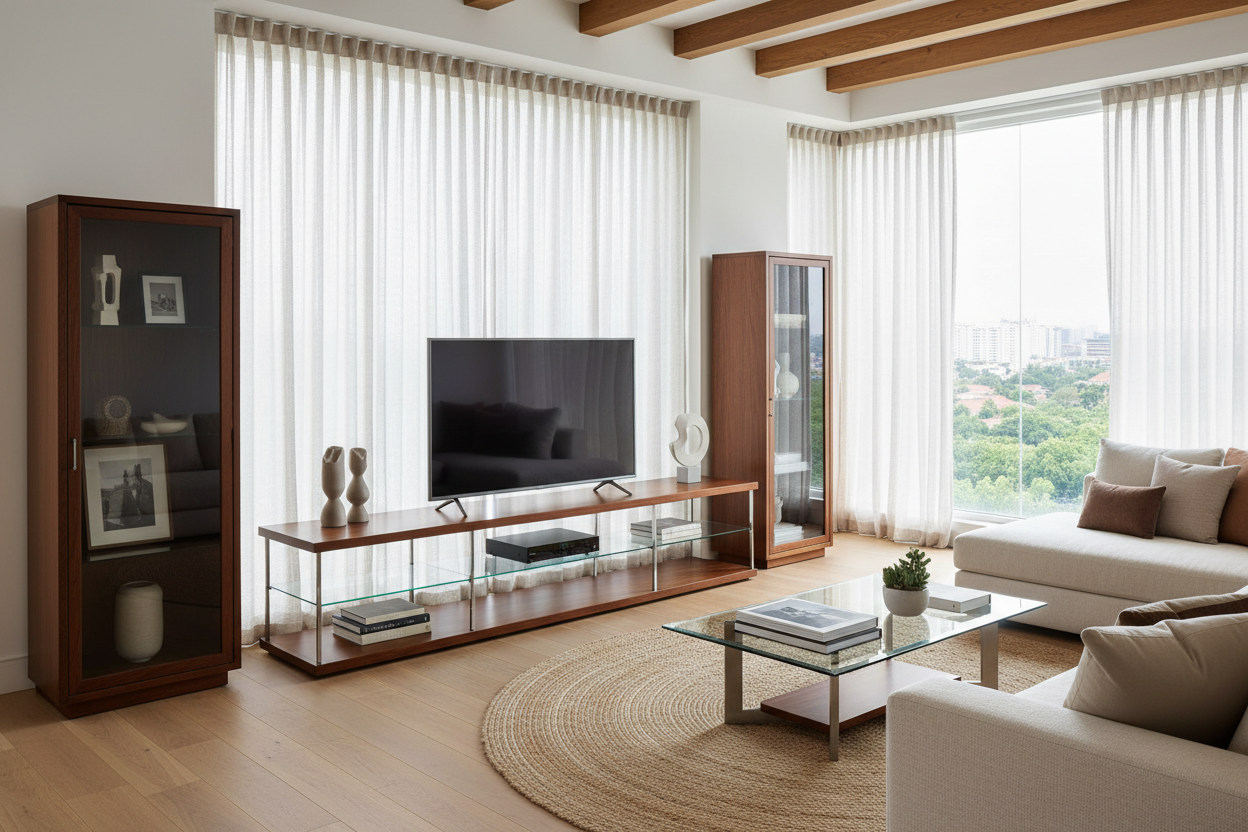
Before you start shopping, trace the footprint on your floor with painter's tape. If you are placing this unit near a dining table or a sofa, you must leave an absolute minimum of 36 inches of clearance for traffic flow. When deciding between a massive freestanding unit and an in wall display cabinet, consider your room's architecture. Recessed, in-wall units save floor space and look incredibly high-end, but they require moving studs and dealing with drywall. Freestanding modular units are much more renter-friendly and can mimic a built-in look if you finish the edges with custom trim.
Curating the Shelves Without the Clutter
The biggest mistake I see homeowners make is treating their display cabinets like a storage unit rather than a curated showcase. When you have an entire wall of shelving, you have to be ruthless about what makes the cut.
The Rule of Visual Weight
Start by placing your largest, heaviest items—like oversized art books, large ceramic vases, or woven baskets—on the lower shelves. This grounds the piece. As you move upward, the items should get visually lighter. Group items in odd numbers (threes and fives) and vary the heights. Most importantly, embrace negative space. An empty spot on a shelf is not a missed opportunity; it is the breathing room that allows your favorite pieces to actually stand out.
Choosing Materials That Last
When you are buying furniture of this scale, the materials dictate whether the piece will last a lifetime or start sagging within a year.
Solid Wood vs. Engineered Cores
For shelves that span more than 30 inches across, solid wood is highly recommended to prevent bowing over time, especially if you plan to display a heavy book collection. Engineered wood or high-quality plywood is perfectly fine for the cabinet framing and the lower closed doors, but make sure the visible veneers are thick enough to withstand occasional bumps from vacuum cleaners or pets. If you opt for metal framing, powder-coated finishes resist scratching much better than painted metal.
Lessons from My Own Projects
A few years ago, I designed a stunning, 12-foot-wide matte charcoal display cabinet for a 1920s Tudor home in Chicago. During the day, the dark finish looked incredibly sophisticated against the client's collection of white ceramics. But I learned a hard lesson the first night I visited after the project wrapped. Without integrated lighting, that beautiful dark cabinet turned into a massive black hole that sucked all the warmth out of the room.
We had to retroactively install hardwired puck lights, which required drilling through the finished wood and cost twice as much as it would have during the initial build. I also had to have a very honest conversation with the client about maintenance: dusting a floor-to-ceiling unit requires a step stool and dedicated time. It is a stunning focal point, but it is certainly not maintenance-free.
Frequently Asked Questions
How deep should full wall display cabinets be?
Standard depth for the upper display shelves is usually 12 to 15 inches, which perfectly accommodates books, frames, and standard decor. For the lower closed cabinets, aim for 18 to 22 inches of depth so you can easily store board games, vinyl records, or serving platters.
Is an in wall display cabinet cheaper than a freestanding one?
Generally, no. Built-in or recessed options require framing, drywall work, and custom carpentry, making them a higher upfront investment. However, they offer a seamless architectural finish that often adds tangible resale value to the home.
How do I light my display cabinet without hardwiring?
If hardwiring isn't in your budget or you are renting, rechargeable, motion-sensor LED light bars are an excellent alternative. They attach discreetly under the shelves via magnetic strips and typically only need recharging every few weeks, depending on how often you use that room.

Leave a comment
This site is protected by hCaptcha and the hCaptcha Privacy Policy and Terms of Service apply.