

















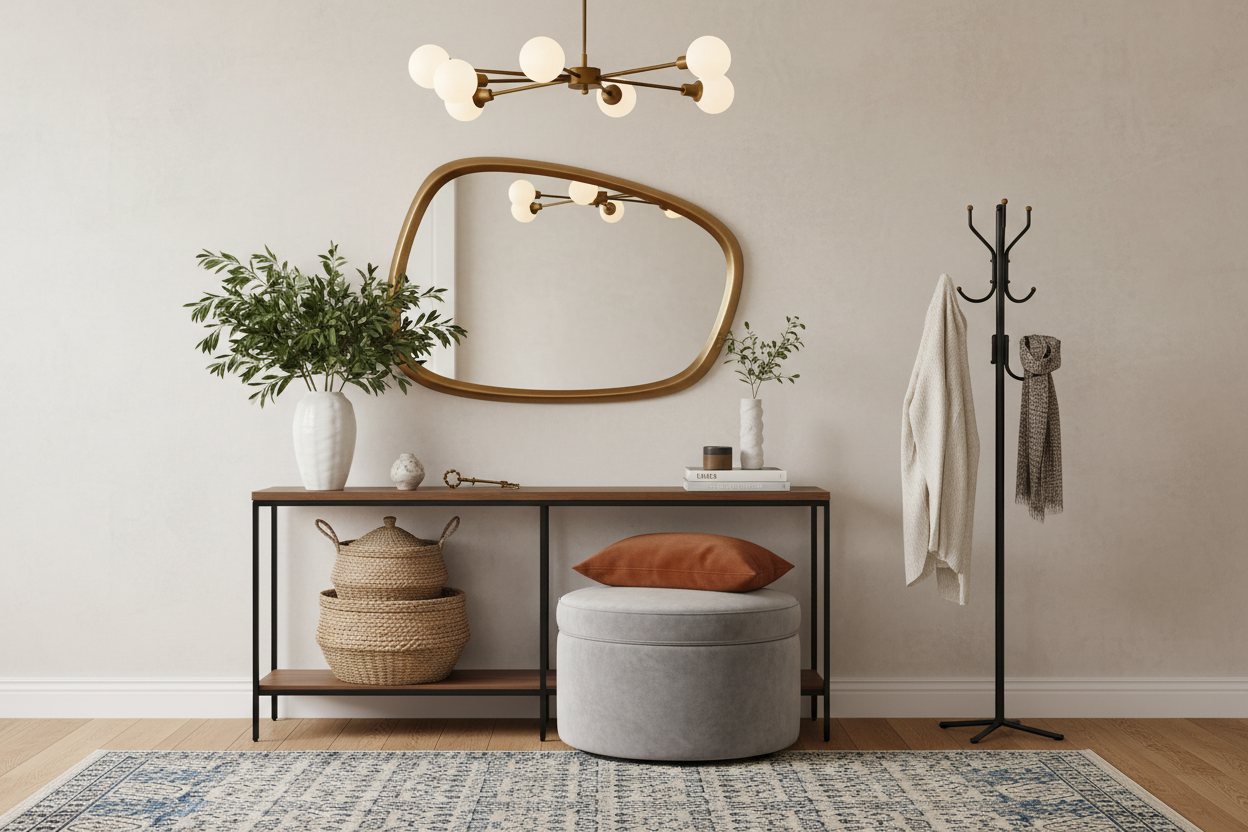
The entryway is the handshake of your home. It sets the tone before a guest even takes off their coat. Yet, this space is often treated as a mere drop zone for keys and mail, populated by utilitarian furniture that fades into the background. Transforming this area starts with a single, pivotal piece: a unique entryway bench. Rather than settling for generic, mass-produced shoe racks, selecting a seat with character changes the entire dynamic of the foyer. It bridges the gap between high-design aesthetics and the practical need for a place to sit and tie your laces.
Finding the right piece requires looking beyond functionality. You want furniture that acts as a conversation starter. Whether it is a sculptural modern piece or a weathered antique, the goal is to disrupt the expected visual flow. A carefully chosen bench anchors the space, providing a focal point that draws the eye and invites people further into your sanctuary.
The Hunt for Character
My own journey to finding the perfect foyer seating taught me that patience pays off. I spent months living with an empty wall by my front door because I refused to buy a standard particle-board unit. One rainy Saturday, I stumbled into a salvage warehouse and spotted a reclaimed church pew cut down to a four-foot length. It was battered, heavy, and the wood was a deep, rich oak that you just don't find in modern furniture. It wasn't what I originally envisioned—I thought I wanted something upholstered—but it had soul. Once I styled it with a lumbar pillow and a large abstract print above it, that bench became the most complimented piece in my house. It proved that unique benches for entryway spaces often find you, rather than the other way around.
Defining "Unique" in a Sea of Sameness
What actually makes a bench unique? It usually comes down to three factors: material, silhouette, and origin. If you walk into a big-box store, you will likely see rectangular shapes made of MDF or simple metal frames. To step away from this, look for asymmetry. A bench with legs of varying thicknesses, a curved kidney-bean shape, or a backrest that mimics organic forms immediately stands out.
Material choice is equally vital. A slab of live-edge walnut on lucite legs creates a floating effect that feels modern and airy. Conversely, a bench woven from seagrass or rattan introduces texture that warms up a sterile, tiled hallway. For those leaning towards a fancy entryway bench, consider materials like crushed velvet, mohair, or unlacquered brass. These textures catch the light and add a layer of luxury that signals to guests that this is a curated home, not just a pass-through space.
Repurposing the Unexpected
Some of the most interesting seating options weren't originally intended for the foyer. Vintage theater seats, for example, flip up to save space and offer a nostalgic, cinematic vibe. An old steamer trunk with a custom cushion on top offers massive storage while looking like a traveler's treasure. Even a low, long media console can serve as a bench if it’s reinforced properly, offering drawers for hiding clutter while providing a sleek, low profile suitable for modern minimalism.
Balancing the "Fancy" with the Functional
There is a common fear that a fancy entryway bench will be too delicate for daily life, especially in households with kids or pets. High design does not have to mean fragile. Performance fabrics have come a long way; a velvet bench in a deep jewel tone can hide stains and withstand wear if the fabric is treated. Leather is another excellent option for high-traffic areas because it develops a patina over time, making scratches and wear part of its story rather than a defect.
If storage is non-negotiable, avoid the open-cubby look which often appears messy. Look for benches with hidden compartments under the seat or deep drawers. The mechanism should be smooth, and the hardware should act as jewelry for the piece. A bench with intricate wood carving or inlay work can hide a multitude of shoes while looking like a museum acquisition.
Styling Your Statement Piece
A bench rarely succeeds in isolation. It needs context to feel grounded. The wall space above the bench is prime real estate. A large, oversized round mirror is a classic choice because it reflects light and checks your appearance before you leave. However, hanging a large piece of tapestry or a gallery wall of black-and-white photography can make the area feel more like a living room and less like a corridor.
Lighting plays a supporting role here. If you have space for a floor lamp next to the bench, it creates a cozy vignette. If not, a wall sconce installed directly above adds drama. Textiles are the final layer. A sheepskin throw draped over a hard wooden bench adds softness and invites touch. If your unique entryway bench is upholstered, use a contrasting throw pillow to break up the color block.
Where to Look for Hidden Gems
Step away from the algorithm-driven recommendations of major online retailers. Local estate sales are goldmines for unique furniture. You can often find high-quality wood pieces for a fraction of the cost of new veneer furniture. Antique malls and flea markets require digging, but they offer the best chance of finding something truly one-of-a-kind.
For those who prefer new but unique items, look at artisan marketplaces like Etsy or independent local woodworkers. Commissioning a piece allows you to specify the exact dimensions—crucial for narrow hallways—and choose wood species that match your flooring. While a custom or vintage piece might require a higher upfront investment or more time to source, the result is a foyer that feels intentionally designed rather than assembled from a catalog.
Your home’s entrance sets expectations. By choosing a seat that defies the ordinary, you create a space that pauses the rush of the outside world. Whether it is a velvet chaise, a rustic beam, or a mid-century marvel, the right bench declares that your home is a place of style and substance.
Frequently Asked Questions
How do I choose the right size bench for a small entryway?
Measure your available wall space and aim for a bench that leaves at least 18 to 24 inches of clearance on either side if possible, or at least ensures the door swings freely. A bench depth of 15 to 18 inches is usually sufficient for sitting without blocking the walkway in narrow corridors.
Can I mix wood tones between my floor and the bench?
Absolutely. Mixing wood tones adds depth and prevents the space from looking too "matched." Try to keep the undertones (warm vs. cool) consistent, or go for high contrast, such as a dark walnut bench on light oak floors, to make the furniture pop.
What is the best fabric for a high-traffic entryway bench?
Crypton fabrics, high-performance velvets, and top-grain leather are ideal choices. These materials are durable, easy to clean, and resist the wear and tear that comes from bags, coats, and daily sitting.

Leave a comment
This site is protected by hCaptcha and the hCaptcha Privacy Policy and Terms of Service apply.