
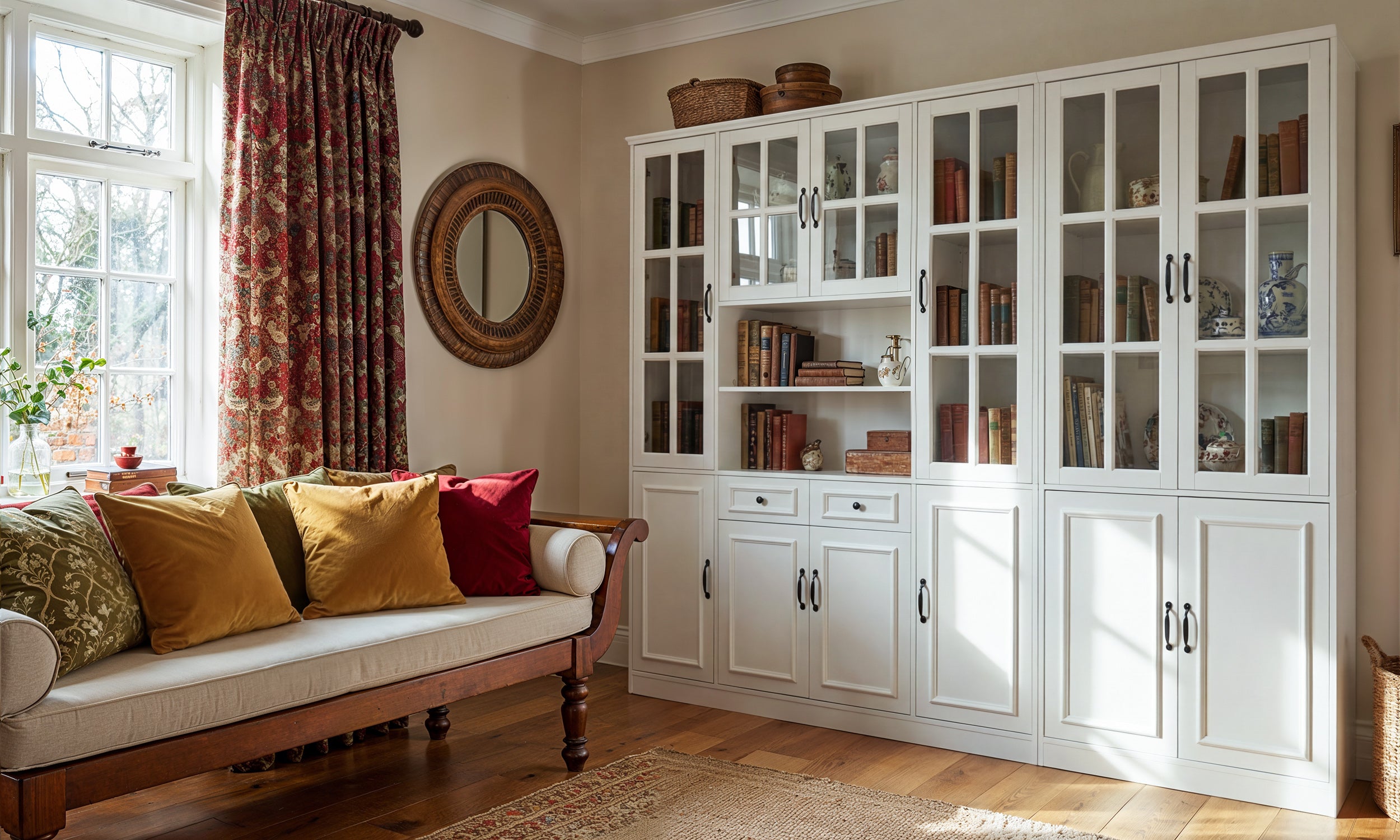
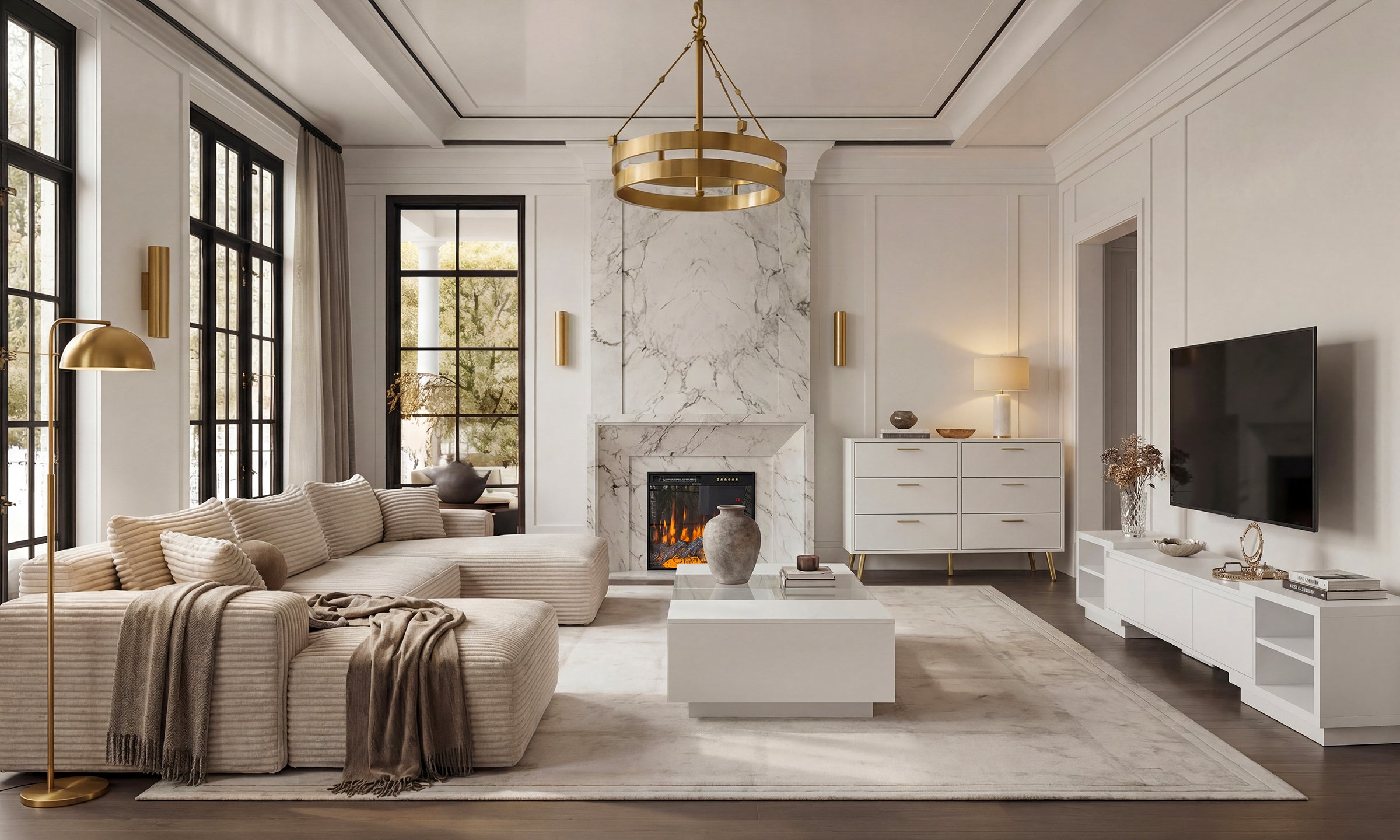
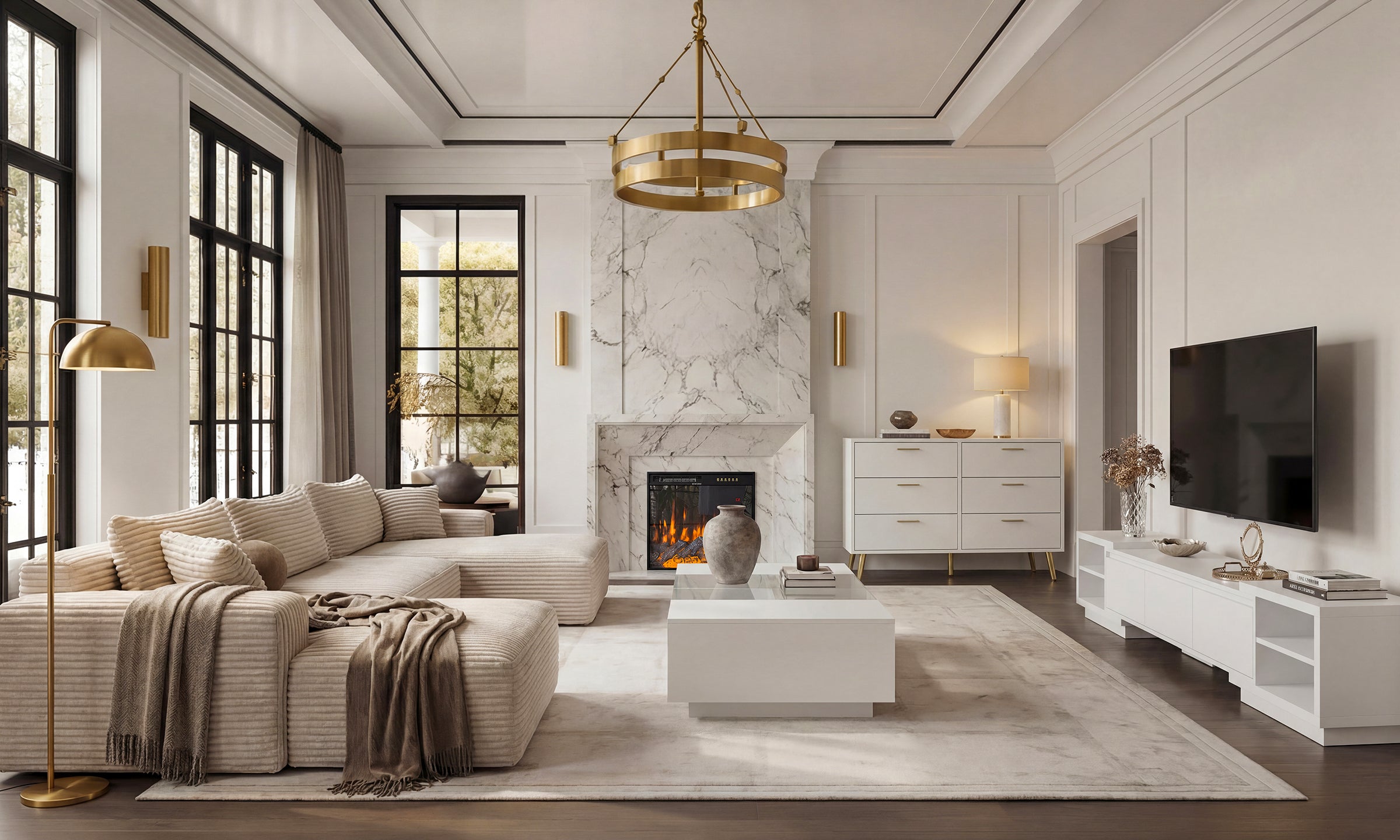
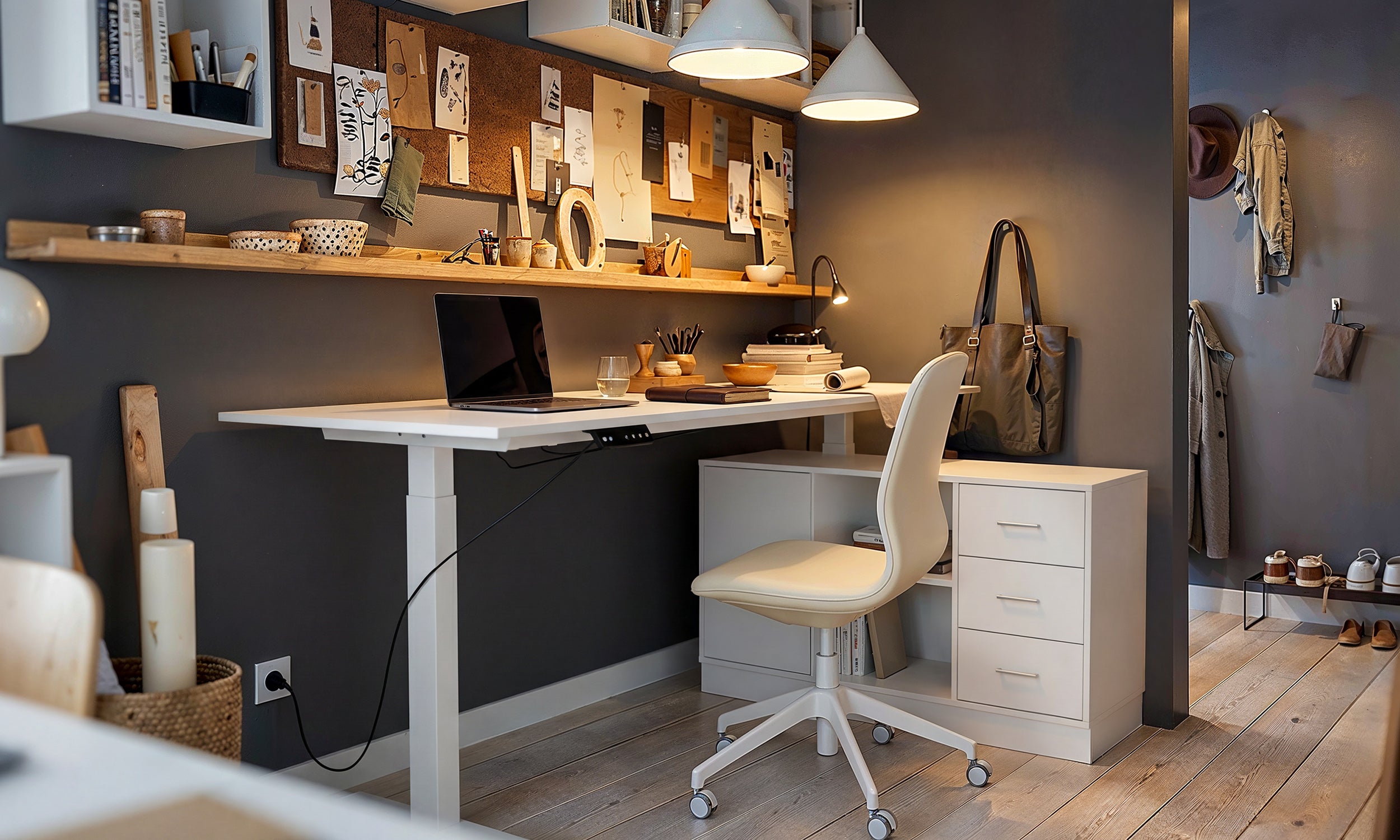
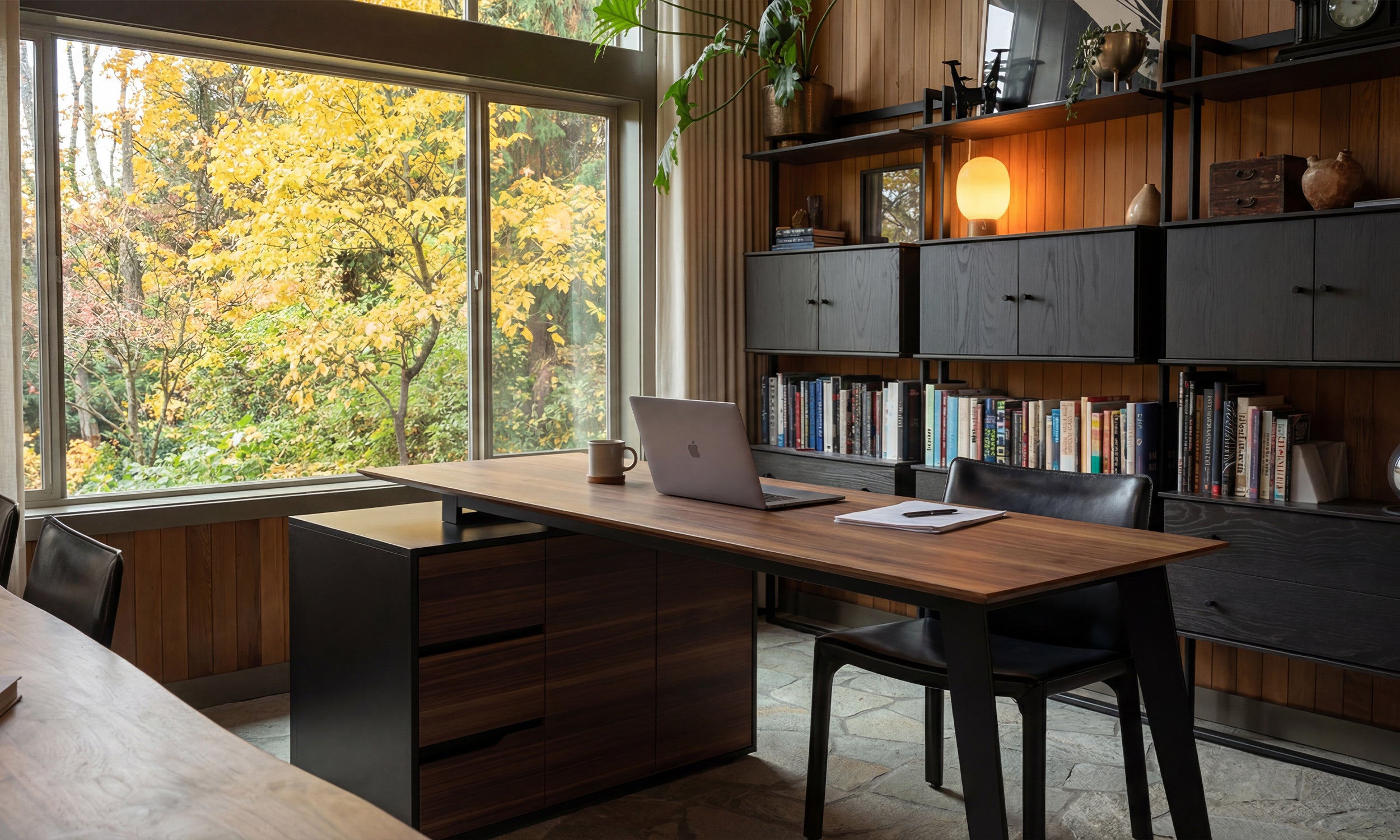


A dedicated workstation requires both accessible record keeping and clear visual breathing room. Choosing a filing cabinet with bookshelf design brings both needs into a single footprint. Instead of lining a perimeter with separate bookcases, low credenzas, and utilitarian metal pedestals, a hybrid piece organizes your active paperwork underneath while keeping reference books, decorative accents, or office machinery within arm's reach above.
Why Choose a Filing Cabinet with Bookshelf Combo?
Combining enclosed hanging file storage with vertical display shelves solves one of the most persistent dilemmas in residential workspace planning: how to keep important papers accessible without turning a living area or study into a stark commercial backroom. Traditional metal filing cabinets often feel industrial and out of place in residential interiors. A bookcase filing cabinet combo softens that utilitarian feel by framing paper storage beneath warm wooden tones, framed artwork, potted greenery, and curated decorative objects.
From a spatial standpoint, these hybrid storage units capitalize on vertical wall height rather than claiming multiple sections of baseboard real estate. In compact spare bedrooms, alcoves, or shared living rooms, every square foot of floor space counts. By stacking book display areas directly over deep suspension drawers, you preserve walking lanes and reduce clutter. Browsing an organized selection of home office storage shows how upward expansion creates a streamlined silhouette that feels built-in rather than pieced together over time.
Many remote workers ask whether paper filing remains relevant in an increasingly digital landscape. While day-to-day notes often transition to cloud applications, physical archives remain necessary. Homeowners still require structured storage for physical tax folders, vehicle titles, house deeds, vital identity records, medical histories, and active project paperwork that cannot be replaced by a digital file. An integrated unit keeps these critical files organized behind closed drawer faces while allowing everyday reference binders and desk accessories to remain accessible on open shelves.
Lateral File Cabinets vs. Vertical Storage Units
When selecting a unit, floor dimensions and workflow dictate whether a lateral or vertical orientation works best. Horizontal file furniture, commonly known as lateral file cabinets, features wide, shallow drawers that pull out to reveal broad rows of documents. Because they spread their capacity horizontally, lateral units provide clear visibility across multiple rows of paperwork at a single glance. A wide base also creates an expansive counter ledge between the lower drawers and upper bookcase shelving, which functions naturally as a dedicated printer stand or auxiliary landing spot for desk supplies.
When considering storage capacity between the two formats, lateral designs generally accommodate more linear volume per tier. A wide drawer can often hold dual columns of letter-size paperwork side by side or one continuous row of legal folders. In contrast, narrow vertical units fit neatly into tight nooks, corners, or narrow wall segments where a wide credenza would block walkways or interior door swings. For larger rooms requiring substantial capacity, pairing open display with an option like a two-drawer filing storage cabinet provides a stable, broad foundation that balances upper shelving effortlessly.
Filing Drawers: Letter Size, Legal Folders, and Hardware
The interior hardware of any file drawer determines how smoothly your organization functions day to day. Before choosing a cabinet, consider the specific document formats you handle regularly:
- Document Dimensions: Standard business files, personal receipts, and household documents rely on letter size folders. In contrast, real estate portfolios, architectural contracts, and specialized legal paperwork require wider legal folders.
- Convertible Hanging Rails: Not all file drawers accept legal sizes automatically. Look for units equipped with adjustable rails or multiple hanging notches. These metal suspension rails allow you to reconfigure internal channels to support front-to-back letter filing, side-to-side letter filing, or lengthwise legal suspension.
- Full-Extension Glides: High-performance ball-bearing drawer slides allow the entire file drawer to extend clear of the cabinet casing. Without full extension, folders stored at the extreme back of the drawer become difficult to reach, leading to bent tabs, misfiled paperwork, and unnecessary frustration.
- Safety Interlocks: Quality file furniture often incorporates mechanical interlocks that prevent a second drawer from opening while the first is extended. Heavy paper collections create substantial forward leverage, making interlocking hardware an important consideration for smooth, stable operation.
- Locking Drawers: If your workspace hosts clients, shared family members, or visiting guests, choosing a unit with locking drawers offers peace of mind for sensitive tax forms and personal records.
Open Shelves and Adjustable Shelving Options
The upper portion of a combination unit provides versatility that traditional cabinets lack. Featuring multiple open shelves, the bookcase section elevates everyday productivity while showcasing personal style. Having adjustable shelves allows you to reposition shelf pins according to your immediate storage needs, whether accommodating tall hardbound volumes, standard ring binders, storage baskets, or small office supplies.
An intermediate open storage shelf positioned immediately above the drawer base serves as an excellent perch for hardware. Rather than crowding your primary writing desk, placing a large printer, wireless scanner, or charging hub on this intermediate level keeps cables organized and leaves your desk surface clear for active writing and computer tasks. Some hybrid designs incorporate sliding doors or back cutouts to conceal accessory wires cleanly.
Styling the upper display shelf can elevate an entire room. Integrating natural elements such as trailing plants, textured ceramic bowls, and framed photographs breaks up rows of reference manuals and office supplies. For ideas on balancing enclosed cabinet bases with exposed display shelving across multi-use rooms, reading through a guide to bookcase cabinet combinations can offer creative ways to blend functional utility with residential warmth.
Weight Balance, Loading, and Wall Anchoring
Because paper is exceptionally dense, loaded file drawers generate significant downward and forward force. Proper loading habits and wall anchoring protect both your furniture and your workspace environment. Keep these core principles in mind when organizing your unit:
- Center of Gravity: Always place your heaviest materials in the bottom drawers. Storing heavy paper archives, legal folders, and bulky hardware in lower compartments keeps the center of gravity low and stable.
- Distributing Shelf Weight: Position heavy textbook collections, photo albums, and tech peripherals on lower shelves rather than the highest tiers. Use upper shelves for lightweight paperbacks, woven storage bins containing light items, and framed art.
- Mandatory Wall Anchoring: Any tall vertical storage unit, especially one with moving drawers that project weight forward when opened, must be secured firmly to structural wall framing using anti-tip straps or rigid brackets. Anchoring is especially critical on plush carpeting, where thick padding can introduce subtle front-to-back tilt. Helpful techniques for positioning tall cabinetry securely are highlighted in our tall vertical storage styling guide.
- Even Loading: When arranging lateral drawers with multiple columns, balance the folders evenly across the left and right sides of the drawer box to ensure the drawer glides wear evenly over years of service.
Materials and What to Expect When Assembly Is Required
Hybrid office furniture comes in various structural builds, each offering distinct aesthetic and maintenance benefits. Laminate surfaces over engineered wood cores remain a common choice due to their resistance to scratches, ink stains, and surface wear. Warm wood finishes, such as a rustic brown woodgrain, add timeless character to home offices. Other models combine engineered wood panels with matte black steel framing for industrial stability, or incorporate solid wood drawer fronts and face moldings for classic executive appeal.
Because these hybrid units combine tall vertical frameworks with precision drawer components, flat-pack assembly required models demand care and patience during setup. Assembling the piece correctly ensures smooth drawer travel and a long operating life:
- Prepare Your Workspace: Clear a wide floor area and lay down soft packaging blankets or cardboard to prevent cosmetic scratches to the finish while assembling side panels.
- Square the Cabinet Frame: Before fastening the backboard panels, verify that the main cabinet box is perfectly square. Even a minor diagonal discrepancy can cause file drawers to bind or hang unevenly against the face frame.
- Align Drawer Glides Accurately: Take time to align the left and right slide tracks carefully within the pre-drilled cabinet holes. Misaligned glides create unnecessary friction and prevent smooth closing.
- Assemble in Sections: Many tall units assemble in two modular halves—the base file credenza and the upper hutch—before being joined with structural mending plates. For households with extensive archival needs, modular expansion using larger pieces like a six-drawer filing cabinet can satisfy substantial storage requirements alongside coordinating bookcases.
Frequently Asked Questions
What is considered a good modern filing cabinet for home use?
A good modern filing cabinet for home settings blends seamlessly with residential furnishings rather than resembling utilitarian metal office equipment. Look for models featuring woodgrain laminates, clean matte hardware, full-extension metal glides, and versatile storage configurations that pair closed hanging file drawers with open display shelving or cabinet cubbies.
What do people use instead of filing cabinets?
Homeowners who prefer not to use dedicated file cabinets often rely on decorative fabric or leather storage boxes with integrated interior rails, portable desktop file caddies, lidded wicker baskets fitted with drop-in frames, or heavy-duty binder rings with clear plastic sheet protectors organized across open bookshelves.
How can someone turn a standard bookshelf into a filing cabinet?
To convert an existing open bookcase shelf into a functional filing area, you can insert standalone metal hanging file frames onto lower sturdy shelves, or install modular pull-out wire basket drawers equipped with hanging rails. Always verify that the shelf supports the concentrated weight of hanging paperwork before loading it completely.


Leave a comment
This site is protected by hCaptcha and the hCaptcha Privacy Policy and Terms of Service apply.