

















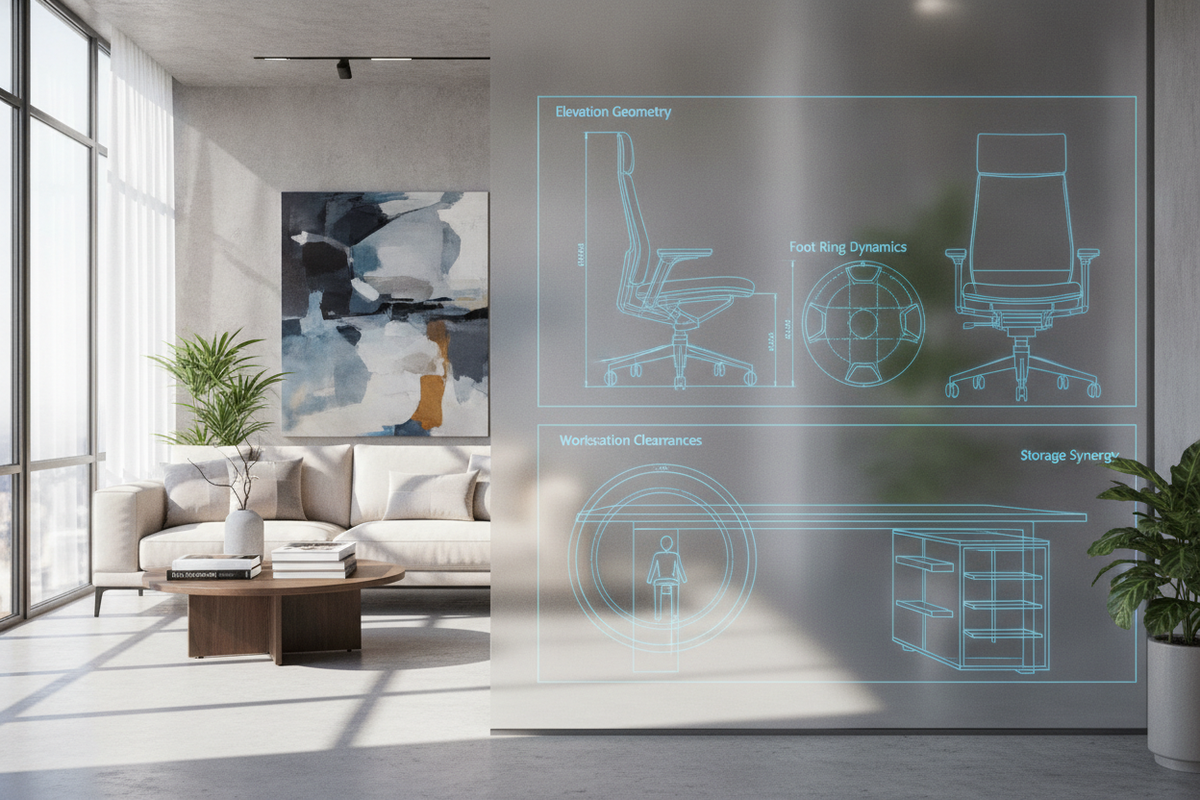
Modern home offices, creative studios, and hybrid drafting zones increasingly demand versatile seating that adapts to elevated desktops. An extended height desk chair bridges the gap between conventional low-task seating and active standing setups, offering ergonomic support when working at drafting tables, standing desks, or high architectural workbenches.
Understanding the Extended Height Desk Chair: Definition and Functional Archetypes
Tall seating bridges the transition between sitting and standing workflows without requiring constant desk adjustments. Understanding the structural differences between traditional office chairs and extended height seating helps you select the right configuration for your room.
Standard Desk Chairs vs. Extended Height Office Chairs
Traditional office seating operates within a limited vertical elevation window intended for standard desk surfaces. In contrast, extended height office chairs use elongated pneumatic lift cylinders paired with reinforced telescoping columns. This mechanical variation allows the user to sit comfortably at standing-height surfaces, counter surfaces, and high drafting boards while maintaining healthy posture angles.
Because the seat pan sits higher from the floor, these chairs incorporate a dedicated footrest ring. This essential element provides lower-body stability, ensuring your feet rest on a firm platform rather than dangling without support.
Primary Drafting and Tall Workstation Configurations
Extended height chairs excel across several distinct working environments:
- Drafting and Design Studios: Architectural and creative drafting requires elevated sightlines over broad drawing boards and expansive sketch surfaces.
- Sit-Stand Desk Transitions: For users who frequently change positions, an elevated chair allows rapid perching without lowering the electric desk frame throughout the day.
- Multi-Tier Craft and Maker Spaces: High tables provide generous vertical clearance for material handling, cutting mats, and assembly projects.
Ergonomic Geometry: Foot Rings, Armrests, and Posture Envelopes
Proper posture at an elevated workstation relies on harmonizing seat height, foot support, and upper-body clearance.
Footrest Ring Mechanics and Thigh Circulation Support
A primary structural feature of any extended height desk chair is its integrated foot ring. When seated at elevated levels, dangling feet can place uneven pressure on the underside of your thighs. A sturdy, height-adjustable foot ring provides a solid resting foundation for the soles of your feet, promoting natural knee angles and balanced weight distribution.
Look for foot rings with reliable adjustment collars, such as hand-tightened compression rings or secure twist-locks, allowing you to position the ring to match your natural leg length.
Armrest Clearance and Torso Recline Dynamics
Upper-body posture depends on armrest adjustability and backrest support. Armrests that adjust vertically or flip upward allow the chair to glide smoothly under thick desk aprons and raised keyboard trays. Synchro-tilt mechanisms and adjustable lumbar support ensure your spine stays aligned as you lean forward over sketches or recline back during virtual meetings.
Workstation Clearance and Surface Pairing Blueprint
Integrating a tall chair into your workspace requires careful spatial planning between the chair, desk frame, and surrounding cabinetry.
Under-Desk Clearance Zones and Apron Envelopes
Before selecting elevated seating, evaluate the clearance beneath your tabletop. Measure the vertical gap between the top of the seat cushion and the lower edge of the desk frame, drawer box, or crossbar. Ensuring sufficient space prevents knee contact and allows the foot ring to pivot freely without striking table legs.
Pairing Extended Chairs with Multifunctional Desks
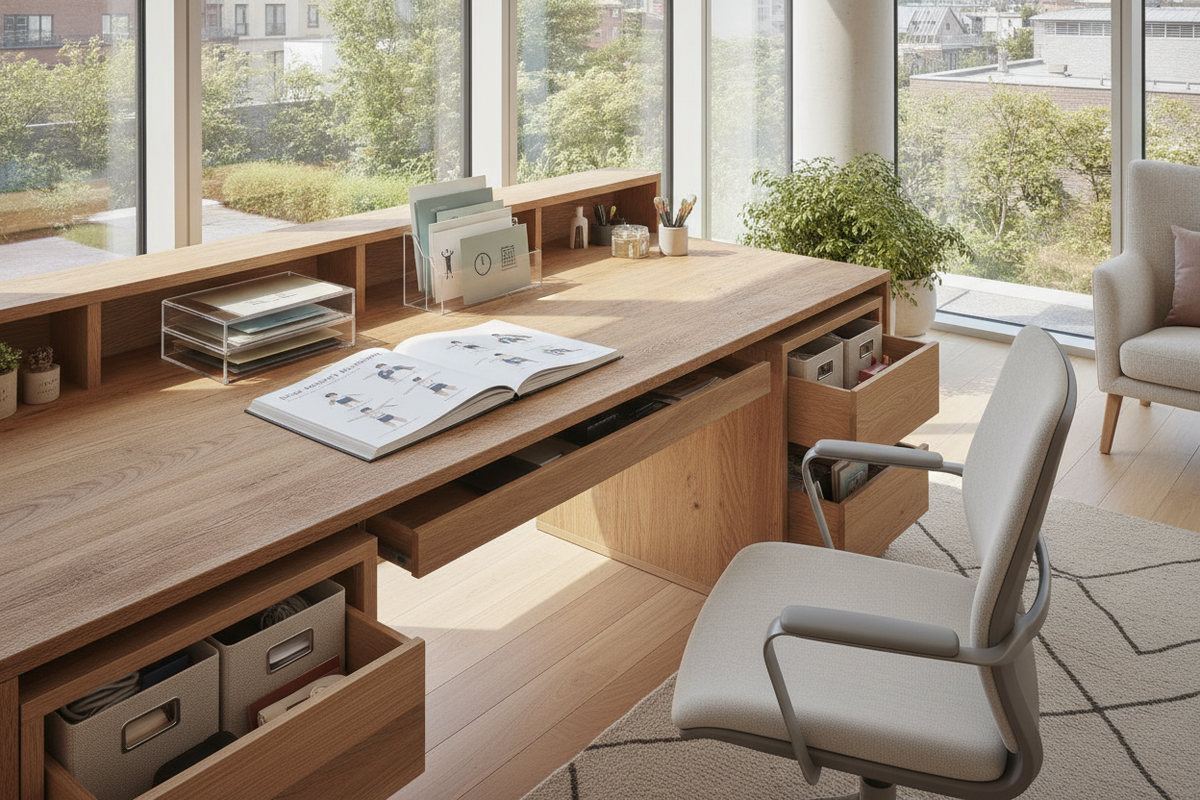
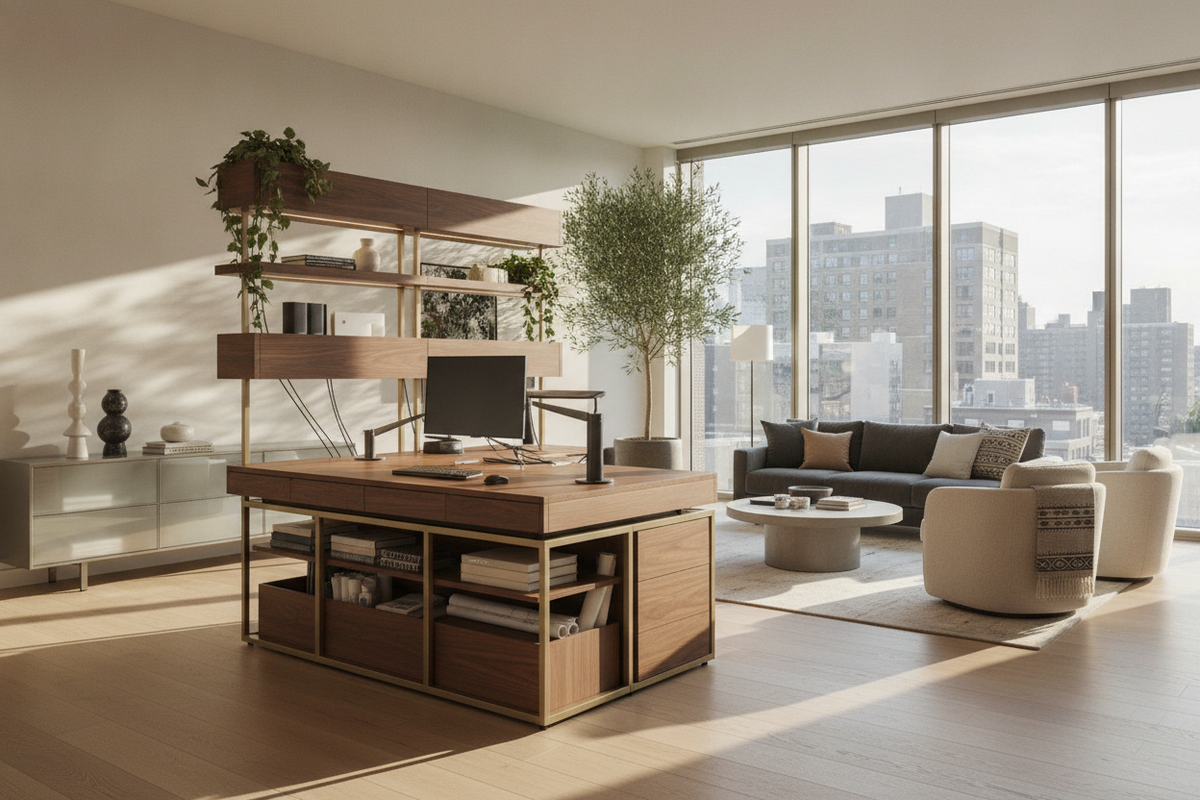
Elevated seating pairs well with flexible workstations that feature varied surface configurations. For multi-use creative rooms, pairing tall chairs with flexible adjustable-height workstation surfaces allows you to switch easily between focused screen work, detailed craft projects, and grooming routines. Reviewing our office desk and chair coordination guide can also help you match finishes, textiles, and proportional silhouettes for a cohesive aesthetic.
Material Craft, Base Stability, and Casters for Tall Seating
Because an extended height desk chair elevates the user's center of gravity, foundational stability and robust materials are vital design considerations.
Five-Star Base Diameter and Tipping Resistance
Extended height chairs feature a broader five-star base diameter than standard task chairs. This wider footprint distributes weight evenly, providing tipping resistance when leaning or swiveling. Heavy-duty nylon, polished aluminum, and reinforced steel bases offer durability for long-term daily use.
Caster Mechanics and Upholstery Selection
Selecting appropriate casters and upholstery improves daily comfort and practical mobility:
- Caster Type: Hooded dual-wheel casters move smoothly across low-pile carpets, while soft-tread polyurethane wheels protect wood and laminate flooring. Stationary glides are ideal for fixed drafting stations where stability takes priority over rolling mobility.
- Breathable Mesh Backs: Open-weave mesh encourages continuous airflow, maintaining a comfortable temperature during focused work sessions.
- High-Density Cushioned Seats: Molded foam seat cushions distribute seating pressure evenly, retaining their shape over years of use.
Storage Architecture and Spatial Harmony for Elevated Workspaces
Working at an elevated height changes your physical reach zone, requiring thoughtful placement of surrounding storage furniture.
Vertical Reach Zones and Credenza Integration
When seated high, reaching down to low floor-level drawers can cause awkward twisting. To maintain ergonomic harmony, pair your extended chair with mid-height storage credenzas, sideboards, or an integrated office storage cabinet with desk. These configurations bring files, daily supplies, and technology accessories within comfortable, level reach.
Room Flow, Corner Configurations, and Cable Management
Placing an extended height seating setup within a room requires generous turning radius clearances. In corner workstation layouts, using a spacious corner computer desk with large storage provides open leg channels while keeping tech cables organized and away from rotating foot rings.
Selection Checklist: Choosing Your Ideal Extended Height Office Chair
Use this practical framework to select the right extended height desk chair for your workspace:
- Measure Primary Surface Height: Confirm your desktop working height and calculate the required seat travel range to ensure proper forearm alignment.
- Verify Foot Ring Adjustability: Ensure the footrest can be locked at the right height to support your legs without interfering with the five-star base.
- Check Under-Desk Clearance: Confirm that the armrests and seat cushion clear table aprons, drawers, and framework crossbars comfortably.
- Select Flooring-Appropriate Casters: Choose soft casters for hard floors or firm glides for stable studio workstations.
- Harmonize Storage Proximity: Arrange shelving and cabinets within your seated reach arc to maintain a fluid, ergonomic workspace.

Leave a comment
This site is protected by hCaptcha and the hCaptcha Privacy Policy and Terms of Service apply.