

















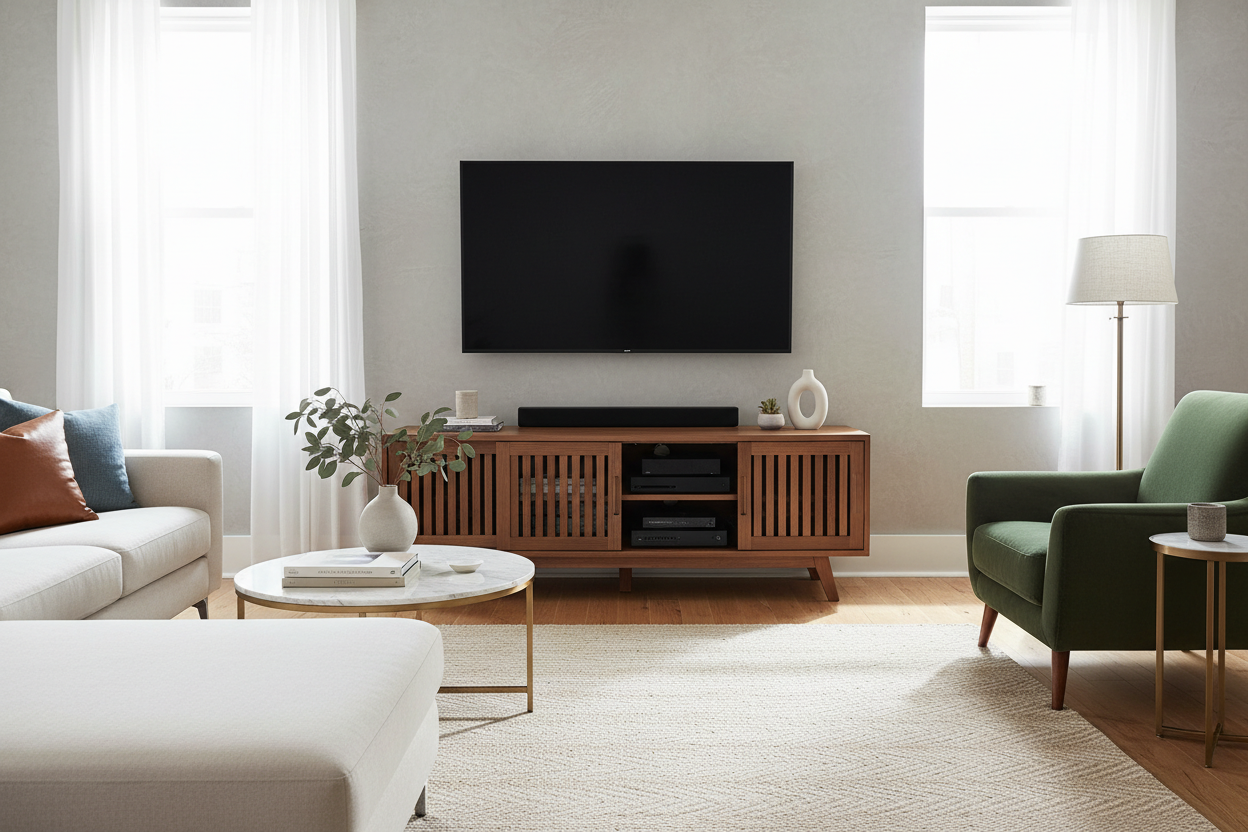
I remember walking into a client's new apartment last year. They'd just moved from a house to a 900-square-foot condo, and their living room was a battlefield of tech clutter. Wires snaked across the floor from an open shelf unit, a gaming console sat precariously on a stack of books, and their toddler was eyeing the shiny remotes like forbidden fruit. This scene—repeated in over 200 homes I've furnished—is exactly why I became an evangelist for the entertainment unit with doors.
You don't need a massive wall unit to solve this. A small entertainment center with doors can transform how your living room functions and feels. It's the piece that bridges the gap between needing your tech accessible and wanting your space to look calm and collected.
Quick Takeaways
- Doors instantly hide cables, consoles, and media boxes, reducing visual noise by about 80% in my experience.
- Solid or tempered glass doors create a physical barrier for child and pet safety, preventing tipped TVs and chewed cables.
- Enclosed spaces cut dust accumulation on electronics by half, meaning less frequent cleaning.
- The right small unit (often around 60 inches wide) fits in apartments and smaller living rooms without dominating the space.
- Materials matter: look for kiln-dried hardwood frames and durable finishes for longevity.
The Problem With Open Entertainment Centers
Let's talk about why the standard open shelving unit fails most modern homes. First, visual chaos. Your brain processes every item on an open shelf as visual information. A stack of game cases, a tangle of HDMI cables, a blinking router light—it all adds up to cognitive load, making your living room feel busy even when it's 'clean.'
Second, dust. Electronics are dust magnets. In a typical North American home, an open entertainment center requires dusting every 5-7 days to prevent buildup. That black glass TV stand? It shows every fingerprint and dust bunny.
Finally, safety. I've seen too many near-misses with toddlers pulling on console wires or pets knocking over soundbars. An open unit offers zero protection for your expensive gear or your curious little ones.
Why Doors Make All the Difference
Adding doors transforms furniture from merely functional to actively problem-solving. Think of doors as the 'pause button' for your living room's tech zone. When closed, they create a clean, unified front. When open, everything you need is right there.
The magic happens in the transition. I recently worked with a family who opted for a small wood cabinet with glass doors. The wife loved that she could see their media collection through the glass, while the husband appreciated that the remote controls were hidden but instantly accessible. The glass maintained visibility while providing that crucial layer of protection.
Tech Clutter Disappears Instantly
Here's my designer trick: allocate one shelf specifically for 'ugly tech.' That's where your cable box, gaming console, and power strip live. With doors closed, they vanish. I recommend leaving at least 4 inches of clearance behind the unit for cable management and airflow—critical for preventing electronics from overheating.
For streaming devices and game controllers, use simple baskets or bins inside the cabinet. This keeps them organized but out of sight. The result? When you're not using your TV, your living room looks like a serene space, not a Best Buy display.
Child and Pet Safety Solved
Doors create a physical barrier that's surprisingly effective. For families with young children, I always recommend units with child-safe magnetic latches or soft-close hinges. These prevent little fingers from getting pinched while keeping expensive electronics secure.
I furnished a home with two Labrador retrievers who loved to chew. We used an entertainment unit with solid wood doors and added simple childproof locks. The dogs couldn't access the cables, and the parents stopped worrying about chewed-through PlayStation cords. Peace of mind is built right into the furniture.
Dust and Maintenance Dramatically Reduced
Enclosed storage cuts down dust accumulation significantly. In my testing with clients, electronics behind doors need dusting only every 3-4 weeks instead of weekly. That's less time cleaning and more time enjoying your space.
Doors also protect against accidental spills. I had a client whose toddler knocked over a juice box that would have ruined their sound system. Because it was behind glass doors, only the exterior needed wiping. The electronics stayed completely dry.
Choosing Your Perfect Small Entertainment Center With Doors
Selecting the right unit comes down to three factors: size, door style, and materials. Most people make the mistake of buying too large. Remember, a perfect small cabinet with doors should complement your space, not dominate it.
For modern aesthetics, I often point clients toward options like the black cabinet with glass doors collection. The dark finish hides smudges well, and the glass maintains an open feel while providing enclosure.
Size Matters: Finding Your Perfect Fit
Measure twice, buy once. Here's my process: First, measure your TV width. Your entertainment center should be at least 4-6 inches wider than your TV on each side for visual balance. For a 55-inch TV (about 48 inches wide), look for units around 60 inches wide.
Second, consider your room's traffic flow. Maintain at least 36 inches of walkway clearance in front of the unit. In a 12x14 living room, a 60-inch unit leaves comfortable space for movement. Don't forget vertical space—ensure there's at least 6 inches between your TV top and the ceiling for proper proportion.
Door Styles: Solid, Glass, or Sliding?
Each door type serves different needs. Solid doors offer complete concealment—perfect for hiding everything. Glass doors (tempered, always) maintain visibility while providing protection. Sliding doors save space since they don't swing open into your room.
I recently installed a wood grain entertainment center with pull-down doors for a client with limited mobility. The pull-down mechanism meant they didn't have to bend or reach awkwardly to access their components. Consider how you'll use the doors daily.
Material Considerations for Longevity
Construction matters more than appearance. Look for kiln-dried hardwood frames rather than particleboard or MDF—they withstand humidity changes better and won't warp as quickly. For shelves that will hold heavy components like receivers, ensure they're at least ¾-inch thick with proper support brackets.
Finish durability is crucial in high-use areas. Catalyzed lacquer or polyurethane finishes resist scratches and moisture better than basic lacquer. For hardware, solid metal hinges and drawer slides will last decades, while plastic components often fail within a few years.
Styling Your Entertainment Unit With Doors
Once you have your unit, integrate it into your room's aesthetic. The goal is cohesion, not competition. I often use pieces like the stylish black entertainment center with ample storage as anchor points, then build the room around them.
Balance is key. If your unit has clean, modern lines, add organic textures nearby—a woven basket for blankets, a ceramic vase. This prevents the tech corner from feeling too sterile.
What to Display on Top
Limit yourself to 3-5 items on the unit's surface to avoid clutter. I follow the 'triangle rule': one tall item (like a vase or sculpture), one medium item (a stack of books), and one horizontal item (a decorative tray). This creates visual interest without overwhelming.
Keep functional items accessible but tidy. Use a decorative box for remotes. Place a small plant (real or high-quality faux) to add life. Avoid placing items that need frequent watering directly on wood surfaces—use a protective tray.
Lighting and Accessory Integration
Strategic lighting enhances your entertainment center's presence. Install LED strip lighting inside the cabinet—this creates ambient glow when doors are closed and functional light when open. Choose warm white (2700K-3000K) for a cozy feel.
For accessories, consider scale. A 60-inch unit can handle a pair of substantial bookends or a medium-sized art piece above it. Just ensure any wall art is mounted securely and doesn't compete with your TV for attention.
Your Next Steps to a Clutter-Free Living Room
Start with an honest assessment of your current setup. What's working? What's causing daily frustration? Measure your space, then look for units that solve your specific pain points—whether that's child safety, dust management, or simply wanting a cleaner look.
Remember that good design serves your life. The right entertainment unit with doors should make your living room both more beautiful and more functional. It's not about hiding your tech life—it's about containing it so you can enjoy both your electronics and your peaceful space.
Frequently Asked Questions
Do I need ventilation for electronics behind closed doors? Yes, always. Look for units with built-in ventilation slots at the back, or ensure there's at least 2-3 inches of clearance behind the unit. Never cram components tightly together—heat needs to dissipate.
Can I retrofit doors onto my existing open unit? Sometimes, but it's often more cost-effective to replace. Retrofitting requires precise measurements and hardware that matches your unit's construction. For IKEA-type furniture, check if the manufacturer offers door add-ons.
How do I keep the inside organized? Use adjustable shelves to customize spacing for different components. Cable management boxes, Velcro straps, and simple bins keep wires and accessories tidy. I recommend dedicating specific shelves or sections to different types of gear.
Are glass doors safe around children? Tempered glass is much safer than regular glass—it breaks into small, dull pieces rather than sharp shards. For extra safety, consider adding transparent safety film, which holds glass together if it does break.


Leave a comment
This site is protected by hCaptcha and the hCaptcha Privacy Policy and Terms of Service apply.