

















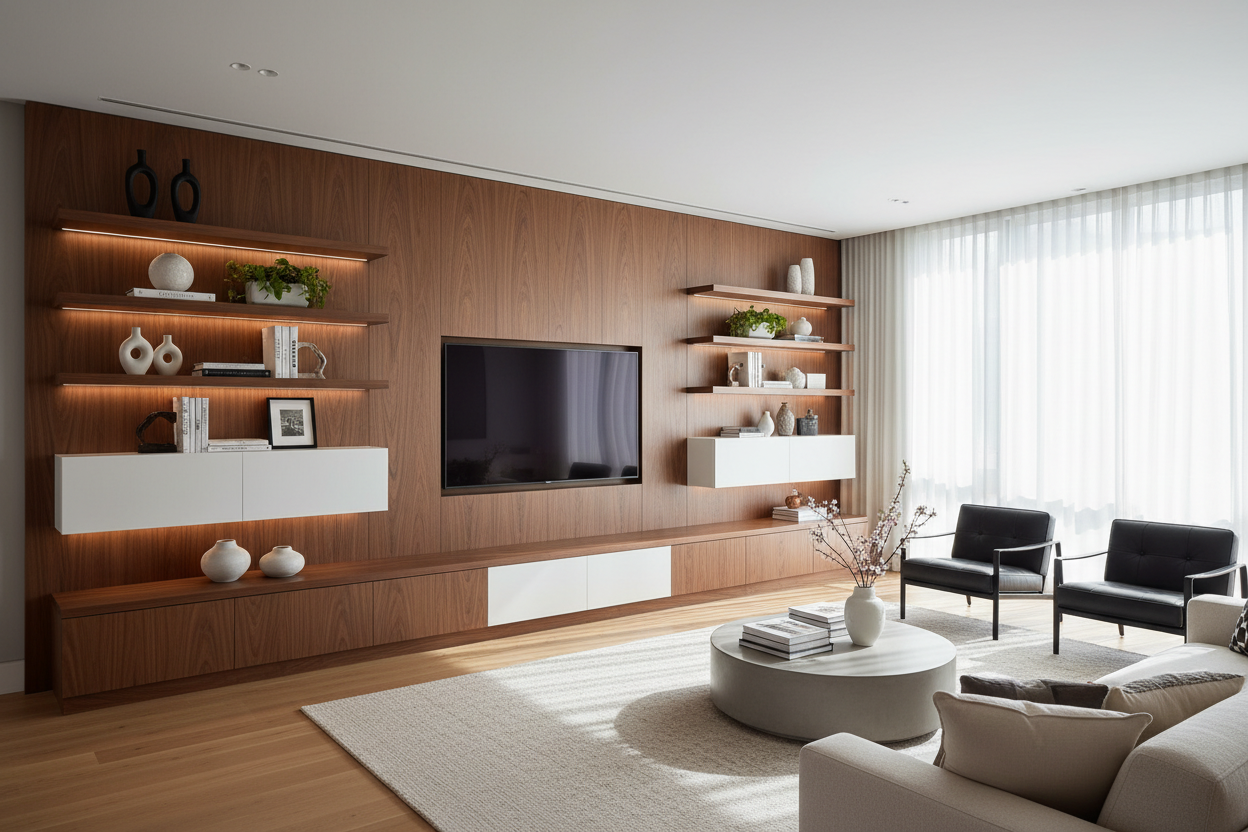
We have all seen it: a massive 75-inch flat screen floating on a vast, empty living room wall. It makes the television look like a black hole and leaves the entire room feeling unfinished and cold. If you are struggling to ground your space and hide the inevitable clutter of daily life, entertainment centers and wall units are the architectural anchors you are looking for. They add immediate character, warmth, and much-needed utility to builder-grade rooms.
As a designer, I spend a lot of time talking clients out of tiny, floating TV consoles and into substantial pieces that actually fit the scale of their homes. Today, we are going to break down how to choose the right piece, balance open and closed storage, and avoid the heavy, dated look of the 1990s.
Quick Decision Guide
- Measure for breathing room: A large tv wall unit needs 12 to 18 inches of negative space on either side so it does not overwhelm the room.
- Balance the storage: Aim for a 50/50 split of open shelving and an entertainment center wall unit with doors to hide daily clutter.
- Mind the depth: Standard media wall units are 15 to 20 inches deep; ensure this footprint does not block room traffic flow.
- Check the back panel: Always choose a wall entertainment system with a false back or pre-drilled holes for seamless wire management.
Space Planning for Large Entertainment Units
Proportion is Everything
When dealing with large entertainment units, proportion dictates success. A whole wall entertainment center should not actually touch every single corner of your room. Leaving negative space around a large wall unit entertainment center prevents the furniture from looking like a monolith. If you have an open-concept floor plan, a tv wall entertainment center acts as a room divider and an architectural anchor, giving the living area a distinct focal point.
Small Rooms Can Go Big
It sounds counterintuitive, but small rooms often benefit from fewer, larger pieces of furniture rather than several small ones. A small entertainment center wall unit that focuses on vertical height rather than width draws the eye up, making the ceiling feel higher. A tall wall unit media center provides massive storage without eating up your valuable square footage.
Material Selection and Visual Weight
The Case for Solid Wood
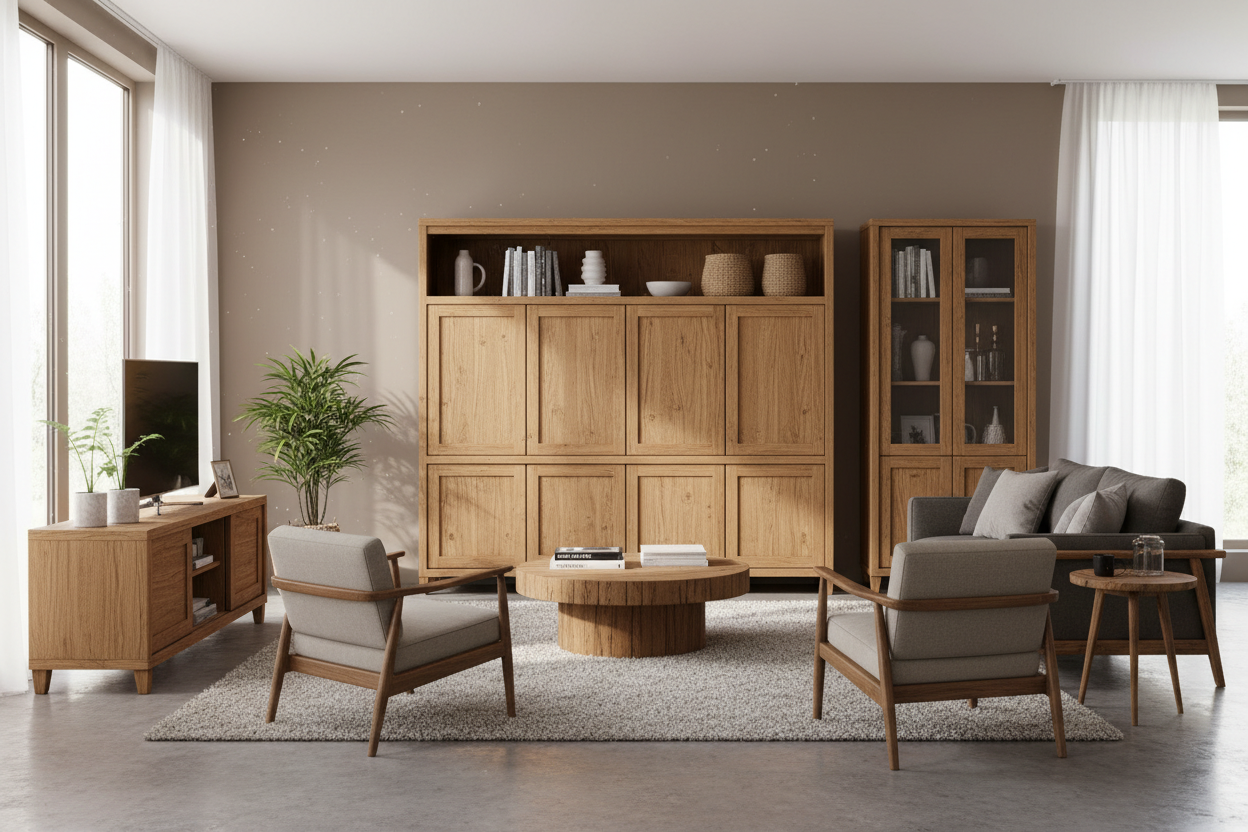
The build quality of your tv wall furniture determines how it handles the daily abuse of a busy household. A solid wood entertainment center wall unit is an heirloom piece. Materials like oak or walnut offer incredible longevity, but a large wood entertainment center carries immense visual weight. If you live in a climate with extreme humidity shifts, keep in mind that solid wood expands and contracts.
Blending Textures
If a heavy wood wall entertainment center feels too rustic or traditional for your aesthetic, consider blending materials. A wooden wall entertainment center with fluted glass doors, cane webbing, or metal accents breaks up the bulk. Engineered wood with a high-quality veneer is also a highly practical choice for a living room wall entertainment center, offering stability against warping while maintaining a high-end look.
Mastering Storage: Display vs. Concealment
The debate between an open wall unit entertainment center with bookshelves and closed cabinets for entertainment wall usually comes down to your family's lifestyle. An entertainment wall cabinet with solid doors is your best defense against visible cord clutter, gaming consoles, and board games. Conversely, a wall entertainment shelf provides a stage for curated ceramics, books, and art. The most functional living room entertainment centers wall units combine both—a full wall tv stand base for concealed storage, topped with open shelving to keep the upper half feeling airy and light.
Designer's Honest Take: The Dust and the Wires
I once designed a gorgeous wood entertainment wall for a client in a suburban new-build. We went with a custom, floor-to-ceiling wall cabinet entertainment center featuring mostly open, matte-black shelving. It looked incredible on installation day. Six months later? The client was frustrated. Between the kids' toys, random mail, and the constant dusting required for the dark finish, it looked visually chaotic.
I learned the hard way that a full entertainment center needs substantial closed storage to function in a real home. Now, I always specify an entertainment center unit with solid doors on the bottom third. And those matte dark finishes I used to love? I now warn clients that every single fingerprint and dust particle will show. If you want low maintenance, stick to lighter wood tones or satin-finish painted cabinets.
Frequently Asked Questions
Are entertainment wall units for living room out of style?
Not at all, but the bulky, overly ornate 1990s big wall units definitely are. Today's tv entertainment wall units focus on clean lines, integrated LED lighting, and modular functionality that blends seamlessly with modern architecture.
What size tv wall unit entertainment center do I need?
Your entertainment wall center should be at least 20 percent wider than your television. If you have a 65-inch TV, your wall entertainment furniture base should be a minimum of 80 inches wide to maintain proper visual balance and avoid a top-heavy look.
Can I install a wall size entertainment center in a rental?
Yes, but opt for a freestanding entertainment center for large wall rather than a built-in. Look for modular whole wall entertainment centers that can be disassembled, moved, and reconfigured to fit a different floor plan when your lease is up.

Leave a comment
This site is protected by hCaptcha and the hCaptcha Privacy Policy and Terms of Service apply.