

















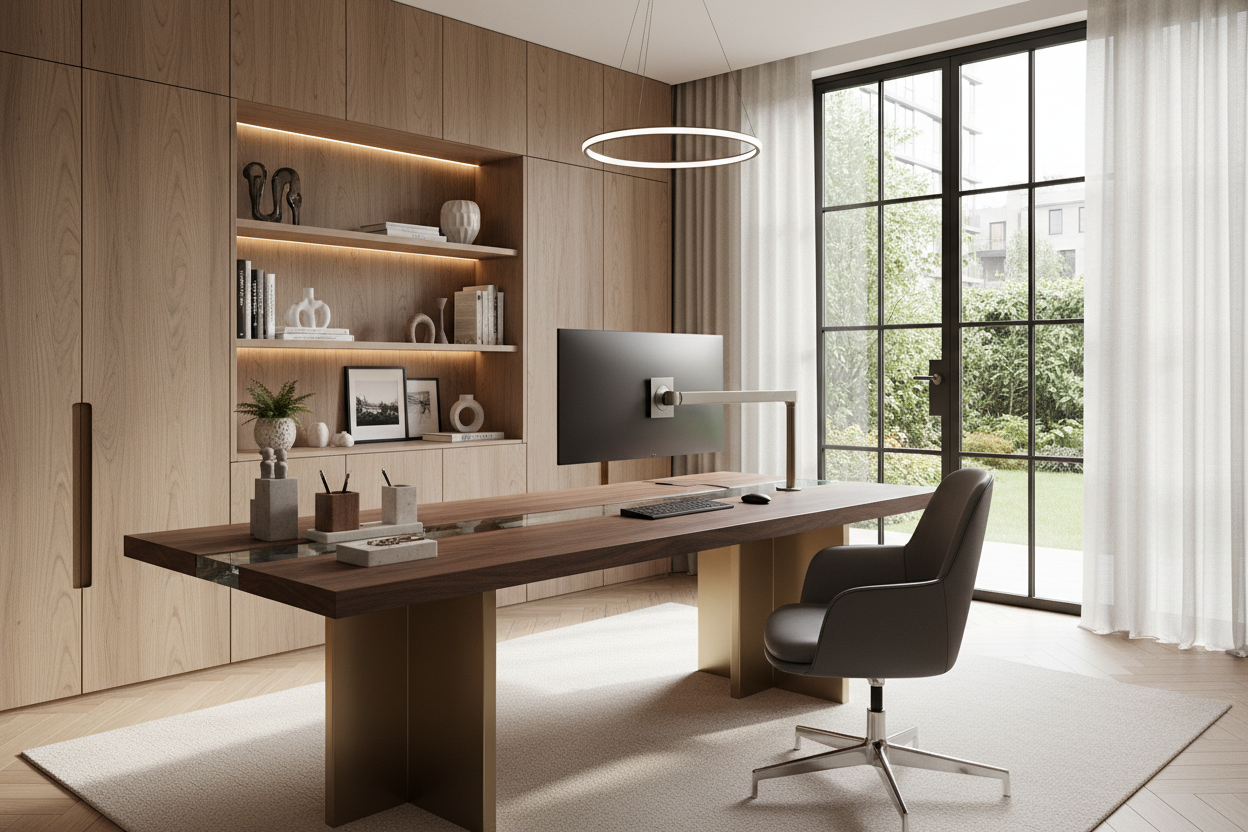
There is a distinct difference between a workspace that merely functions and one that inspires. Often, homeowners treat the home office as a utilitarian afterthought, resulting in uninspired layouts that stifle productivity. The solution lies in curating desk design ideas that balance architectural beauty with rigorous ergonomic standards. Whether you are carving out a niche in a master bedroom or outfitting a dedicated study, the desk is the anchor of your intellectual life. Let’s explore how to select and style a piece that serves as both a workhorse and a work of art.
Quick Decision Guide: Key Features to Look For
Before committing to a purchase, use this checklist to ensure your selection meets professional interior design standards:
- Surface Materiality: Opt for solid wood or high-quality veneers for warmth; use glass or stone sparingly as they can feel cold to the touch during long hours.
- Visual Weight: In smaller rooms, choose legs with open silhouettes (like a Parsons table) to maintain airflow and light.
- Ergonomics: Ensure the desk height sits between 28 to 30 inches, with enough leg clearance for a swivel chair.
- Cable Management: Look for integrated grommets or hidden channels to keep technology from ruining the aesthetic.
Defining the Silhouette and Materiality
The silhouette of your desk dictates the flow of the room. For a commanding presence, executive styles with closed distinct volumes work well. However, for a more modern, airy feel, explore table desk ideas. These pieces often lack heavy drawers, offering a clean line that bridges the gap between dining furniture and office utility. When sourcing creative desks, look beyond the standard big-box store laminates. A walnut slab with a live edge brings organic texture into a sterile room, while a desk wrapped in shagreen or leather adds a layer of tactile luxury that elevates the experience of writing.
Function Meets Form: The Creative Layout
Positioning is just as critical as the furniture itself. One of the most creative ideas for desks is to float the piece in the center of the room rather than pushing it against a wall. This command position allows you to face the door and control the room's energy.
Styling the Surface
When considering desk top ideas, avoid clutter. Instead, create a 'vignette' of three items: a task lamp with architectural interest, a sculptural paperweight, and a tray to corral loose items. This trio provides visual balance without overcrowding your workspace.
Innovative Solutions for Modern Workflows
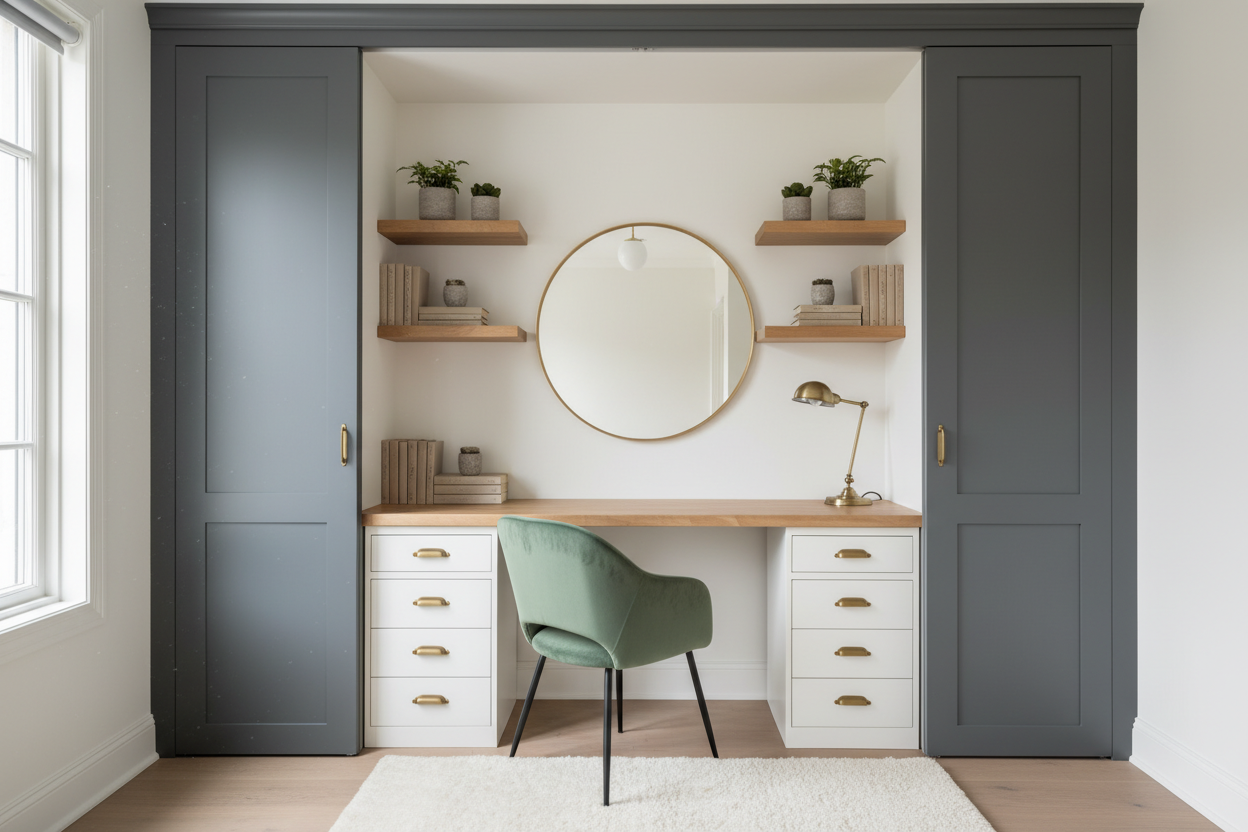
If you are limited on square footage, creative office desks often involve verticality. Wall-mounted ladder desks or built-in joinery can utilize alcoves that would otherwise be dead space. Cool ideas for desks in multi-purpose rooms include console tables that expand. The goal is to ensure the desk feels like a deliberate part of the home's narrative, not a corporate intrusion.
My Personal Take on Desk Design Ideas
I learned a hard lesson early in my career regarding materials. I once specified a stunning, high-gloss black lacquer desk for a client in a sun-drenched Manhattan apartment. It looked incredible in the portfolio photos. However, the reality was different. The high-gloss finish acted like a mirror, creating blinding glare during the client's morning work sessions, and every single fingerprint or dust mote was visible instantly.
We eventually had to commission a custom matte leather blotter to cover 60% of the surface just to make it usable. Now, when I look for creative desk ideas, I always prioritize matte or satin finishes and test the surface temperature. If a material feels icy on your forearms or reflects too much light, it doesn't matter how beautiful it looks—it will annoy you every single day.
Conclusion
Your workspace should be a reflection of your ambition and your taste. By selecting the right materials, respecting the scale of your room, and paying attention to the tactile experience, you transform a simple table into a sanctuary for thought. Use these insights to curate a space that invites you to sit down and create.
Frequently Asked Questions
What is the ideal depth for a home office desk?
For a laptop setup, 24 inches is sufficient. However, if you use multiple monitors or spread out physical paperwork, aim for a depth of 30 inches to maintain a comfortable focal distance from your screens.
How can I make a vintage table work as a desk?
Vintage tables are excellent creative ideas for desks, but check the height. Dining tables are often slightly higher than desks. You may need an adjustable chair or to professionally trim the legs to achieve an ergonomic 29-inch height.
What are the best lighting options for desk work?
Layer your lighting. Combine ambient overhead light with a dedicated task lamp. Ensure the task lamp is placed on the opposite side of your dominant hand to prevent shadows while writing.

Leave a comment
This site is protected by hCaptcha and the hCaptcha Privacy Policy and Terms of Service apply.