

















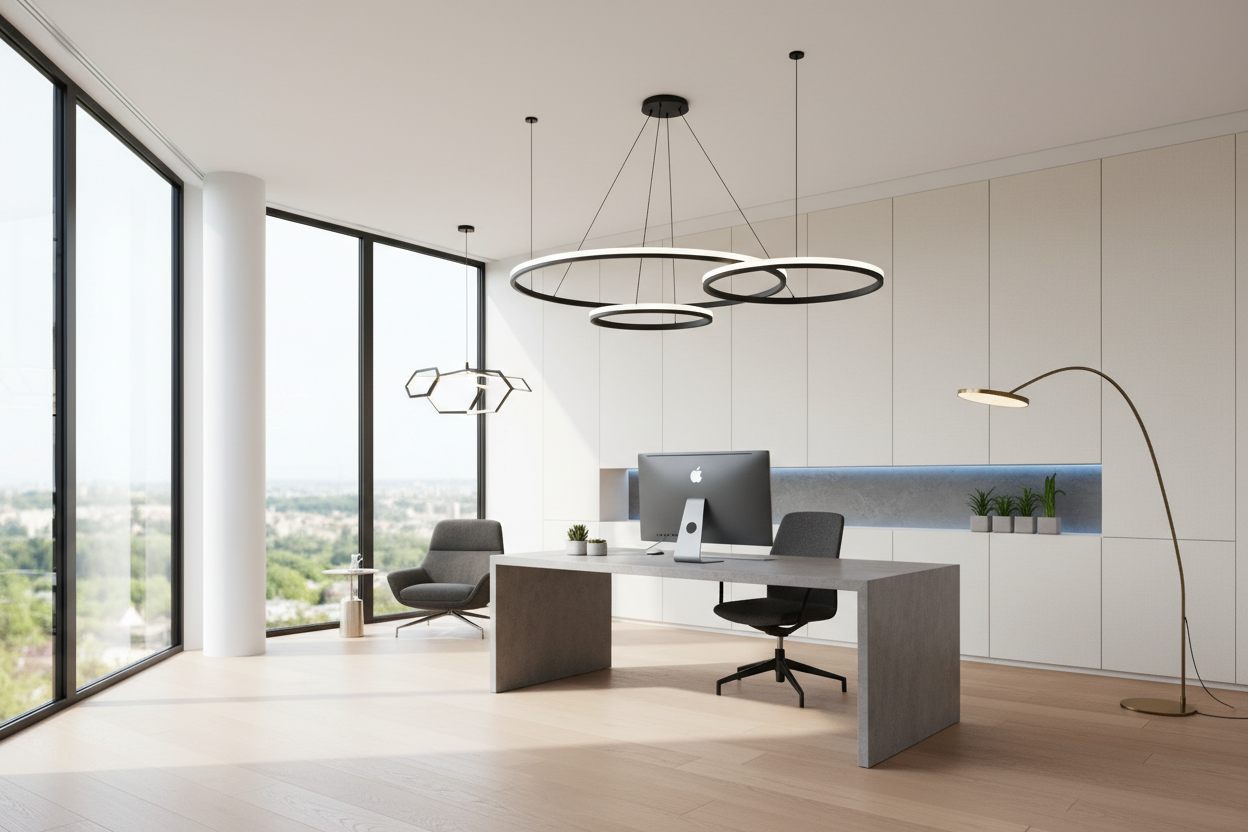
Most home offices suffer from one of two extremes: the dim, sleep-inducing "cave" effect or the harsh, clinical vibe of an interrogation room. As we curate spaces that need to function for both high-focus tasks and video calls, the solution isn't just buying a brighter bulb. It is about selecting cool office lighting that balances architectural form with ergonomic function. Proper illumination dictates your energy levels, reduces eye strain, and ultimately defines the sophistication of your workspace.
Key Features to Look For
- Color Temperature (Kelvin): Look for 3500K to 4500K for a balance of alertness and comfort.
- Adjustability: Articulating arms and dimming capabilities are non-negotiable for adapting to time of day.
- Material Quality: Opt for weighted bases (solid brass or steel) to prevent tipping during adjustments.
- Diffusion: Frosted glass or integrated diffusers are essential to prevent glare on computer monitors.
The Intersection of Style and Color Temperature
When clients ask for a "cool office light," they often mean two things simultaneously: a fixture that looks stylish (aesthetic) and light that keeps them alert (temperature). In lighting design, "cool" light refers to the Kelvin scale. For a productive office, you generally want to avoid the yellow, sleepy hues of 2700K (warm white) used in living rooms.
However, going too cool (6000K+) creates a sterile, hospital-like environment. The sweet spot for a luxury aesthetic that functions well is between 3500K and 4000K. This range renders colors accurately—vital for designers—and keeps the mind active without causing fatigue.
Layering: Beyond the Desk Lamp
A single light source is the enemy of a well-designed room. To achieve a high-end look, you must layer your illumination. This is where office decorative lights come into play. While your task lamp handles the heavy lifting on your desk, you need ambient lighting to soften the contrast.
Consider installing architectural sconces or a statement pendant light to fill the room with a soft glow. This reduces the contrast ratio between your bright screen and the dark room behind it, which is the primary cause of digital eye strain. If hardwiring isn't an option, a sculptural floor lamp placed in the corner can add visual height and texture to the space.
Materiality and Ergonomics
The tactile experience of a fixture is just as important as the light it emits. In high-end design, we look for substantial materials. A cheap plastic lamp might look fine in a photo, but it lacks the stability and smooth articulation required for daily use. Look for machined aluminum, matte powder-coated steel, or solid brass.
Pay attention to the switch mechanism as well. A capacitive touch dimmer or a solid rotary dial offers a much more satisfying user experience than a flimsy inline cord switch. Furthermore, ensure the fixture has a deep shade or a recessed bulb; you should never be able to see the bare bulb from your seated position.
My Personal Take on Cool Office Lighting
I learned a hard lesson about finishes during a project for a tech executive in San Francisco. We selected a stunning, high-gloss chrome desk lamp that looked incredible in the catalog. It was undeniably a cool office light in terms of silhouette. However, once we installed it, we realized the glossy finish acted like a mirror.
Every time the client hopped on a Zoom call, the lamp reflected the monitor's changing colors, creating a distracting disco-ball effect on his face. Furthermore, the high-polish finish was a magnet for fingerprints; every time he adjusted the arm, it left a smudge. I now almost exclusively recommend matte or brushed finishes for desk-proximate lighting. It absorbs stray light rather than bouncing it around, and it keeps the fixture looking pristine even after a long work week.
Conclusion
Transforming your office isn't about cluttering the desk with gadgets; it's about curating tools that serve a purpose. By investing in lighting that offers the right color temperature, quality materials, and glare-free diffusion, you create an environment that invites focus. Treat your lighting as permanent furniture, not disposable accessories.
Frequently Asked Questions
What is the best position for a desk lamp to reduce eye strain?
Place the lamp on the opposite side of your dominant hand to reduce shadows while writing. Crucially, position the light source below your eye level so the bulb is not visible, and angle it away from your monitor to prevent screen glare.
Can I use decorative lights for task work?
Generally, no. Office decorative lights are designed for ambiance (lumens typically under 400). Task lighting requires focused beams with higher lumen output (450-800 lumens) to illuminate documents or keyboards effectively.
Is smart lighting worth it for a home office?
Absolutely. Being able to adjust the color temperature from cool (morning focus) to warm (evening wrap-up) helps maintain your circadian rhythm. Smart bulbs allow you to automate this transition, signaling to your brain when the workday is ending.

Leave a comment
This site is protected by hCaptcha and the hCaptcha Privacy Policy and Terms of Service apply.