

















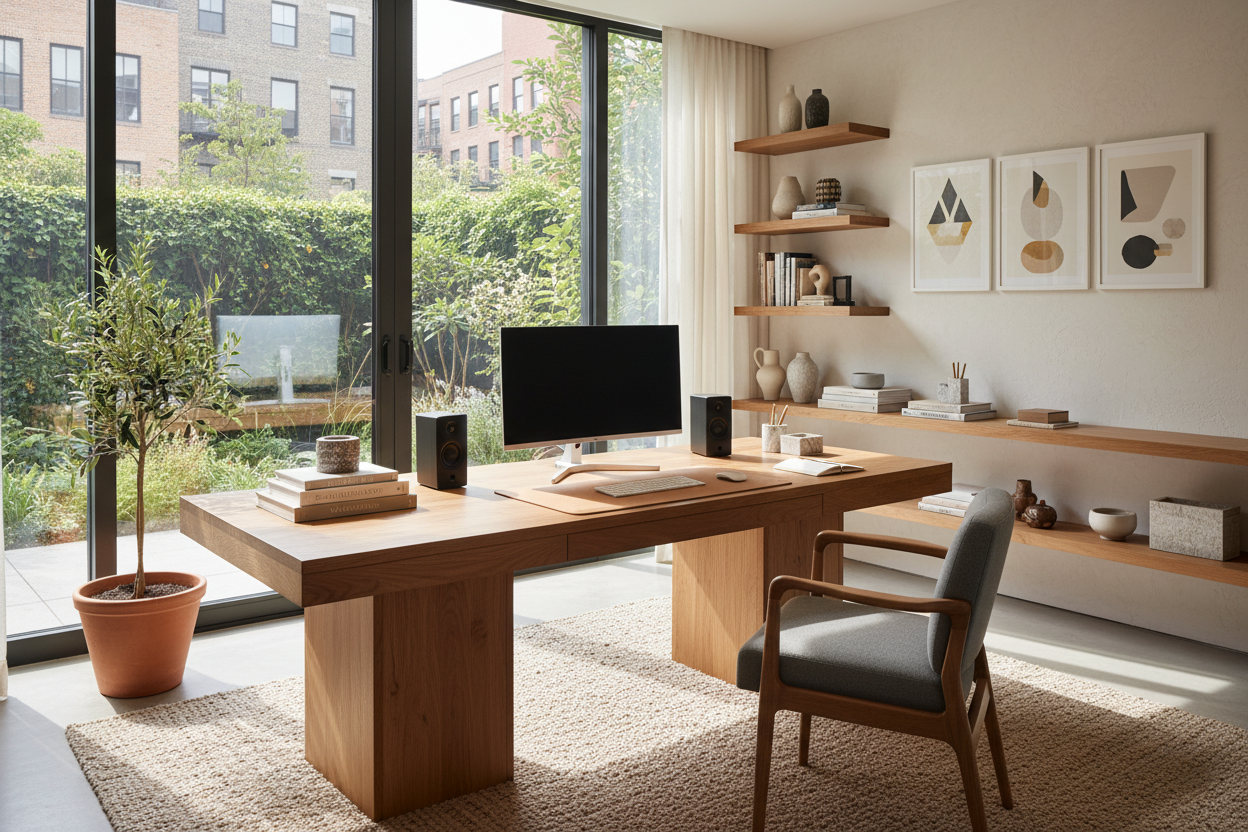
Staring at a blank wall or fighting for elbow room at the kitchen island isn't sustainable for a professional workflow. As a designer, I frequently see clients treat desks as utilitarian afterthoughts, yet the right workstation anchors your entire room and sets the tone for your productivity. This guide provides the curated home office desk inspo you need to strictly blend ergonomic functionality with high-end design principles.
Key Features to Look For
- Surface Area & Depth: Ensure a minimum depth of 24–30 inches to accommodate monitors without straining your eyes.
- Material Integrity: Distinguish between solid hardwoods (longevity) and hollow-core laminates (budget-friendly but prone to bowing).
- Cable Management: Look for integrated grommets or hidden channels to maintain visual silence.
- Ergonomics: Verify the apron height (the space under the drawer) allows for proper leg clearance and chair movement.
Defining Your Aesthetic Narrative
Before purchasing, we must establish the visual language of the room. Office furniture inspo often leans too heavily into the "corporate" look, which can feel sterile in a residential setting. Instead, treat the desk as a piece of sculpture.
The Executive Silhouette
For a commanding presence, look for heavy, grounding materials like walnut or mahogany. A double-pedestal desk offers substantial storage and acts as a focal point, perfect for floating in the center of a room rather than pushing against a wall.
The Architectural Minimalist
If you prefer home desk inspiration that feels airy, opt for a Parsons-style desk or a glass-top trestle. These silhouettes preserve sightlines, making smaller rooms feel expansive. However, be mindful that minimal storage requires disciplined organization.
Materiality and Tactile Experience
The surface you touch for eight hours a day matters. In my showroom consultations, I always emphasize the tactile nature of furniture.
Solid Wood vs. Veneer
Solid wood develops a patina over time, telling the story of your work. High-quality veneers are excellent for stability against humidity changes, but avoid paper-thin veneers that chip easily. Run your hand along the edges; they should feel smooth and substantial, not sharp or peeling.
Metal and Glass
While visually stunning, glass can be cold to the touch and creates acoustic reflections. If you choose glass, consider a leather desk blotter to warm up the immediate work zone and improve mouse tracking.
Spatial Planning and Layout
The placement of your desk is just as critical as the piece itself. Good home desk inspo isn't just about the furniture; it's about the flow.
Never place your desk with your back directly to the entrance; this creates subconscious unease. Instead, position the desk in the "command position," facing the door but not directly in line with it. If possible, orient your view toward a window to reduce eye strain, but manage glare with sheer drapery.
My Personal Take on Home Office Desk Inspo
I learned a hard lesson early in my career regarding "style over substance." I once specified a stunning, reclaimed rough-hewn timber desk for a writer client. It looked incredible in the portfolio photos—rich texture, incredible character.
However, two weeks later, the client called. The uneven surface made writing on paper impossible, and the raw wood edge was snagging her cashmere sweaters. I had to commission a custom tempered glass top to overlay the wood, which compromised the original matte aesthetic I was going for. Now, I always check the "forearm factor." Sit at the desk (or a similar height table) and rest your arms as if typing. If the edge is sharp or the surface is abrasive, it doesn't matter how beautiful it looks; it will become a daily annoyance.
Conclusion
Curating your workspace is an investment in your career and your mental clarity. By focusing on quality materials, proper scale, and a silhouette that speaks to your personal style, you create an environment that invites focus rather than fatigue. Don't settle for temporary solutions; build a space that works as hard as you do.
Frequently Asked Questions
What is the ideal size for a home office desk?
For a standard setup with a laptop and monitor, aim for a width of at least 48 inches and a depth of 30 inches. If you use dual monitors or review physical blueprints, upgrade to a 60-inch width to maintain a clutter-free surface.
How do I mix vintage desks with modern technology?
Vintage pieces offer incredible character but lack cable management. Use adhesive cable clips along the back legs or invest in a "cable spine" that runs from the desktop to the floor to hide cords while preserving the antique integrity.
Is a standing desk worth the aesthetic compromise?
Functionally, yes. Aesthetically, it can be challenging. To maintain high-end home desk inspo, look for standing desks with solid wood tops and shrouded legs that hide the motor mechanics, or use a standing converter that can be tucked away when not in use.

Leave a comment
This site is protected by hCaptcha and the hCaptcha Privacy Policy and Terms of Service apply.