

















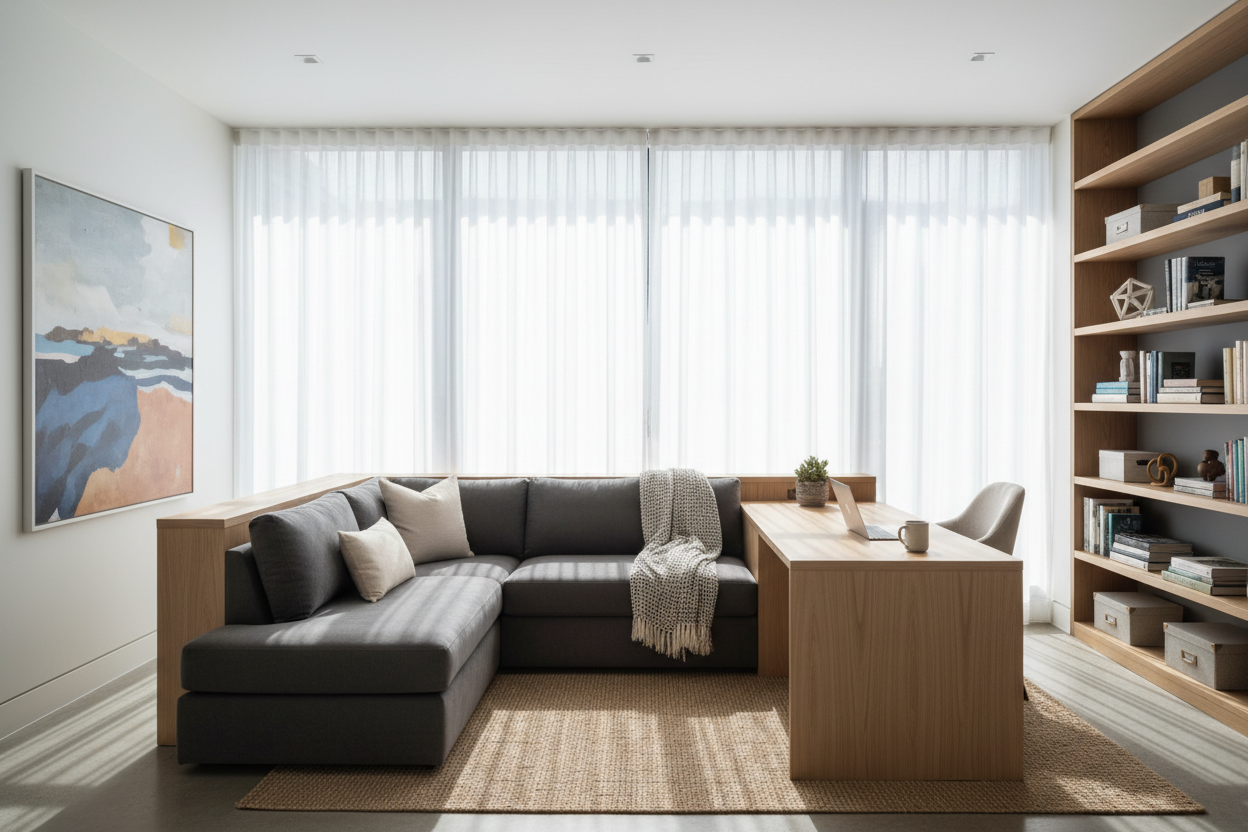
We have all experienced that 3 PM slump where the ergonomic task chair feels less like a support system and more like a cage. You want to shift your posture, review documents comfortably, or simply take a moment to reset, but the living room is too full of distractions. This is where the concept of the couch office bridges the gap between high-performance utility and residential comfort. It is not just about shoving a sofa into a spare room; it is about curating a secondary work zone that enhances productivity rather than hindering it.
Key Features to Look For
- Seat Height & Depth: Look for a seat height of 18-20 inches and a shallower depth (under 24 inches) to maintain an upright posture for laptop work.
- Performance Fabrics: Opt for high-rub count textiles (Crypton or commercial-grade leather) that resist ink stains and coffee spills.
- Visual Weight: Choose legs that lift the frame off the floor to keep small offices from feeling cramped.
- Structure: A tight-back design prevents the messy look of loose cushions during video calls.
Defining the Purpose of Your Office Couch
Before selecting a silhouette, we must define the intent. Is this the office couch intended for client meetings, or is it a solitary retreat for reading contracts? If you are hosting clients, you need a firmer sit—something akin to a reception settee. If this is a couch for home office use exclusively for you, you can afford slightly more plushness, but beware of going too soft. A sofa that swallows you whole makes it incredibly difficult to type on a laptop or stand up quickly when the phone rings.
Materiality and Aesthetics
In a workspace, texture plays a massive role in the ambient feel of the room. A couch for office room setups needs to command respect while inviting use.
Leather vs. Fabric
Top-grain leather is the gold standard for an executive feel; it ages beautifully and creates a serious focal point. However, if your office has hard surfaces (glass desks, hardwood floors), leather can add to the echo. In those cases, I recommend a heavy-duty tweed or velvet to act as sound absorption, dampening the acoustics for clearer conference calls.
Space Planning and Layout
The placement of an office room couch is critical to flow. The most common mistake I see is placing the sofa directly behind the desk chair. This creates a "corridor effect" and limits movement.
Instead, try perpendicular placement. Position the couch against a side wall to create a distinct "breakout zone." If you are limited on square footage, consider a loveseat or an apartment-sized sofa. The goal is to maintain distinct traffic lanes so the room breathes.
My Personal Take on Couch Office Design
I learned a hard lesson about the couch office dynamic during a project for a tech consultant in San Francisco. We installed a stunning, deep-seated velvet sofa in navy blue. It looked incredible in photos.
Three months later, the client called me. The issue wasn't the comfort—it was the maintenance and the optics. He realized that every time he sat down to work, the velvet nap would shift, leaving distinct "butt prints" that looked messy in the background of his Zoom calls. Furthermore, because the seat was 26 inches deep, he ended up slouching so much that his laptop camera was looking up his nose. We swapped it for a tighter mid-century tweed bench seat. The lesson? In an office, structure always beats slouch, and matte textures forgive more sins than sheen.
Conclusion
Integrating a sofa into your workspace is an investment in your workflow. It provides a necessary change of scenery without leaving the room. By focusing on firm support, durable textiles, and smart spatial planning, you can create a sophisticated environment that works as hard as you do.
Frequently Asked Questions
What is the ideal size for a home office couch?
For most standard 10x12 home offices, a loveseat (approx. 60 inches wide) or an apartment sofa (approx. 72 inches wide) is the maximum size you should consider to avoid overcrowding the space.
Can I use a sleeper sofa in my office?
Absolutely. A sleeper sofa is a fantastic way to make a room multi-functional. However, ensure you measure the "open" depth to guarantee the bed doesn't hit your desk when unfolded.
How do I clean an office couch?
Vacuum weekly to remove dust that settles from paper and electronics. For stains, blot immediately. If you anticipate high traffic or eating at your desk, treat the fabric with a stain-repellent guard upon delivery.

Leave a comment
This site is protected by hCaptcha and the hCaptcha Privacy Policy and Terms of Service apply.