




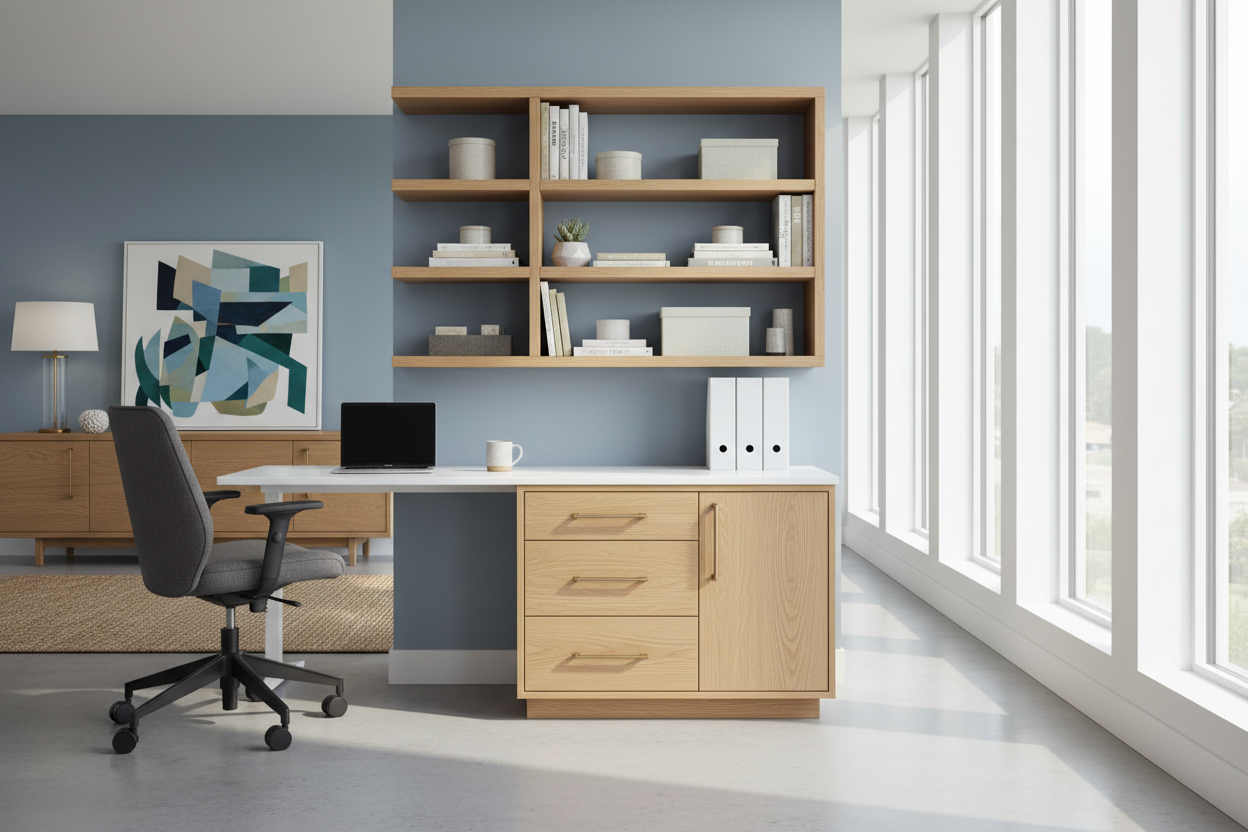
There is a subtle but profound link between your environment and your productivity. A disorganized workspace isn't merely an eyesore; it disrupts your creative flow and mental clarity. As a designer, I often see clients invest heavily in ergonomic chairs and expansive desks, only to neglect the storage solutions that actually keep the surface clear. Finding the right cabinet drawer office unit is about balancing volume requirements with the visual weight of the room.
Key Features to Look For
Before committing to a purchase, consider these core specifications to ensure longevity and functionality:
- Drawer Extension: Full-extension slides allow access to the very back of the drawer, whereas partial slides leave space wasted.
- Weight Capacity: Ensure the bottom drawer (often used for filing) includes a fifth caster or heavy-duty rails to prevent tipping.
- Material Integrity: High-pressure laminate resists scratches, while powder-coated steel offers a modern, industrial durability.
- Mobility: Lockable casters are essential for flexibility in dynamic workspaces.
Choosing the Right Material
The material of your drawer cabinet for office usage dictates both the aesthetic and the lifespan of the piece. In high-traffic commercial zones, I typically recommend steel or melamine. These materials withstand the accidental bumps from office chairs and resist coffee rings. However, for a home executive suite, wood veneers—such as walnut or white oak—add warmth and texture that sterile metal cannot replicate.
Solid Wood vs. Engineered Composites
While solid wood is the gold standard for heirlooms, it expands and contracts with humidity. For a functional piece like a filing cabinet, high-quality MDF with a premium veneer is often more stable and cost-effective. Look for edge banding; if the edges look like they might peel, walk away. That is the first place wear will show.
Space Planning & Layout
In smaller floor plans, the footprint of your furniture is critical. A small office drawer cabinet usually fits snugly under a standard 29-inch desk, but you must measure the clearance carefully. Leave at least two inches of vertical space between the cabinet top and the desk underside to allow for easy movement.
If you are placing the unit beside your desk to extend the work surface, ensure the height matches your desk exactly. This creates a seamless visual line, effectively expanding your usable desktop area without the bulk of a larger table.
Visual Balance and Style
Design is about proportion. A bulky, dark drawers cabinet office unit can make a room feel heavy if the rest of the furniture is spindly or light-colored. If your desk has open metal legs, consider a cabinet that also sits on legs rather than flush to the floor; seeing the floor underneath furniture tricks the eye into thinking the room is larger.
Lessons from My Own Projects
I want to share a specific realization from a home office renovation I did last year in Chicago. We selected a stunning, high-gloss lacquer cabinet that looked incredible in the catalog. However, within two weeks, the client called me. The issue wasn't the look—it was the sound.
The metal drawer slides were standard grade, not soft-close. Every time she slammed a drawer shut during a stressful call, it rattled the whole unit and eventually caused the internal filing rails to jump their tracks. It was a tactile failure. I had to replace the hardware personally. Since then, I always check the "feel" of the close mechanism. If it doesn't whisper when it shuts, it’s going to annoy you eventually. Also, check for "anti-tilt" mechanisms; I once had a loaded drawer tip forward because we didn't account for the weight of heavy legal files when the top drawer was fully extended.
Conclusion
Curating your workspace is an investment in your peace of mind. By selecting a cabinet that offers smooth operation, durable materials, and a silhouette that complements your design language, you turn a utilitarian object into a design asset. Clear your desk, and you clear your mind.
Frequently Asked Questions
What is the standard height for an under-desk cabinet?
Most under-desk pedestals range between 24 to 28 inches in height. Standard desks are usually 29 to 30 inches high, so this range ensures a proper fit with clearance.
How do I maintain a wood veneer cabinet?
Avoid harsh chemical cleaners which can strip the finish. Dust regularly with a microfiber cloth and use a specialized wood polish every few months to maintain the luster and prevent drying.
Are locking mechanisms necessary for home offices?
Even if security isn't a major concern, locks are useful for childproofing. They prevent little hands from accessing sharp office supplies or important documents, adding a layer of safety to your home.



Leave a comment
This site is protected by hCaptcha and the hCaptcha Privacy Policy and Terms of Service apply.