



We often mistake complexity for luxury, assuming that more ornamentation equates to higher value. However, in my fifteen years of designing home offices and corporate suites, I have found that visual noise is the quickest way to kill productivity. The most sophisticated spaces often rely on office furniture simple in form yet robust in function. This article explores how to curate a workspace that feels curated and calm, rather than stark or empty.
Key Features to Look For
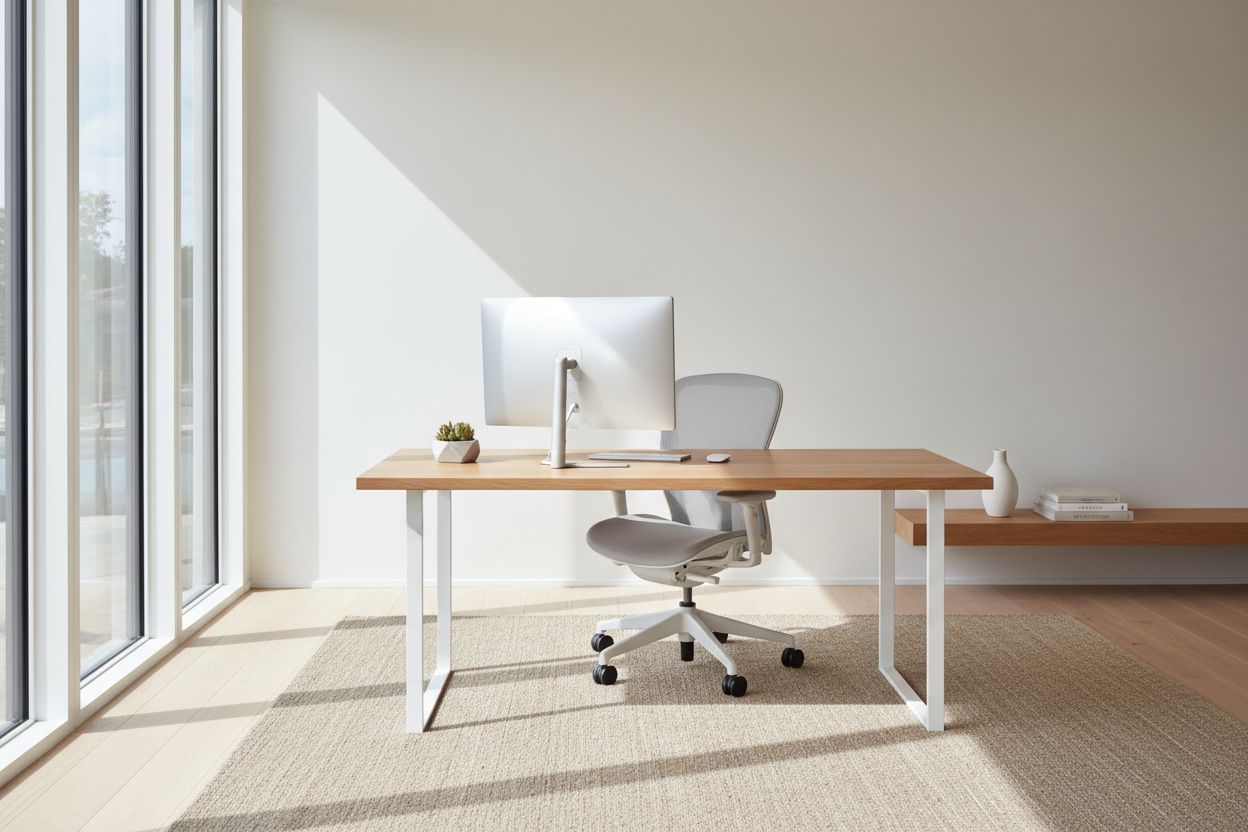
- Visual Weight: Opt for slender leg profiles and floating tops to maintain an airy feel.
- Material Honesty: Look for authentic textures like matte wood grains or powder-coated steel rather than glossy synthetics.
- Hidden Functionality: Simple designs must possess integrated cable management to preserve the clean silhouette.
- Scale and Proportion: Ensure the furniture size respects the negative space of the room.
Curating Materials for Longevity
When dealing with simple office furniture, there is nowhere for poor quality to hide. In ornate furniture, carving and embellishments can distract from a subpar finish. In minimalist design, the surface is everything.
Solid Wood vs. High-Grade Veneer
For a desk that acts as a focal point, solid wood offers unmatched tactile warmth. However, do not dismiss high-grade architectural veneers. They often provide better stability against humidity changes than solid slabs, ensuring your clean lines remain straight over time. If you prefer a modern industrial aesthetic, look for high-pressure laminates (HPL) with a soft-touch matte finish, which reduces glare from overhead lighting.
Space Planning and Visual Flow
The placement of your furniture is just as critical as the piece itself. A common error I see is pushing a simple desk directly against a wall in a large room. This creates a "dorm room" effect.
Instead, try "floating" the desk in the center of the room or perpendicular to a window. This highlights the silhouette of the furniture and allows you to command the room. When the furniture lines are clean, the negative space around the items becomes an active part of the design composition.
Ergonomics Without the Bulk
Many clients worry that a streamlined aesthetic requires sacrificing comfort. This is a myth. High-end task chairs now utilize mesh technologies and internal lumbar mechanisms that provide support without the visual heaviness of overstuffed leather. Look for chairs where the mechanics are integrated into the frame rather than bolted on externally.
Lessons from My Own Projects
I learned a hard lesson about "simple" finishes during a project for a tech consultant in Seattle. We selected a stunning, ultra-minimalist desk with a matte black "soft-touch" laminate surface. It looked incredible in the showroom and even better on installation day.
However, three weeks later, the client called. The specific texture of that laminate, while beautiful, held onto natural skin oils relentlessly. Every time he rested his forearms to type, it left temporary, shiny patches that made the desk look greasy rather than chic. We had to swap it for a textured wood grain charcoal finish which was much more forgiving. Now, when I recommend minimalist pieces, I always test the surface with my own hands to see how it reacts to fingerprints and friction. True simplicity shouldn't require constant maintenance.
Conclusion
Designing with simplicity is an exercise in restraint. By selecting pieces that prioritize silhouette, material quality, and hidden ergonomics, you create a workspace that invites focus rather than distraction. Remember that the goal is not just a room that looks good in a photo, but one that supports your daily workflow with quiet efficiency.
Frequently Asked Questions
How do I hide cords with open-frame furniture?
Look for desks with hollow legs or under-mount trays. If your piece lacks these, use magnetic cable channels that run down the back of metal legs to keep wires invisible from the front view.
Can simple furniture work in a traditional home?
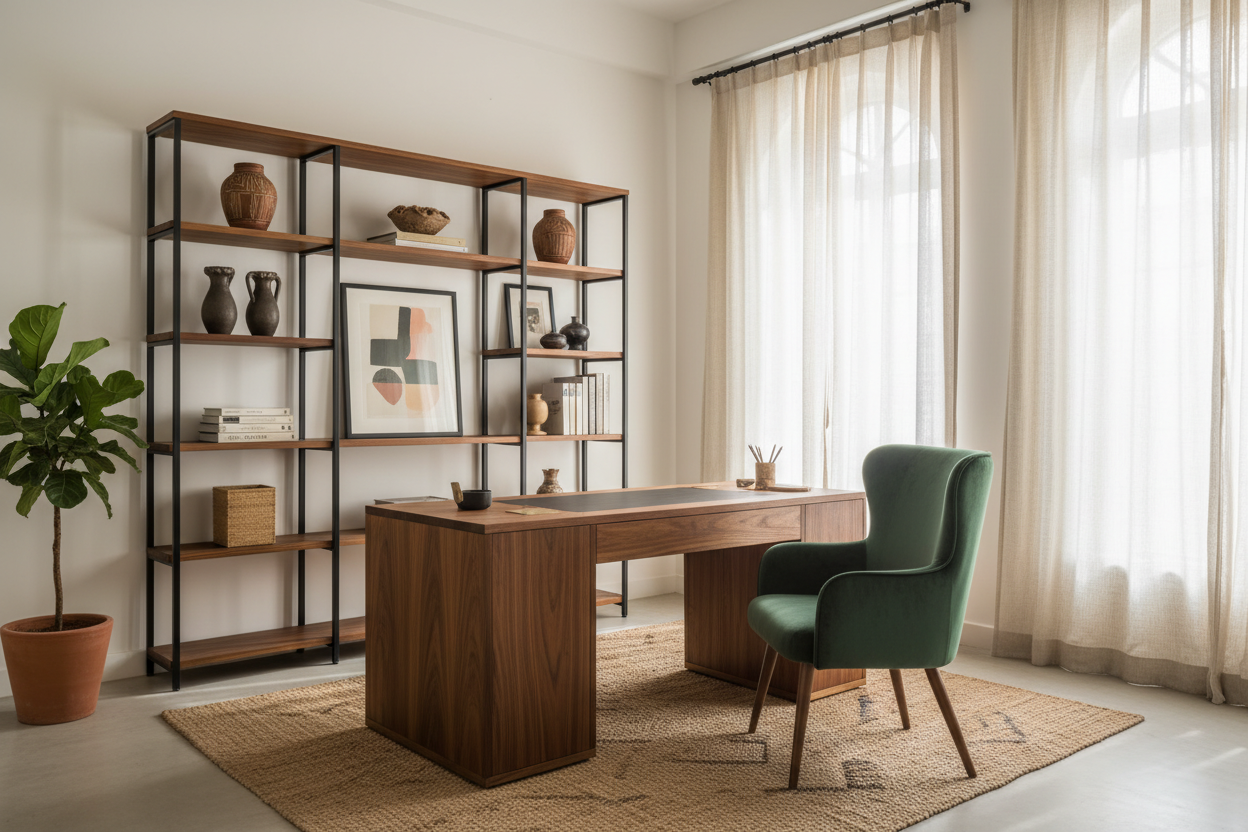
Absolutely. A clean-lined modern desk can act as a "palate cleanser" in a room with traditional wainscoting or heavy drapes, creating a sophisticated transitional look.
Is minimalist furniture durable enough for daily use?
Yes, provided you choose the right materials. Powder-coated metal and commercial-grade laminates are often more durable than traditional varnished wood, resisting scratches and heat rings effectively.

Leave a comment
This site is protected by hCaptcha and the hCaptcha Privacy Policy and Terms of Service apply.