

















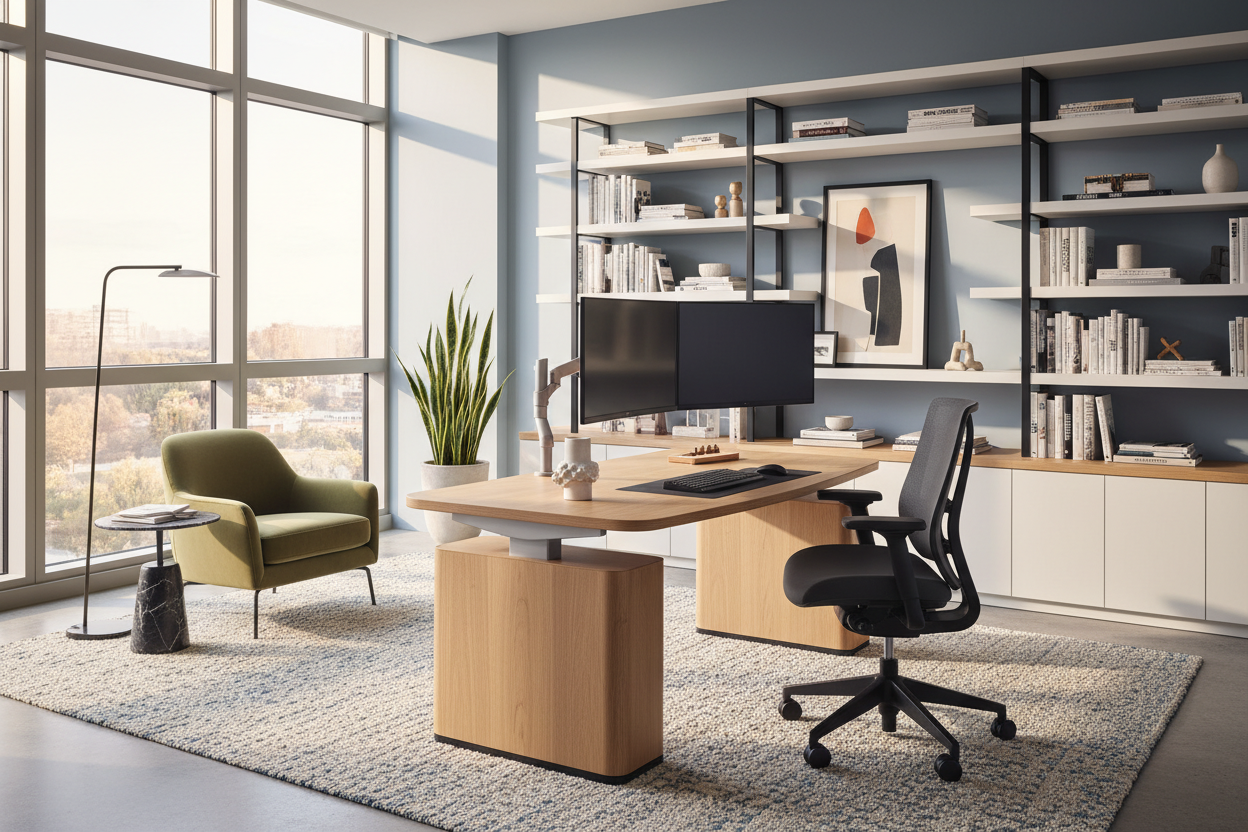
We have all experienced the fatigue that comes from working in a makeshift space. Whether you are converting a spare bedroom or upgrading a corporate suite, the environment dictates your output. Sourcing the right design ideas for office layouts is not merely about aesthetics; it is about psychological anchoring. A well-designed room signals to your brain that it is time to focus, separating professional duties from domestic relaxation. Below, we explore the architectural and decorative elements that create a workspace that is as functional as it is visually commanding.
Quick Decision Guide: Key Elements of Office Design
- Ergonomics Over Aesthetics: Always prioritize chair lumbar support and desk height before selecting finishes.
- Lighting Layers: Combine ambient overhead lighting with focused task lighting (4000K temperature) to reduce eye strain.
- Acoustic Control: Incorporate rugs, drapes, or acoustic panels to dampen echo in office room designs.
- Traffic Flow: Ensure a minimum of 36 inches of clearance behind your chair for smooth movement.
- Material Durability: Choose high-pressure laminates or sealed hardwoods for high-touch surfaces.
Mastering the Layout: Office Configuration Ideas
The most common error I see in floor plans is placing the desk facing a wall. In professional design terms, we often advocate for the "command position." This office configuration idea places the desk facing the door, giving you a view of the room and anyone entering. It creates a sense of authority and openness.
If you are working with limited square footage, consider a floating desk perpendicular to a window. This maximizes natural light without creating glare on your monitor screens. When evaluating office design ideas work zones are essential. Separate your digital work (computer) from your analog work (reading, sketching) to create mental breaks without leaving the room.
Materiality and Texture: Creating a Beautiful Office Design
A beautiful office design relies on the tactile quality of materials. In a luxury or executive setting, we look beyond standard melamine. Solid wood, such as walnut or white oak, adds warmth and character, developing a patina over time. However, be mindful of maintenance; a glass top might look sleek, but it is cold to the touch and amplifies sound.
Textiles and Window Treatments
Offices often suffer from being too sterile. To counter this, introduce texture through window treatments and upholstery. A wool-blend rug not only anchors the furniture but also serves a functional purpose by dampening noise—crucial for video conferencing. For window treatments, opt for solar shades that filter UV rays (protecting your furniture) while maintaining your view.
Lighting: The Unsung Hero of Best Office Ideas
The best office ideas always revolve around lighting. Relying solely on recessed can lights creates harsh shadows that cause fatigue. Instead, aim for a layered approach. Start with a statement pendant for ambient light, add a dedicated architectural task lamp for your work surface, and consider accent lighting (like LED strips in bookshelves) to add depth to the room. This hierarchy of light allows you to adjust the mood depending on the time of day.
My Personal Take on Design Ideas for Office
I learned a hard lesson early in my career regarding surface finishes. I once designed a stunning, high-gloss black lacquer desk for a client who wanted a "Mad Men" aesthetic. It looked incredible in the portfolio photos. However, two weeks later, the client called me in frustration.
The issue wasn't the look; it was the usability. Every single fingerprint showed up instantly. Worse, the optical mouse wouldn't track on the glossy surface, forcing him to use a mousepad that ruined the clean lines we fought so hard for. Since then, I always steer clients toward matte or satin finishes for horizontal work surfaces. It’s a small detail, but when you are leaning on a desk for eight hours a day, those practical nuances matter more than the showroom shine.
Conclusion
Transforming your workspace requires a balance of structural planning and personal style. By prioritizing flow, lighting, and honest materials, you can curate a space that not only looks professional but actively supports your workflow. Don't settle for a generic setup; invest in a design that works as hard as you do.
Frequently Asked Questions
What are the best design ideas for office spaces in small rooms?
For small office room design ideas, utilize vertical space. Install floor-to-ceiling shelving to draw the eye upward and keep the floor clear. Use a desk with visually lightweight legs (like hairpin or acrylic) to make the room feel larger.
How do I choose the right color palette for productivity?
Color psychology suggests that blues and greens promote focus and calmness, making them ideal for high-stress environments. If you are in a creative field, warmer tones like terracotta or ochre can stimulate energy.
Is a standing desk worth the investment for a home office?
Absolutely. From an ergonomic standpoint, the ability to alternate between sitting and standing reduces spinal compression. Look for electric dual-motor frames for stability and smooth transitions.

Leave a comment
This site is protected by hCaptcha and the hCaptcha Privacy Policy and Terms of Service apply.