

















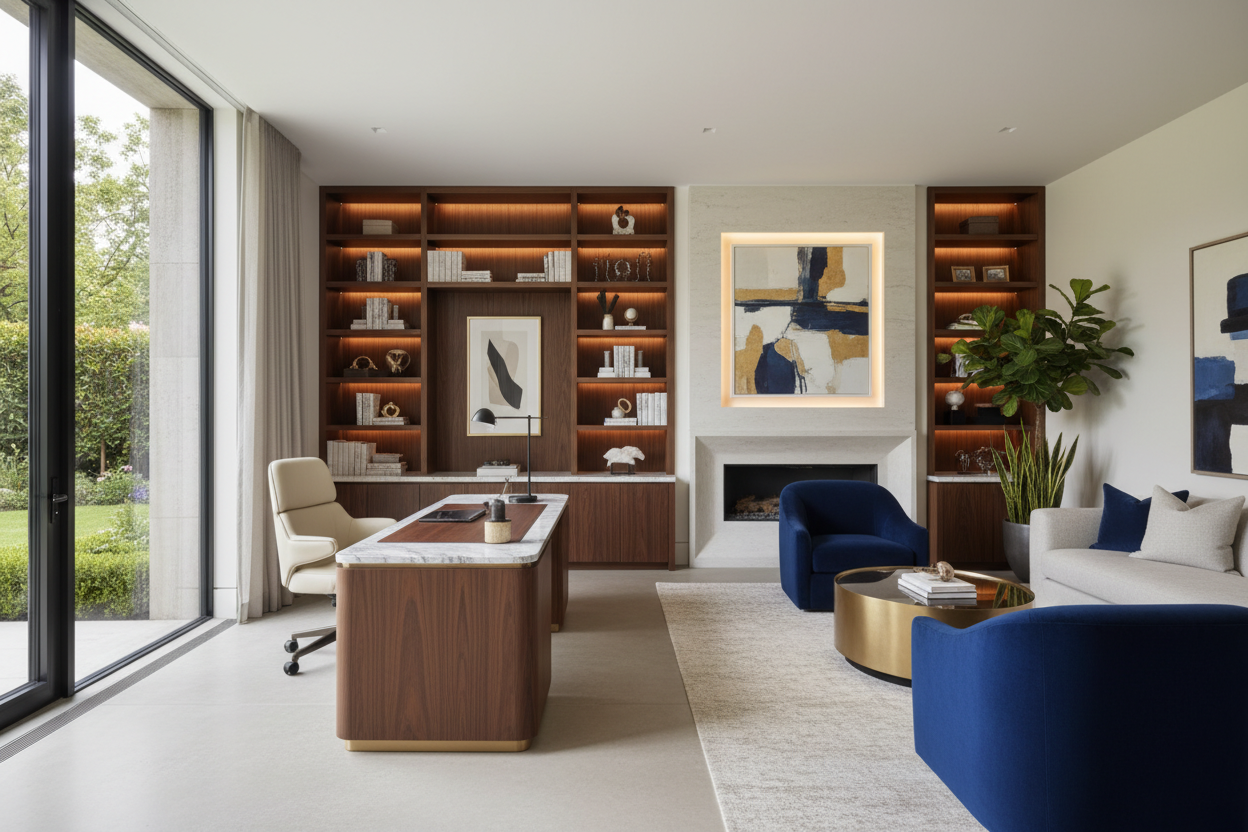
For too long, workspace design has been dominated by the singular focus of the desk and chair. However, as our work lives blend seamlessly with our need for contemplation and casual collaboration, the most sophisticated offices ideas now prioritize a secondary zone: the lounge. A well-designed office is not just a place to type; it is a space to think, read, and host.
Key Features to Look For in Office Lounges
- Scale and Proportion: Ensure lounge furniture does not dwarf the desk; maintain a visual hierarchy where the desk remains the command center.
- Upholstery Performance: Look for high Martindale rub counts (20,000+) to withstand daily friction, especially in a home office with sitting area contexts.
- Seat Height & Depth: Choose firmer, higher seats (17-18 inches) compared to living room sofas to facilitate professional posture and easy movement.
- Lighting Layers: Integrate dedicated floor lamps or sconces to separate the seating zone from the task lighting of the desk area.
Mastering the Layout: The Office with Sitting Area
The success of a home office with sitting area relies entirely on spatial planning. A common error I see in residential projects is pushing all furniture against the walls, creating a "waiting room" effect. Instead, float your seating pieces. If you have the square footage, position a pair of club chairs opposite your desk to create a conversational triangle. This layout commands authority while inviting collaboration.
For a smaller home office with seating area, consider a corner configuration. An L-shaped sectional or a chaise lounge placed near a window maximizes natural light and creates a distinct psychological break from the computer screen. This separation is vital for mental clarity.
Curating Office Seating Ideas for Aesthetics and Function
When sourcing office seating ideas, the silhouette is paramount. Avoid overstuffed, marshmallow-like sofas that look messy. Opt for tailored lines—tuxedo sofas or mid-century modern armchairs with exposed legs help maintain a sense of airiness in the room.
Material Selection
In a professional setting, texture conveys status and comfort. For office sitting area ideas that lean masculine and traditional, full-grain cognac leather is a timeless choice that patinas beautifully over time. However, for a softer, more contemporary home office with sitting area ideas, consider performance velvets or heavy-gauge linens. These materials absorb sound, reducing echo in video calls—a functional benefit often overlooked.
Visual Balance and Accessories
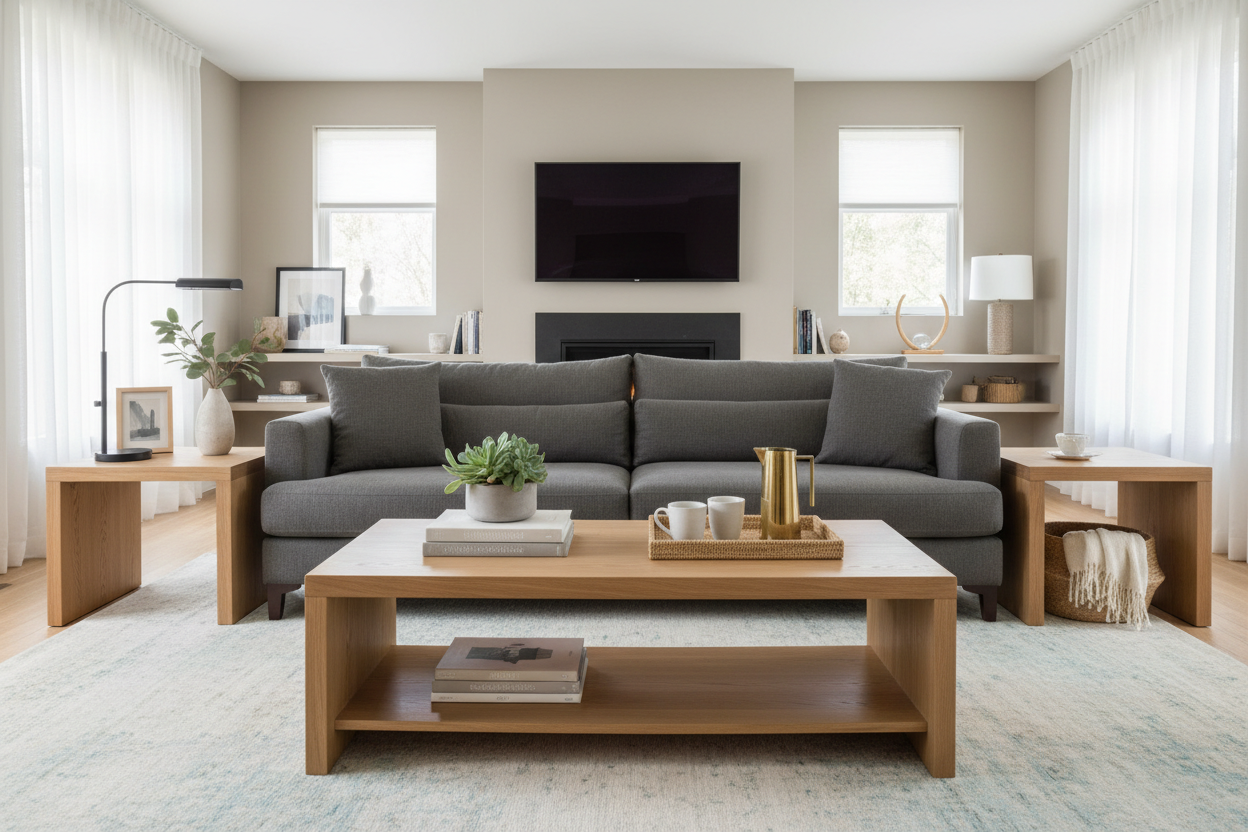
Integrating an office seating area ideas requires bridging the gap between "residential cozy" and "corporate sleek." Anchor the space with a rug that contrasts with your main flooring but complements the desk finish. If your desk is a heavy walnut, a lighter, flat-weave wool rug in the seating area creates necessary lift. Add a low-profile coffee table or a side drink table; functionality must never be sacrificed for style. A place to set a coffee cup is non-negotiable.
My Personal Take on Offices Ideas
I learned a hard lesson about office sitting area ideas during a project for a client in a historic brownstone. We selected a stunning, deep-seated modular sofa for his study. Visually, it was architectural perfection. Practically, it was a disaster.
The seat depth was 28 inches—great for napping, terrible for a meeting. Every time a colleague sat down, they sank so low that standing up became an undignified struggle. It completely disrupted the professional dynamic of the room. I had to swap it out for a pair of structured swivel chairs with a standard 21-inch depth. The takeaway? In an office, the "sit test" is different than in a living room. You want support, not submersion. Always check the pitch of the back; an upright back promotes alertness, while a reclined back signals sleep.
Frequently Asked Questions
How much space do I need for a home office sitting area?
Ideally, you need a minimum of 8x10 feet for the seating zone alone to avoid cramping. However, for a modest home office sitting area, a single statement armchair and a small side table can fit into a 4x4 foot corner comfortably.
What is the best lighting for an office seating area?
Avoid overhead harshness. Use ambient lighting, such as a floor lamp with a linen shade or a dimmer-controlled sconce, to create a softer atmosphere distinct from the bright task lighting used at the desk.
Should the rug in the seating area match the one under the desk?
Not necessarily. While they should share a color palette, varying the texture (e.g., a jute rug under the desk for durability and a wool rug in the seating area for softness) adds sophisticated depth to the room.


Leave a comment
This site is protected by hCaptcha and the hCaptcha Privacy Policy and Terms of Service apply.