

















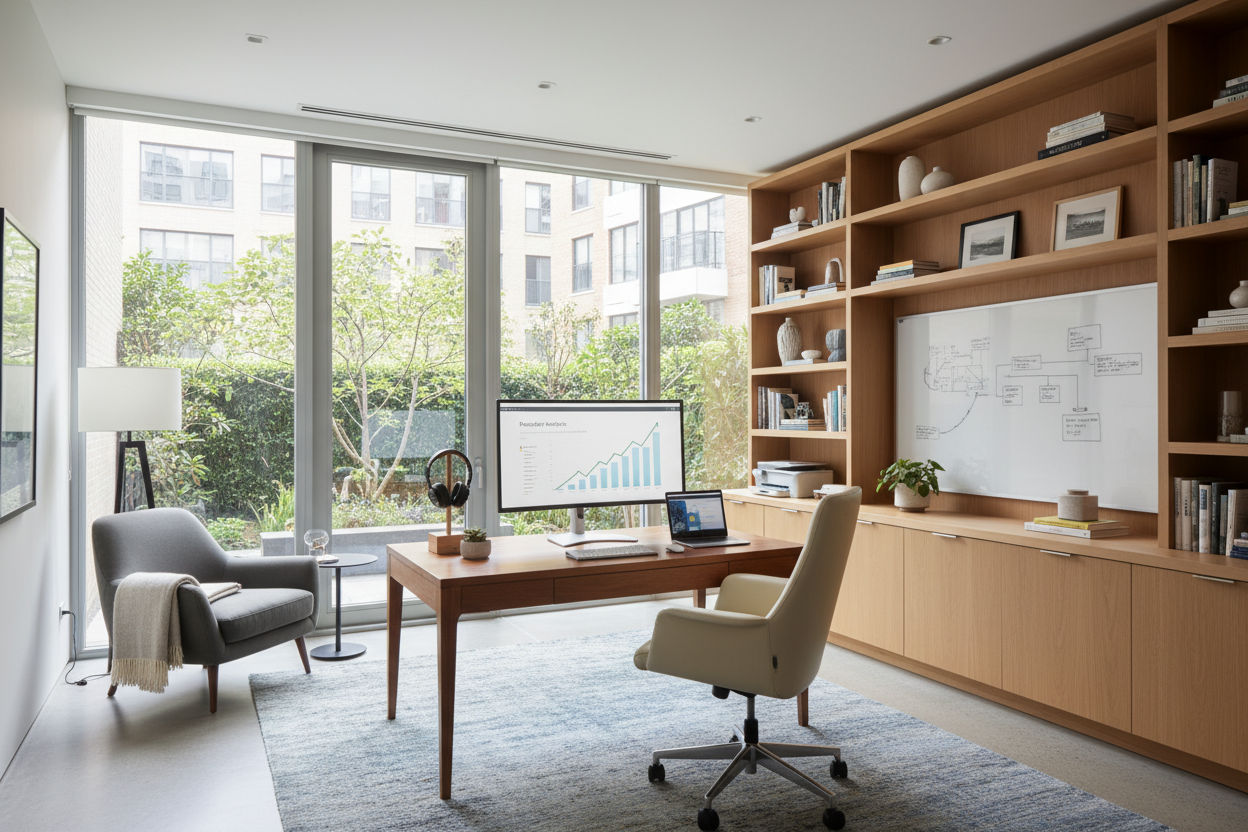
The boundary between professional obligation and personal sanctuary has dissolved. As we navigate the permanent shift toward the employer work from home model, the design dilemma is no longer just about finding a place to sit—it is about curating an environment that sustains high-level output without sacrificing the aesthetic integrity of your home. A makeshift setup at the dining table is a temporary fix; a dedicated, sophisticated workspace is a long-term investment in your career and your property value.
Key Features for a Professional Home Office
To create a space that satisfies both design standards and professional demands, focus on these core elements:
- Ergonomic Integrity: Prioritize seating with lumbar support and adjustable tension to maintain posture during long hours.
- Acoustic Control: Incorporate soft textures (rugs, drapery) to dampen echo for clearer communication.
- Layered Lighting: Combine ambient, task, and accent lighting to reduce eye strain and improve video presence.
- Material Durability: Select commercial-grade finishes like hardwood or high-pressure laminates that withstand daily wear.
Designing for Productivity and ROI
When we discuss the employer benefits of working from home, we often cite increased efficiency and reduced overhead. However, from a design perspective, these benefits only materialize if the environment supports them. A cluttered, poorly lit room hinders the very productivity employers value.
Spatial Planning and Flow
Positioning is everything. Avoid placing your desk directly facing a wall, which can feel stifling. Instead, opt for a "command position"—facing the door but not directly in line with it. This layout reduces subconscious anxiety and commands authority during video calls. If space is limited, a floating desk can reduce visual weight, keeping the room feeling airy while providing necessary surface area.
The Furniture Selection: Form Meets Function
Understanding how working from home benefits employers involves recognizing that physical comfort equals mental endurance. The furniture you choose acts as the engine for this endurance.
The Chair: An Investment Piece
Do not compromise on the chair. Look for a silhouette that complements your room's style—perhaps a mid-century modern aesthetic with leather upholstery—but ensure the mechanics are sound. A synchro-tilt mechanism is vital for movement. The goal is to merge the pros of working from home for employers (sustained focus) with the homeowner's desire for a piece that doesn't look like it belongs in a cubicle farm.
The Desk: Material Matters
Solid wood, such as walnut or white oak, offers tactile warmth that glass or metal cannot replicate. It grounds the space. Ensure the desk depth is at least 24 to 30 inches to accommodate monitors without crowding, allowing for a layout that minimizes visual clutter.
Lighting and Acoustics: The Invisible Design
One of the most overlooked working from home benefits to employer is the professionalism portrayed in client meetings. Your environment is your background. Poor lighting casts shadows that look unprofessional. Use a warm task light (2700K-3000K) to illuminate your workspace and a soft diffuse light behind your monitor to reduce contrast ratios.
Furthermore, hard surfaces create reverb. Introducing heavy linen curtains or a thick wool rug not only elevates the texture of the room but absorbs sound, ensuring your voice carries clearly—a subtle but critical design hack.
My Personal Take on Employer Work From Home Design
In my years designing executive home offices, I’ve learned that specifications on paper rarely tell the whole story. I remember a specific project for a client in a high-rise with floor-to-ceiling glass. We bought a stunning, high-gloss lacquered desk that looked incredible in the catalog.
However, within a week, the client called me. The glare from the afternoon sun bouncing off the lacquer was blinding him during his 2 PM strategy calls, and the surface showed every single fingerprint and coffee cup ring. It was a maintenance nightmare. We had to swap it for a matte-finish rift-sawn oak desk. It taught me that in a high-use environment, "living finishes" that forgive a little mess are far superior to pristine, high-gloss surfaces. Real life involves coffee spills and dust; your furniture should handle that with grace.
Conclusion
Embracing the employer work from home dynamic offers a rare opportunity to tailor your environment to your exact specifications. By selecting materials that age beautifully and planning a layout that prioritizes flow, you create a space that serves your professional goals while enriching your home’s design narrative.
Frequently Asked Questions
What is the ideal desk size for a home office?
For a standard setup with a laptop and one monitor, a desk width of 48 inches is sufficient. However, if you use dual monitors, aim for 60 inches wide and 30 inches deep to maintain proper focal depth and prevent a cramped look.
How can I hide cables to keep the look luxurious?
Cable management is crucial for a high-end look. Look for desks with integrated grommets or modesty panels. Alternatively, mount a cable tray under the desk surface and use Velcro sleeves to bundle cords along the leg of the desk.
Does the room color affect productivity?
Absolutely. While white is clean, it can be clinical. Soft greens (like sage) or warm neutrals (like taupe) are known to reduce eye fatigue and promote focus, making them excellent choices for a workspace.

Leave a comment
This site is protected by hCaptcha and the hCaptcha Privacy Policy and Terms of Service apply.