

















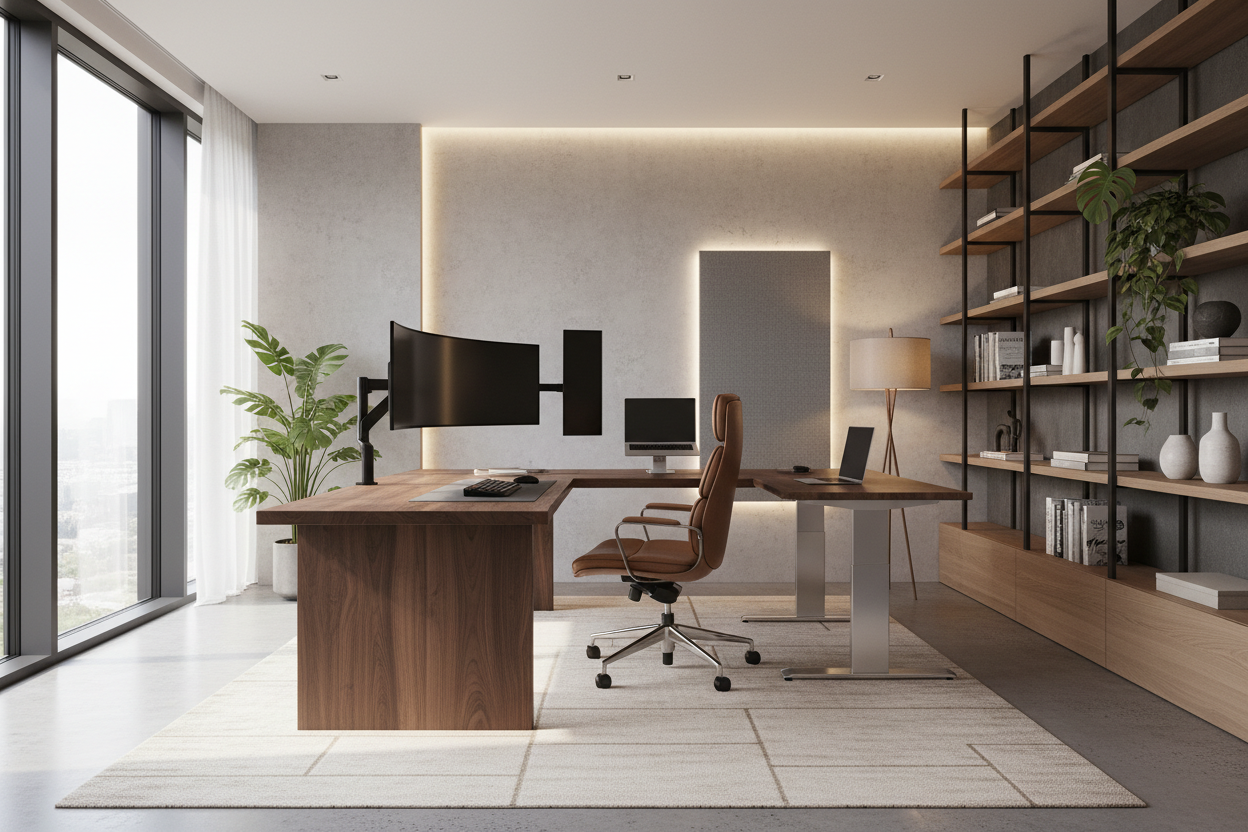
There is a distinct difference between a workspace where you simply survive the 9-to-5 and a sanctuary designed for deep focus. As a designer, I see too many clients push a desk against a blank wall and call it a day, only to wonder why they feel uninspired or fatigued by noon. The secret lies in treating this space with the same design integrity as your living room. Whether you are carving out a niche in a master bedroom or dedicating an entire room to your craft, the right office setup ideas blend rigorous ergonomics with sophisticated aesthetics.
Key Elements for a High-Performance Workspace
- Ergonomics First: Prioritize chair mechanisms and monitor height over purely decorative silhouettes.
- Lighting Layers: Combine ambient ceiling fixtures with focused task lighting (aim for 4000K color temperature).
- Material Tactility: Choose surfaces like solid walnut or matte laminates that resist fingerprints and add warmth.
- Acoustics: Incorporate rugs, drapes, or acoustic panels to reduce echo and visual noise.
- Traffic Flow: Ensure a minimum of 36 inches of clearance behind your chair for movement.
Mastering the Layout: Beyond the Wall-Facing Desk
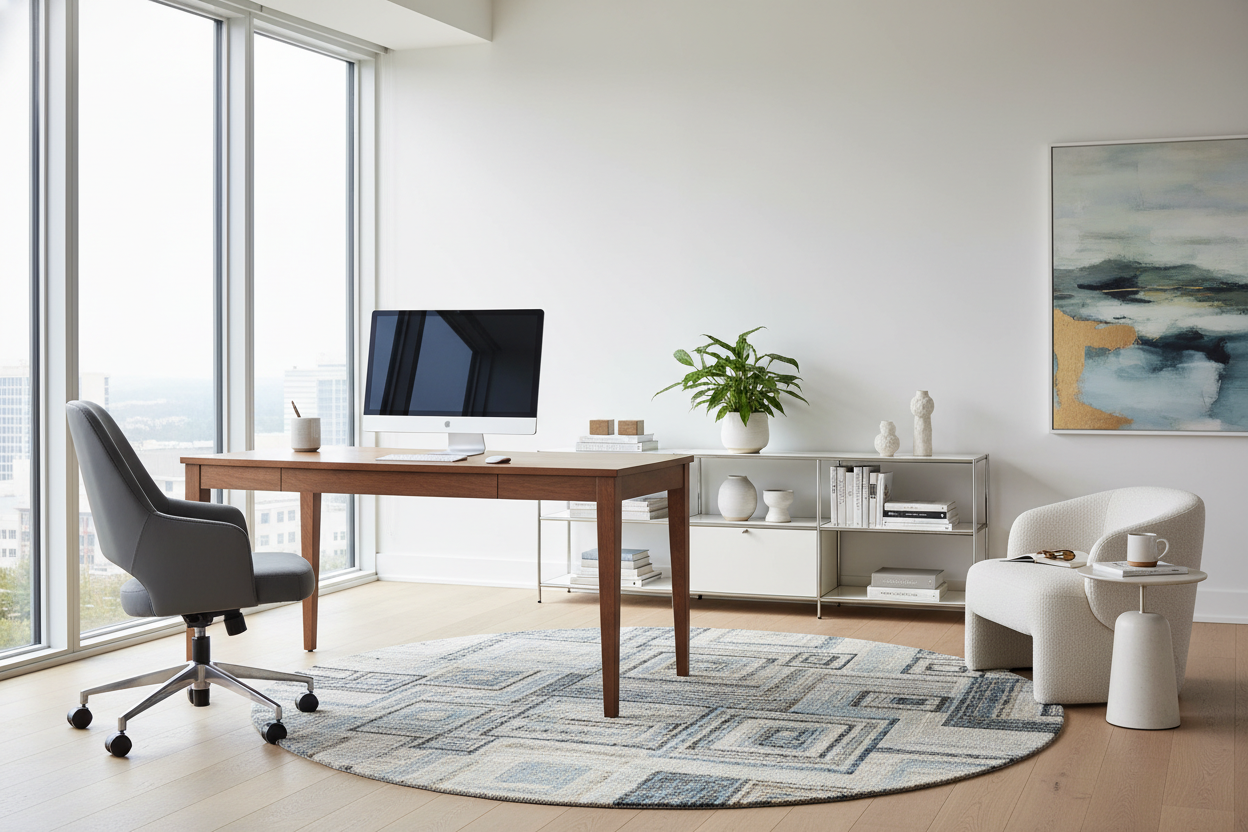
One of the most impactful changes you can make to an office room setup is the orientation of your desk. In high-end design, we often utilize the "command position." Instead of facing a wall, float your desk in the center of the room or position it perpendicular to a window. This not only reduces eye strain by allowing you to look out at a distance but also establishes a sense of authority and visual balance within the space.
If you are working with limited square footage, floating the desk might not be feasible. In these instances, consider an L-shaped configuration in a corner. This maximizes the surface area for your tech stack while keeping the center of the room open, making the space feel larger than it is.
Selecting Materials: Durability Meets Style
When curating home office set up ideas, the tactile experience is often overlooked. Your skin contacts the desk surface for hours daily. I always advise against high-gloss finishes for the primary work surface; they reflect overhead glare and amplify fingerprints. Instead, opt for a satin or matte finish.
For the chair, breatheability is paramount. While a velvet executive chair looks regal, a high-quality mesh or perforated leather is superior for thermal regulation during long sessions. Look for furniture with substantial "visual weight"—such as a desk with chunky legs or a credenza with fluted detailing—to anchor the room.
Lighting and Ambiance
Bad lighting is the silent killer of productivity. A single overhead bulb creates harsh shadows and eye fatigue. A professional office room setup ideas guide always dictates three layers of light:
- Ambient: Soft, general illumination (dimmable recessed lights or a statement chandelier).
- Task: A high-quality articulated lamp with adjustable color temperature.
- Accent: LED strips behind a monitor or under floating shelves to create depth and reduce contrast strain.
My Personal Take on Office Setup Ideas
I learned a hard lesson about aesthetics versus reality during a project for a tech consultant in Seattle. We designed a stunning, minimalist office room setup featuring a glass-top desk floated in the center of the room. It looked incredible in the renderings—airy, modern, and chic.
However, two weeks after installation, the client called me. The issue wasn't the look; it was the cable management. Because the desk was glass and floating, every single wire from his dual monitors, dock, and lamp was visible, hanging down like spaghetti. We ended up having to swap it for a solid wood desk with a modesty panel and integrated cable raceways. It was a humbling reminder that no matter how beautiful a setup is, if it doesn't hide the clutter of modern technology, it will never feel peaceful. Now, I always check the "under-desk" view before recommending a floating layout.
Conclusion
Your workspace should be a reflection of your professional ambition and your personal style. By focusing on flow, layering your lighting, and selecting materials that age gracefully, you create an environment that invites you to sit down and create. Don't settle for utility; aim for a space that inspires.
Frequently Asked Questions
How do I make a small office look bigger?
Utilize vertical space. Install floor-to-ceiling shelving to draw the eye upward. Also, choose furniture with exposed legs rather than solid bases; seeing the floor underneath the furniture tricks the brain into perceiving more square footage.
What is the best desk depth for a dual monitor setup?
Aim for a desk depth of at least 30 inches. This allows you to place monitors at arm's length (roughly 20-24 inches away), which is critical for preventing eye strain, while leaving room for a keyboard and notepad.
Should I use a rug in my office?
Absolutely. A low-pile rug anchors the furniture and provides crucial acoustic dampening. Ensure the rug is large enough that your chair casters don't roll off the edge when you push back from the desk.

Leave a comment
This site is protected by hCaptcha and the hCaptcha Privacy Policy and Terms of Service apply.