

















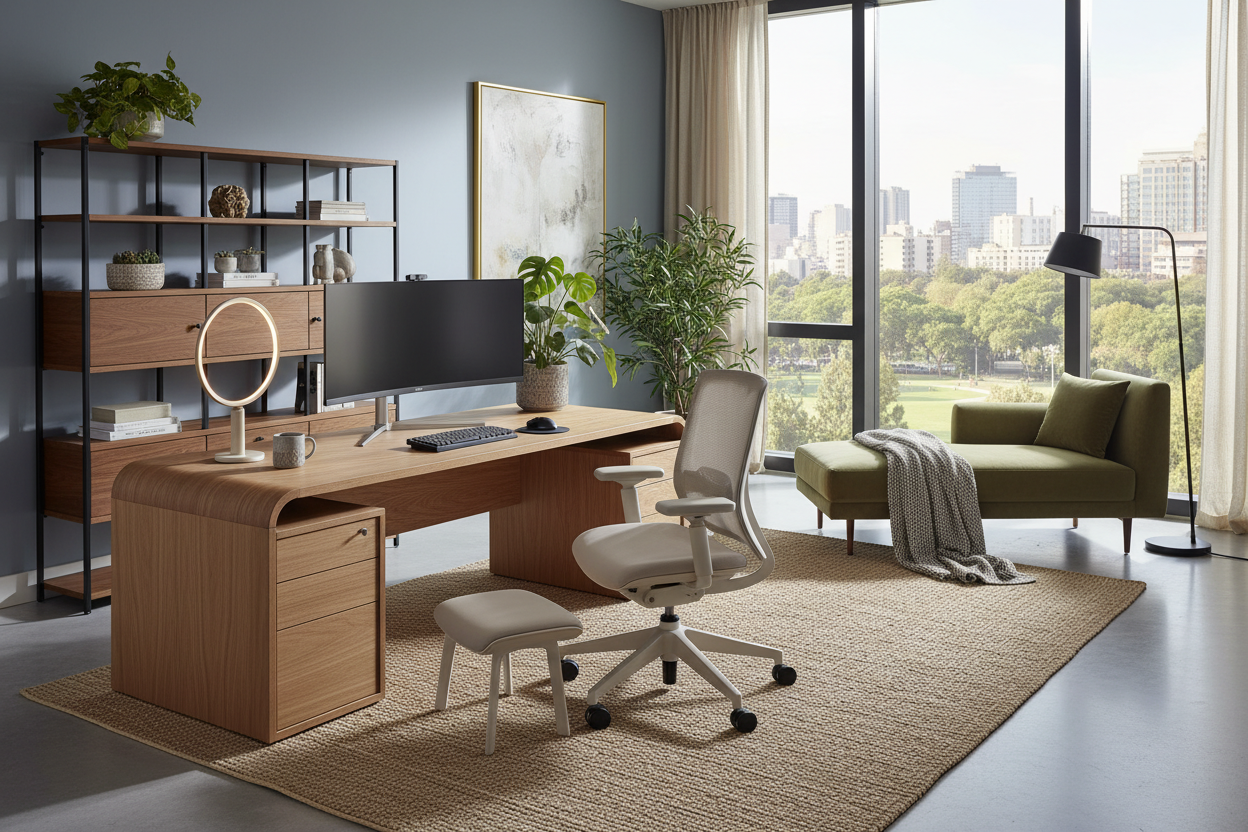
We have officially moved past the era of the kitchen table compromise. In the initial scramble, makeshift setups were forgivable, but the landscape of remote work post pandemic has shifted permanently toward intention and permanence. As a designer, I am no longer just asked to find a desk that fits; I am being asked to integrate a high-performance workspace into the cohesive aesthetic of a home. The challenge lies in balancing professional ergonomics with residential comfort—creating a space that fosters productivity without turning your sanctuary into a cubicle.
Key Design Elements for the New Home Office
- Acoustic Control: Integrating soft furnishings and rugs to dampen echo during calls.
- “Resimercial” Furniture: Pieces that offer commercial-grade durability with residential silhouettes.
- Layered Lighting: A mix of ambient, task, and face-level lighting for video conferencing.
- Visual Zoning: Using rugs, paint, or shelving to psychologically separate “work” from “living.”
Zoning and Spatial Flow
The most critical error I see in post pandemic remote work design is poor placement. It is not enough to find an empty corner; you must consider the flow of traffic and visual distractions. If a dedicated room isn't available, we look to “cloaking” the workspace. This might involve a decorative screen or positioning a floating desk behind a sofa to act as a console table when not in use. The goal is to ensure that when the work day ends, the technology disappears from your line of sight, allowing for mental decompression.
Selecting Materials: The Tactile Experience
When curating furniture for work from home post pandemic, materiality is paramount. Unlike the sterile laminates of corporate offices, home workspaces should feature materials that age gracefully.
Solid Wood vs. Veneer
For the primary desk, I almost always advocate for solid wood—Walnut or White Oak—over veneer. While veneer offers a consistent grain, solid wood allows for refinishing. Over years of use, the edge of a desk takes a beating from wristwatches and chair arms. Solid wood develops a patina; veneer chips. If you must choose a synthetic route for durability, look for high-pressure matte laminates that resist fingerprints and offer a “soft touch” finish.
Seating Aesthetics
The ergonomic chair is non-negotiable, but it doesn't need to look like a spaceship. Look for chairs upholstered in performance velvet or high-grade leather rather than standard black mesh. The silhouette should complement your living room furniture, especially if the office is part of an open floor plan.
Lighting: The Video Call Factor
Lighting has become a structural necessity in post pandemic work from home setups. A single overhead fixture creates unflattering shadows under the eyes (the “raccoon effect”). The solution is layered lighting. We start with ambient light, add a focused task lamp with a warm temperature (2700K-3000K), and crucially, ensure there is diffused light facing the user to soften features on camera. Avoid placing a desk with a window directly behind you, as backlighting creates a silhouette effect that cameras struggle to balance.
My Personal Take on Remote Work Post Pandemic
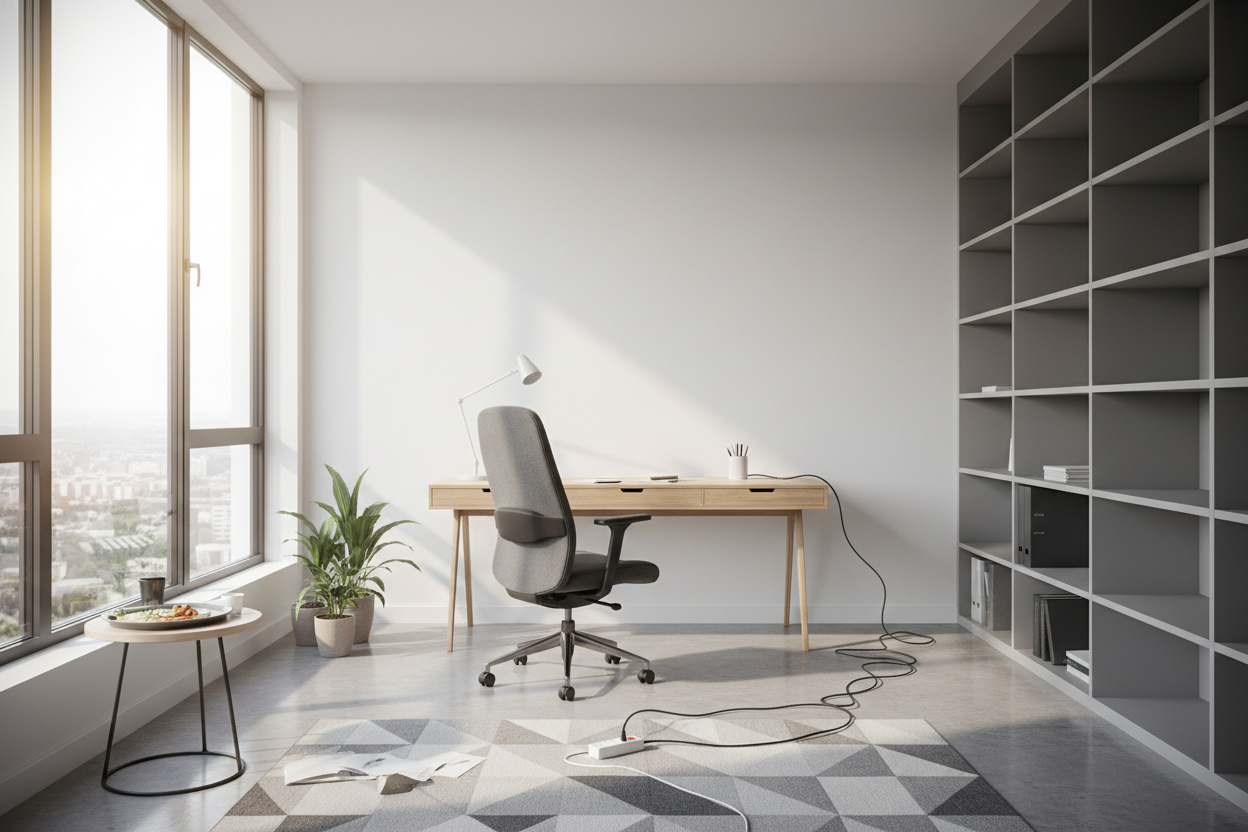
In my own home office redesign, I learned a lesson about “visual noise” that I now preach to every client. I initially fell in love with a minimalist, glass-top desk because it made the small room feel airy. However, after three months of work from home after pandemic restrictions lifted, I realized the flaw: cable management.
With a glass desk, there is nowhere to hide the chaos. Every power brick, HDMI cable, and charging cord was visible, creating a subconscious sense of clutter that actually spiked my anxiety. I ended up swapping it for a vintage mid-century desk with a modesty panel and deep drawers. The ability to physically shut a drawer on my laptop and hide the cords at 6:00 PM was a psychological game-changer. It taught me that in a home environment, the ability to conceal the “gear” is just as important as the gear itself.
Conclusion
Designing for this new era is about respecting the dual nature of our homes. By investing in quality materials, thoughtful lighting, and ergonomic pieces that don't scream “office,” you create a space that supports your career without compromising your home's character.
Frequently Asked Questions
1. How do I fit a workspace into a small apartment?
Focus on verticality. Wall-mounted ladder desks or shelving units with a drop-down surface maximize floor space while drawing the eye upward, making the room feel larger.
2. Is a standing desk worth the investment for home use?
Yes, but visual weight matters. Look for standing desks with hidden motors and wood-grain tops to avoid the industrial look. Pair it with an anti-fatigue mat that can be easily tucked away.
3. What is the best color for a home office wall?
Greens and blues are scientifically shown to reduce eye strain and promote focus. Avoid stark bright whites, which can cause glare, or overly aggressive reds that may induce stress.

Leave a comment
This site is protected by hCaptcha and the hCaptcha Privacy Policy and Terms of Service apply.