

















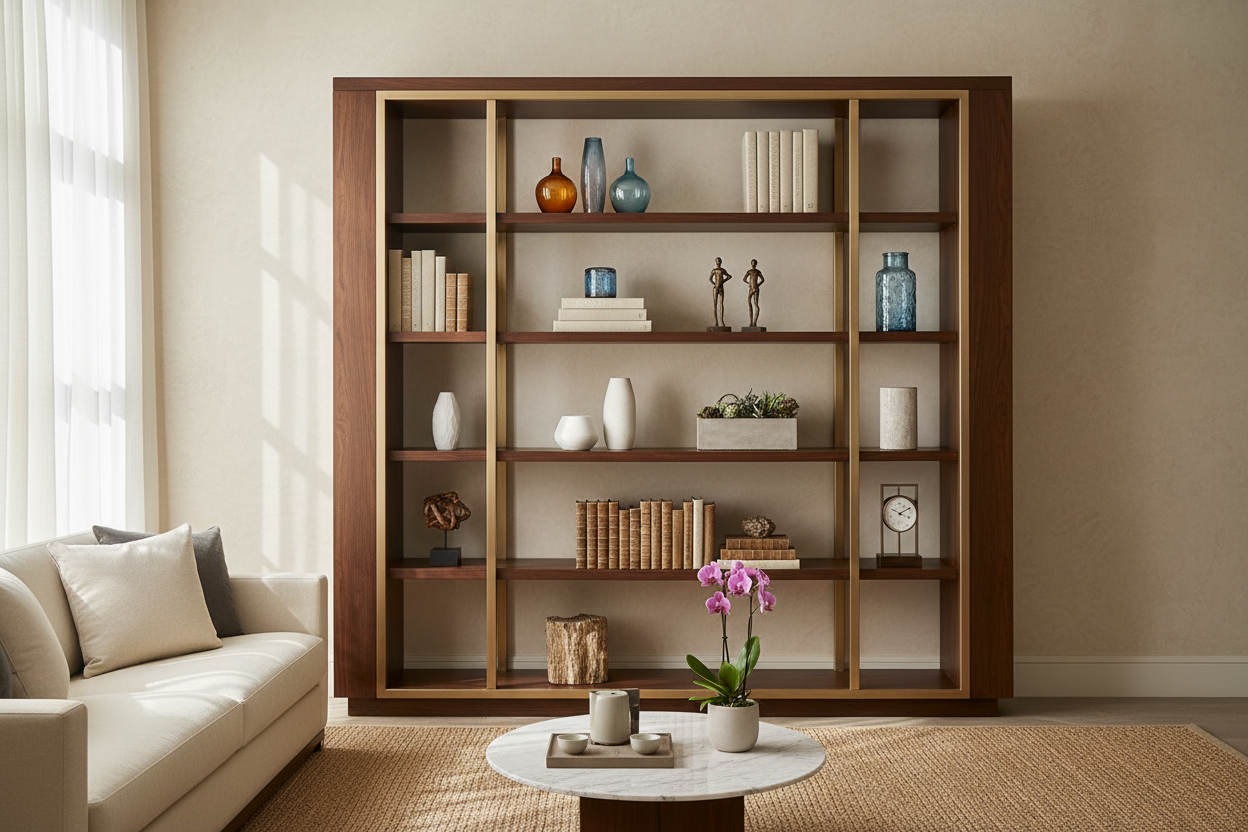
We have all seen the perfectly curated living rooms on social media, where every vase and book seems effortlessly placed. But when you try it at home, a large shelving unit can quickly turn into a chaotic catch-all. If you are considering a display cabinet open to the room, the line between a curated focal point and disorganized clutter is razor-thin. By the end of this guide, you will know exactly how to balance proportions, mix textures, and create a sophisticated arrangement that actually feels livable.
Quick Styling Guide
- Leave 30% empty: Negative space is just as important as the objects you display.
- Anchor the bottom: Place visually heavy items like baskets or large art books on the lowest shelves.
- Vary the heights: Avoid lining up items of the same size in a row; use risers or stacked books to create peaks and valleys.
- Stick to a cohesive palette: Limit your decor to three main colors or materials to unify the piece.
Managing Visual Weight and Proportion
The 60/40 Rule for Open Shelving
When working with an open shelf display cabinet, visual weight is your biggest consideration. Without glass doors to reflect light and soften the contents, every item demands attention. I recommend a 60/40 split: 60 percent functional decor (books, sculptural bowls, framed photos) and 40 percent breathing room. Group items in odd numbers, usually threes or fives, to create a natural triangle for the eye to follow.
Anchoring the Base
A common mistake is placing delicate glassware on the bottom shelf and heavy woven baskets at the top. This makes the furniture feel top-heavy and unstable. Always ground the piece. Use the bottom third for substantial items like oversized coffee table books, lidded storage boxes, or large ceramic vessels. This grounds the silhouette and provides a sturdy visual foundation.
Space Planning in North American Homes
Clearance and Flow
In typical open-concept living rooms, a tall shelving unit draws the eye upward, making ceilings feel higher. However, you need to respect the room's traffic flow. Leave at least 36 inches of walking clearance between the front of the cabinet and your coffee table or sofa back. If you are placing it in a dining room, ensure pulling out a chair will not cause someone to bump into the shelves.
Designer's Honest Take
I love the accessible, lived-in vibe of an open unit, but I have learned a few hard lessons over my 15 years of designing suburban family homes. A few years ago, I installed a stunning floor-to-ceiling matte black wood unit in a client's living room. It looked incredible on installation day. But within two months, the reality of life with a golden retriever set in.
The bottom two shelves became a magnet for pet hair and dust, requiring daily wiping. The honest downside to skipping the glass doors is the maintenance. If you hate dusting, keep your most intricate, hard-to-clean objects behind closed doors, and reserve the open shelves for larger, easily wipeable items or enclosed decorative boxes.
Frequently Asked Questions
How do I keep my open cabinet from looking messy?
Edit ruthlessly. Hide everyday clutter in decorative boxes or baskets, and only leave aesthetically pleasing items out. Stick to a unified color palette so disparate objects feel connected rather than chaotic.
What size cabinet do I need for my room?
Scale is crucial. If you have standard 8-foot ceilings, look for a piece around 72 to 80 inches tall to leave breathing room at the top. For wide walls, use two matching units side-by-side rather than one undersized piece floating alone.
How often does an open display cabinet need dusting?
In a standard North American home with forced-air heating, expect to dust weekly. Using a dry microfiber cloth is usually the safest way to maintain wood finishes without leaving a residue.

Leave a comment
This site is protected by hCaptcha and the hCaptcha Privacy Policy and Terms of Service apply.