

















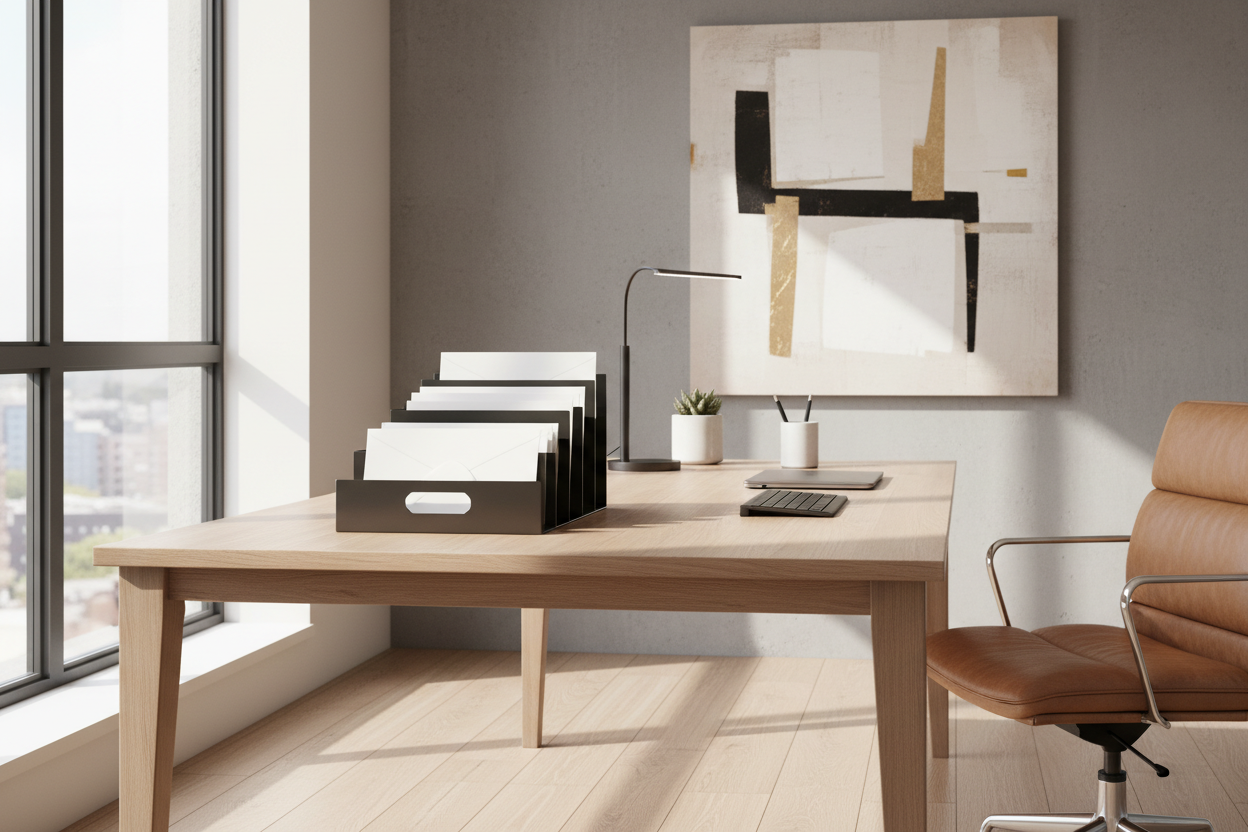
It happens in almost every home office project I design. We select a stunning walnut desk, layer in the perfect brass task lamp, and create a highly productive, beautiful workspace. Then, reality hits. The mail arrives. Within three days, piles of bills, invitations, and notices quickly turn a curated surface into a chaotic paper pile. The simplest solution to this visual clutter is often the most overlooked: a dedicated desktop envelope holder.
Micro-styling matters just as much as your major furniture pieces. When you give incoming paper a specific, stylish home, you prevent it from migrating across your workspace. In this guide, we will break down how to choose the right materials, where to place it for optimal workflow, and how this small accessory completely changes the feel of your daily grind.
Quick Decision Guide
- Prioritize weight: Look for solid brass, heavy marble, or thick acrylic. Lightweight wire holders will tip over when loaded with heavy cardstock.
- Check the base: Always ensure the bottom has felt or rubber pads to prevent deep scratches on wood or glass desk surfaces.
- Zone your desk: Keep your holder in the secondary reach zone (an arm's length away) so it doesn't crowd your keyboard and mouse.
- Scale matters: Measure your typical mail. If you regularly receive large 9x12 mailers, a standard letter-sized holder will look top-heavy and messy.
- Pair for efficiency: Use a small holder for daily incoming mail, and route processed paperwork to a larger office envelope organizer tucked away on a shelf.
Material & Build Quality
Choosing the Right Texture
The material of your desk accessories dictates the entire mood of your office. Solid wood holders, particularly in walnut or white oak, bring warmth and ground a space that might otherwise feel too tech-heavy. They pair beautifully with mid-century or transitional aesthetics. On the other hand, metal options—like brushed brass or matte black steel—add a sharper, more architectural element. Brass develops a lovely patina over time, making it ideal for a heritage or traditional executive look.
The Acrylic Advantage
If you are working with a very small desk in a condo or apartment, visual weight is your enemy. Thick, high-quality acrylic is an excellent choice here. It functionally holds the mail but visually disappears, keeping the desk surface feeling open and airy. Just be warned: cheap, thin plastic will yellow and crack. Invest in cast acrylic with polished edges for a high-end look.
Space Planning & Layout
The Zones of Productivity
Desk real estate is precious. I teach my clients to divide their desk into three zones. Zone 1 is your immediate work area (laptop, keyboard, mouse). Zone 2 is your secondary reach area (coffee cup, pen cup, task lamp). Zone 3 is the perimeter. Your mail holder belongs firmly in Zone 3, typically in the back left or right corner. This keeps pending tasks visible so they aren't forgotten, but out of your immediate line of sight while you are trying to focus.
Layering Organization
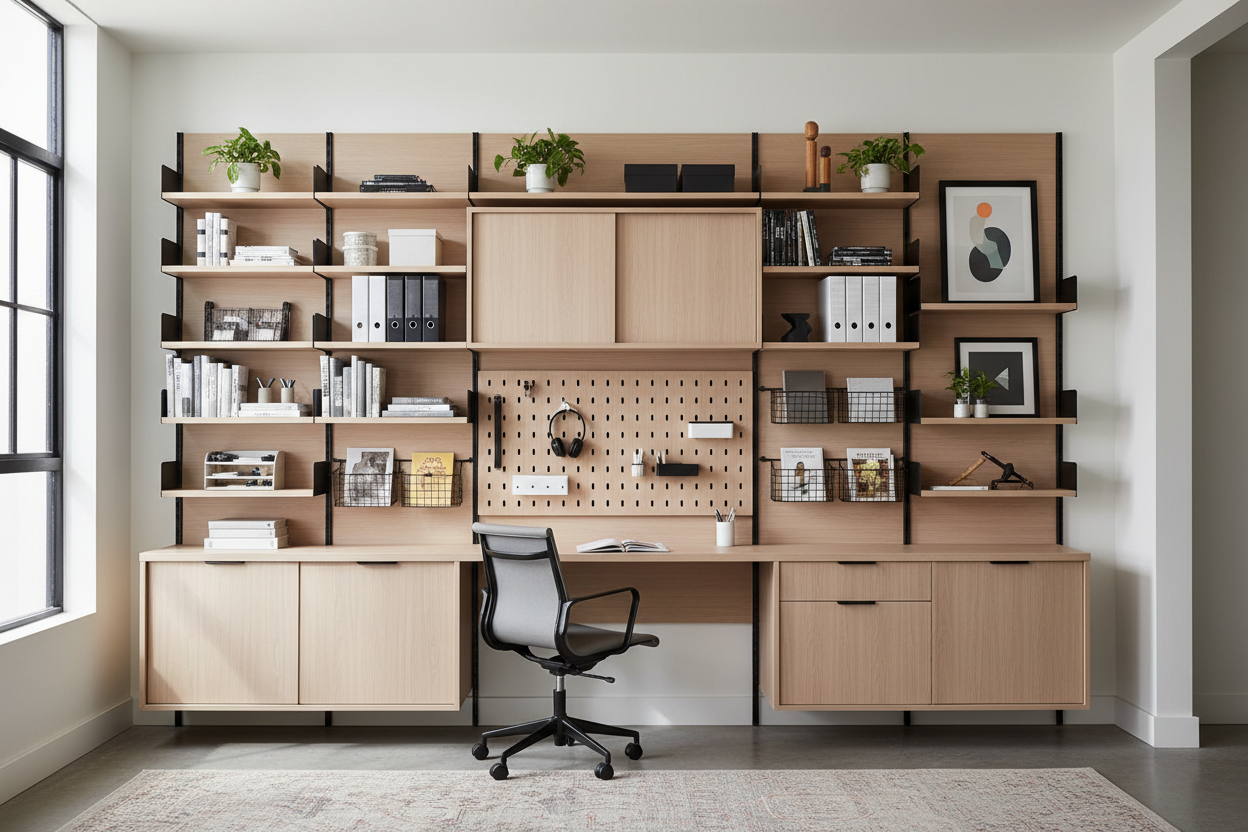
A common mistake is trying to use one small accessory to hold a month's worth of paper. A compact desktop piece is strictly for the "inbox"—the mail you just brought inside. Once opened, those papers need to move. I recommend pairing your desktop piece with a larger, multi-slot office envelope organizer placed on a nearby credenza or bookshelf. This two-step system keeps the desk pristine while ensuring important documents are actually filed away.
Style & Coordination
Balancing Visual Weight
When styling a desk, you want to avoid the "matching set" trap. Buying a matching mesh metal pen cup, tray, and mail holder often looks like a corporate cubicle rather than a curated home office. Instead, mix your materials. If you have a leather desk pad, try a marble envelope holder. If your desk is a heavy, dark wood, lighten the mood with a polished nickel accessory. Mixing textures creates depth and makes the space feel collected over time.
Designer's Honest Take
Early in my career, I sourced a stunning, raw brass mail holder for a client's custom $4,000 white oak desk. It looked incredible on installation day. But I missed a crucial detail: the bottom edges were completely unpolished metal. After a month of sliding the heavy brass piece back and forth to dust, it left deep, permanent scratches across the wood veneer. I was mortified and had to pay to have the desk surface repaired. I learned the hard way that accessory bases matter just as much as the visible design. Now, I keep a sheet of adhesive felt pads in my installation kit. If a desk accessory doesn't come with protective feet, I add them myself before it ever touches a client's furniture.
Frequently Asked Questions
What size desktop envelope holder do I need?
For standard residential use, a holder that is 6 to 8 inches wide and at least 4 inches tall is ideal. This comfortably supports standard #10 envelopes and greeting cards without them flopping over the sides.
How do I clean and maintain metal or wood holders?
For wood, a simple microfiber cloth and a bi-annual wipe with a gentle wood polish is plenty. For unlacquered brass, let it patina naturally for an aged look, or use a specialized brass polish like Brasso every few months to maintain a bright shine. Avoid harsh chemical sprays on acrylic, as they will cause the material to cloud.
Is this accessory only for mail?
Not at all. While designed for post, these holders are incredibly versatile. I frequently use them to hold small notebooks, daily planners, or even a tablet or e-reader while it charges. The goal is simply to keep flat items upright and contained.

Leave a comment
This site is protected by hCaptcha and the hCaptcha Privacy Policy and Terms of Service apply.