

















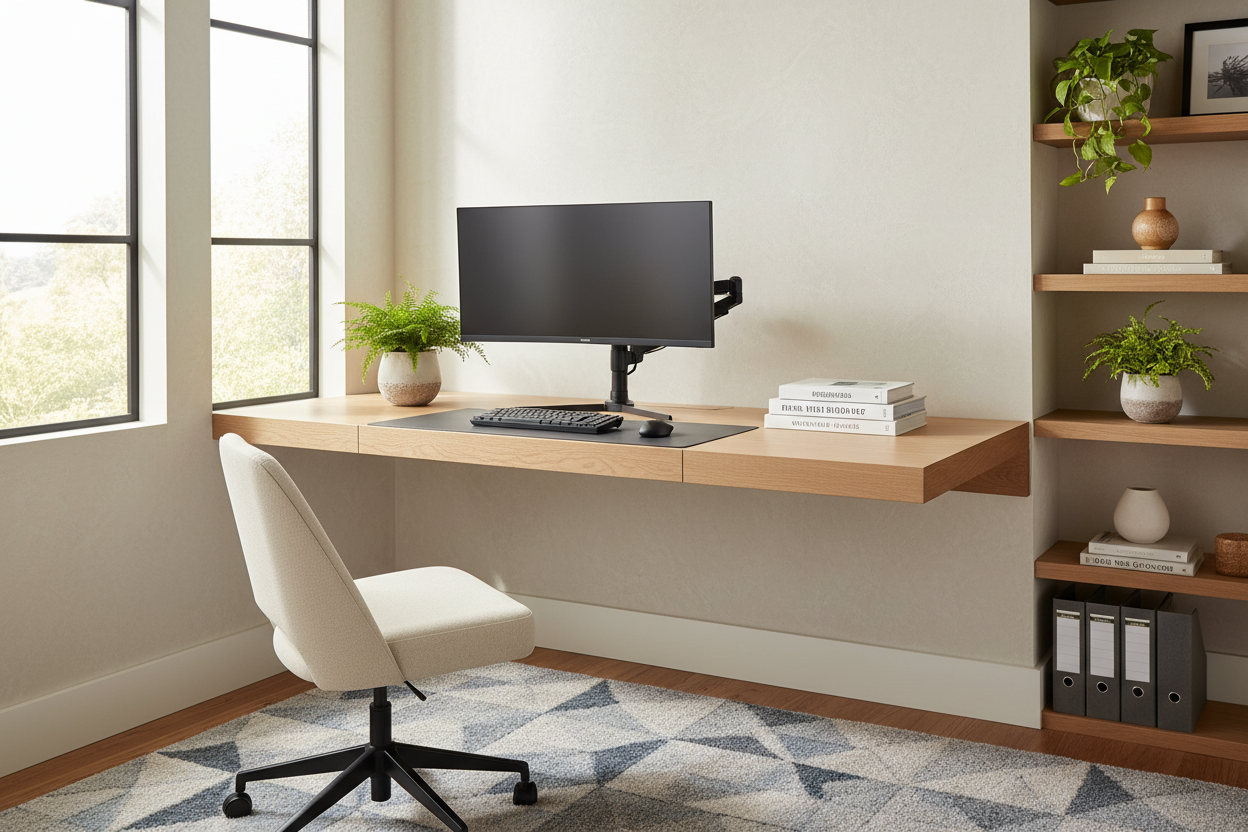
We have all been there. You finally find the perfect writing table, center it in your home office, and realize that thick baseboards, window sills, or monitor C-clamps are forcing a frustrating two-inch void at the back. Before you know it, charging cables, expensive pens, and important sticky notes are falling into the abyss.
Finding the right desk gap filler is about more than just preventing lost items; it is about making your workspace look intentional and custom-built. When furniture floats awkwardly, it throws off the visual weight of the entire room. In this guide, we will break down exactly how to address the space between desk and wall, the hard rules for office clearance, and the best materials to bridge the void.
Quick Decision Guide
- Measure the exact void: The gap between desk and wall usually ranges from 1 to 4 inches depending on your baseboards and monitor mounts.
- Choose the right material: Foam wedges are cheap but visible; custom wood blocks or acrylic strips offer a seamless, high-end look.
- Respect chair clearance: If you pull the desk away from the wall entirely, ensure you have at least 36 inches of space behind desk for chair movement.
- Manage the cables: Use a desk to wall gap filler that includes routed channels to hide unsightly monitor and laptop cords.
Space Planning: Nailing Your Office Desk Spacing
How Much Space Do You Need Behind a Desk?
If you decide to float your desk in the middle of the room rather than pushing it against the wall, you need to understand proper desk clearance dimensions. Clients constantly ask me how much space between desk and wall for chair push-out is actually necessary. The golden rule in residential design is 36 to 42 inches. This gives you enough room to slide out, stand up, and walk away without scraping the drywall or feeling boxed in.
When to Push the Desk Against the Wall
Floating a desk looks incredibly chic in large spaces, but in a standard 10x10 suburban bedroom-turned-office, it often eats up too much floor space. When you push the desk forward, you inevitably deal with how much space between desk and wall is left by architectural features. A desk gap cover becomes essential here. Leaving a raw, dark shadow line behind your work surface creates visual clutter and makes the room feel unfinished.
Choosing the Right Desk Wall Gap Filler
Material Quality and Aesthetics
Not all gap solutions are created equal. If you want to fill gap between desk and wall, you have three main options. High-density foam wedges are popular and inexpensive, but they can look cheap if exposed on the sides. An acrylic office desk gap filler is excellent for modern setups because it lets light through while stopping items from falling. For traditional or transitional rooms, I always recommend a custom-milled piece of wood finished to match your desk surface. It extends the visual plane of the desk, making a standard piece of furniture look like built-in cabinetry.
Ergonomics and Flow
When considering how much space for desk chair is required, do not forget about the surrounding furniture. If you are setting up a shared workspace, you must follow basic office furniture spacing guidelines. The minimum space between desks should be 30 inches for a walkway, but 48 inches is ideal if two people are sitting back-to-back. Proper office desk spacing ensures the room breathes and negative space is maintained.
Designer's Honest Take: Lessons from My Own Projects
A few years ago, I designed a stunning mid-century modern home office for a client in Portland. We sourced a beautiful vintage teak desk. Because of the room's layout, we had to push it against the wall, but a heavy-duty dual monitor arm required a 3-inch clearance. I initially tried to save the client money by using a generic black foam desk wall gap filler I found online.
It was a mistake. The foam collected dust instantly, deteriorated at the edges, and completely cheapened the look of the $3,000 desk. I learned the hard way that if you are going to bridge that gap, you need to treat the filler as an extension of the furniture. We ended up having a local woodworker mill a custom teak ledge that rested perfectly on the baseboard and sat flush with the desk. It cost a bit more, but it solved the problem beautifully and hid all the monitor cables. The downside? If you ever move the desk to a room with different baseboards, that custom piece might not fit perfectly again.
Frequently Asked Questions
What is the minimum space between desk and wall?
If you are facing the wall, you only need enough space to accommodate baseboards and cable management, which usually leaves a 1 to 3-inch gap. If your back is to the wall, you need a minimum of 36 inches of chair space behind desk to move comfortably.
How do I figure out how much space behind desk is right for me?
Sit in your current chair, pull yourself up to a comfortable working position, and then push back and stand up naturally. Measure the distance from the desk edge to the back of the chair's rear casters. Add 6 inches for a walking buffer. That is your ideal clearance.
What is the best way to hide the space between desk and wall?
If you cannot eliminate the gap, use a rigid desk gap cover made of wood or frosted acrylic. Avoid soft foams if the side profile of your desk is visible from the doorway, as they tend to look unfinished and collect pet hair.


Leave a comment
This site is protected by hCaptcha and the hCaptcha Privacy Policy and Terms of Service apply.