












A supportive home office configuration relies heavily on seating that accommodates dynamic movement throughout the workday. Selecting a desk chair with adjustable back functionality allows users to customize spinal contact, recline angles, and seat-to-back ratios. Understanding the engineering, spatial footprints, and material choices behind these seating designs ensures your workspace remains functional, comfortable, and visually balanced.
Understanding Backrest Articulation: Core Mechanical Archetypes
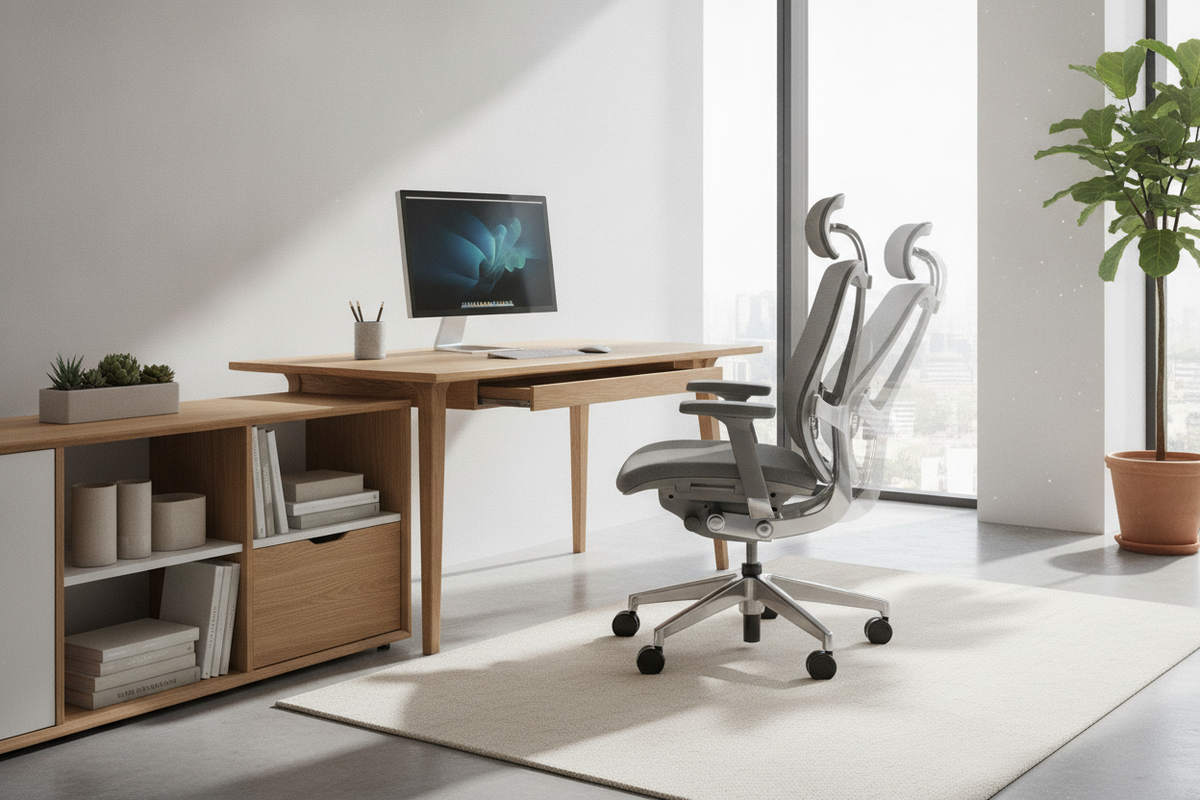
The core value of an articulating backrest lies in its internal mechanism. Rather than remaining rigid, an adaptable backrest moves in response to body shifting, facilitating transitions between focused data entry, active brainstorming, and reclined reading.
Synchro-Tilt vs. Independent Back-Angle Mechanisms
Seating mechanisms govern how the backrest interacts with the seat pan during movement:
- Synchro-Tilt Action: In a synchro-tilt design, the backrest and seat pan recline simultaneously at a coordinated ratio. As the backrest reclines deeper, the seat pan tilts upward slightly, keeping feet grounded and pelvis properly positioned without lifting the front thighs excessively.
- Independent Back-Angle Adjustment: Chairs with independent adjustment levers allow the backrest to tilt and lock independently of the seat pan. This enables precise upright positioning for typing or fixed recline angles for media consumption.
- Center-Tilt Mechanisms: A single pivot point rocks the entire seat and back assembly together, offering basic movement suitable for intermittent office tasks.
Ratchet and Slider Height Adjustment Archetypes
Proper back support requires aligning the lumbar curve with the user's lower spine. A desk chair adjustable back often features vertical track adjustments, such as ratchet lift systems or friction sliders. Ratchet designs allow the user to lift the backrest through several preset height notches before resetting at the lowest position, ensuring the integrated lumbar support matches varying torso proportions.
Dimensional Planning and Spatial Clearances
Articulating chairs require adequate clearance around the workstation to function without striking walls, filing units, or desk aprons.
Recline Sweep Radius and Wall-to-Desk Spacing
When selecting a chair with adjustable back functions, account for the arc created when fully reclining. The total depth of the chair expands significantly when tilted back. Ensure ample clearance between the rear edge of the desk and any background walls or perimeter credenzas so the backrest does not scuff painted surfaces or collide with shelving during dynamic movement.
Under-Desk Clearance and Armrest Docking
A fully integrated workstation allows the chair to roll completely beneath the worksurface when not in use. Pairing an articulated chair with an adjustable desk product ensures armrests clear the underside of the desktop at various working heights. Check that the chair's overall width, including armrest spans, fits comfortably between the desk legs and any under-desk mobile pedestals.
Material Performance and Structural Framing
The construction materials of the backrest dictate thermal comfort, tactile longevity, and structural resilience. Reviewing these elements in a comprehensive chair desk guide helps balance aesthetic preferences with long-term utility.
Breathable Mesh vs. Contoured Upholstered Cushions
Backrest surfaces generally fall into two categories:
- Suspension Mesh: Open-weave elastomeric mesh offers continuous airflow, adapting to body shape and dissipating heat during extended work sessions. High-grade mesh maintains tension without sagging over time.
- Upholstered Molded Foam: High-resilience molded foam backrests wrapped in fabric, faux leather, or top-grain leather provide plush contouring and firm structural stability, ideal for dedicated executive suites and cooler room environments.
Frame Joinery, Gas Cylinders, and Base Stability
The structural spine connects the backrest to the control mechanism. Reinforced nylon composites offer lightweight flexibility, whereas polished aluminum or steel spines provide rigid, long-lasting stability. Five-star bases equipped with smooth-rolling hooded casters ensure balanced weight distribution across both hard floors and low-pile rugs.
Task Profiles: Matching Adjustment Modes to Workflow
Different tasks demand tailored backrest behaviors. Consulting a practical desk chair guide can help map seating features to specific daily routines:
- Intensive Keyboarding: Requires an upright or forward-tilting back angle with firm lumbar contact to keep the upper body aligned over the keyboard.
- Multi-Display Design and Review: Benefits from a responsive synchro-tilt mechanism with variable resistance, allowing fluid movement between screens.
- Virtual Meetings and Reading: Reclined locking positions with cushioned headrests and relaxed backrest angles provide comfortable support during extended listening sessions.
Workstation Integration: Pairing with Desks and Modular Storage
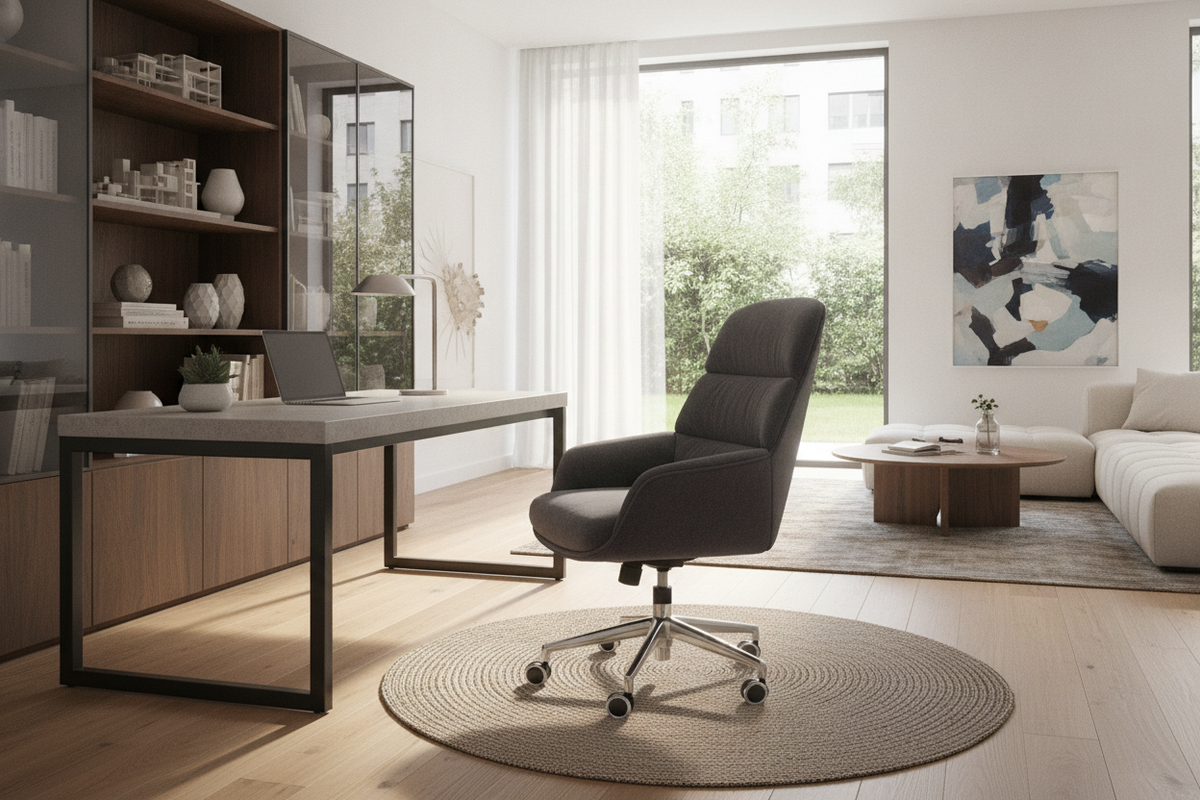
A functional home office balances dynamic seating with coordinated storage and surfaces. When setting up an office layout, harmonize the chair’s frame finishes—such as matte black, light gray, or polished chrome—with surrounding credenzas, file cabinets, and open shelving from an adjustable collection. Keeping storage towers and sideboards clear of the chair’s swivel path maintains open circulation throughout the room.
Assembly, Calibration, and Maintenance Protocols
To preserve mechanical performance, follow systematic setup and maintenance steps:
- Tension Knob Tuning: Adjust the central tilt-tension knob beneath the seat so the backrest reclines smoothly under gentle pressure without feeling too loose or overly rigid.
- Height Alignment: Set the seat height so feet rest flat on the floor, then adjust the backrest vertical tracking until the lumbar curve rests directly against the lower spine.
- Hardware Check: Periodically check and tighten bolts connecting the backrest bracket, armrests, and mechanism plate to prevent frame wobble.
- Caster and Textile Care: Clean casters periodically to remove trapped fibers and vacuum upholstery or wipe mesh surfaces with a mild, damp cloth.


Leave a comment
This site is protected by hCaptcha and the hCaptcha Privacy Policy and Terms of Service apply.